
2026 Working Seminar
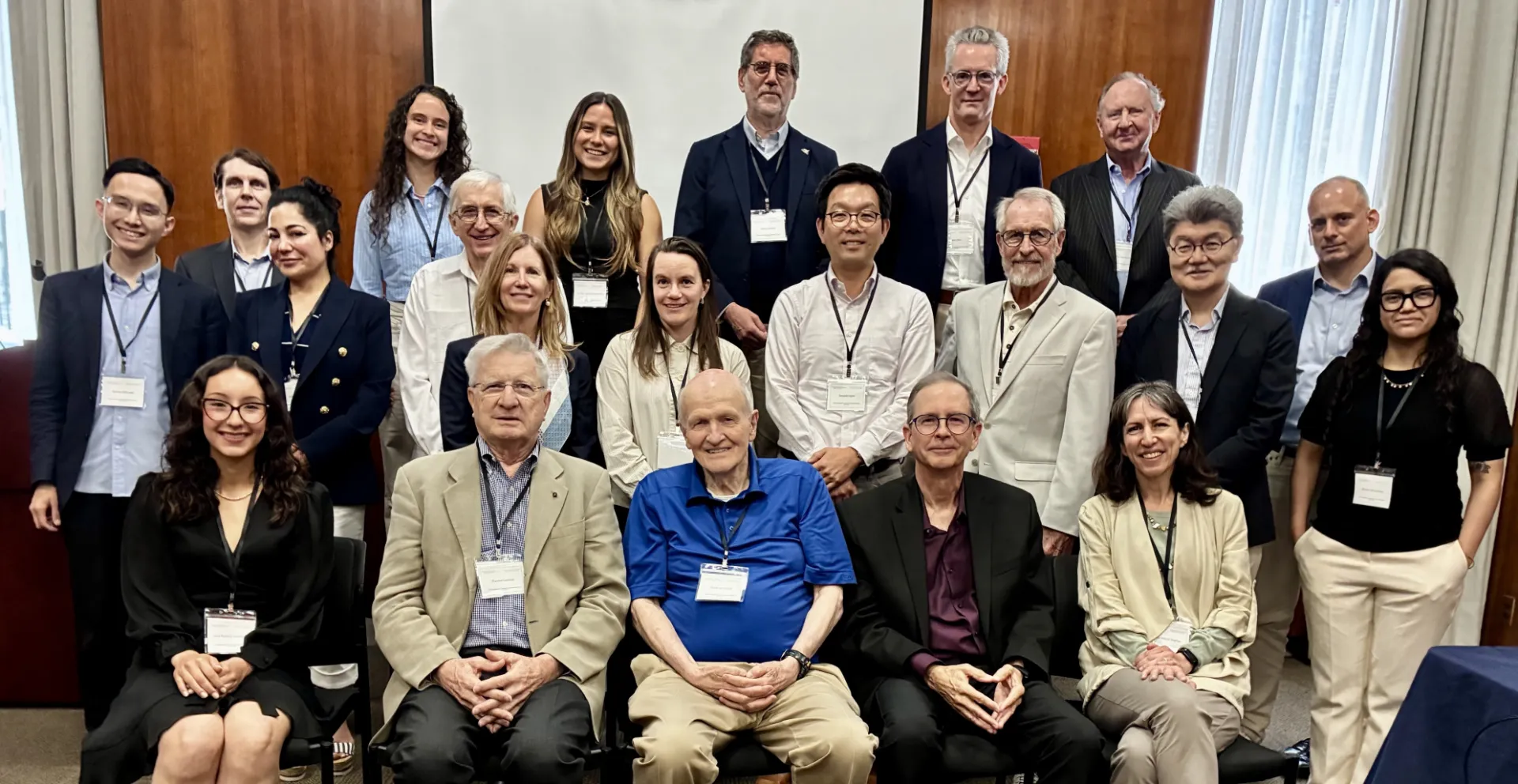
Columbia University, June 15, 2026
AC4 – CNDSI 2026 Working Seminar: Summary Overview
The Cooperative Nuclear Disarmament and Sustainability Initiative (CNDSI) held its 2026 Working Seminar at Columbia University, marking the second installment in a three-year series dedicated to evaluating the historical trajectory and systemic legacies of the Megatons to Megawatts (M2M) deal. Building upon the 2025 inaugural seminar—which analyzed the foundational scientific cooperation, technical feasibility, and political motivations preceding the deal's 1993 launch—the 2026 seminar shifted its focus toward the complex internal realities of governance, commercial implementation, and legislative mechanics. A comprehensive summary overview of the four primary sessions follows below, conducted under Chatham House Rules.
Schedule
Introductory Remarks on Megatons to Megawatts Evaluation Project
Session One - Commercial Dimension “Uncertainties and Strategies to Beginning & Sustaining the HEU Deal”
Session Two - Congressional Dimension “The Domestic, Budgetary and Russian Politics of Making the HEU Deal Work”
Session Three - Executive Dimension “The Executive Branch and Russian Politics of Making the HEU Deal Work”
Closing Remarks
Session One - Commercial Dimension “Uncertainties and Strategies to Beginning & Sustaining the HEU Deal”
The opening session examined the intense bureaucratic and operational realities within the U.S. Executive Branch during the collapse of the Soviet Union. Participants revisited the profound structural uncertainties of late 1991 and 1992, noting that the immediate post-Soviet environment forced a rapid re-evaluation of global threat metrics. While high-level presidential alignment between the U.S. and Russia developed quickly, translating that resonance down to the vast bureaucracies of the State Department and the Department of Energy (DOE) required significant institutional maneuvering.
A primary focus was the systemic turmoil characterizing the U.S. domestic nuclear weapons complex during this transitional era. As the Clinton administration sought to secure a post-Cold War "peace dividend," the DOE faced severe budget contractions, leading to massive downsizing and the closure of major materials production sites. Consequently, early proposals to send financial aid to Russia encountered intense pushback from internal factions who argued that funding a former rival shortchanged domestic nuclear security and oversight.
The session highlighted the era’s bureaucratic creativity, specifically the development of the Materials Protection, Control, and Accounting (MPC&A) program. Designed to secure vulnerable, highly enriched uranium (HEU) stockpiles across the former Soviet apparatus, this program essentially sought to replace deteriorating physical security frameworks with advanced Western technology. Concurrently, "lab-to-lab" cooperation emerged as an essential clearinghouse for high-risk threat reduction, allowing government-owned, contractor-operated national laboratories to establish direct agreements with Russian scientists.
Discussions also delved into the creation of high-level, bilateral institutional frameworks designed to bypass stagnant bureaucratic channels. The establishment of dedicated joint commissions managed multi-layered portfolios encompassing dozens of intersecting political, technical, and economic challenges. This centralized administrative structure allowed both nations to manage the intricate transparency and verification protocols required to monitor the down-blending of military-grade material into low-enriched uranium (LEU).
Furthermore, participants analyzed the immense legislative and geopolitical friction surrounding the compensation of newly independent states like Ukraine. The session highlighted how commercial contract signings were repeatedly delayed due to complex trilateral negotiations regarding strategic warhead transfers. To resolve these impasses, the U.S. government authorized controversial advanced payments channeled through its state-owned corporation to stabilize regional security priorities.
The session concluded with an analysis of how old Soviet classification guidelines and emerging Russian commercial structures complicated early implementation. Negotiators frequently operated under the threat of legal or political retaliation, navigating a delicate landscape where public policy goals often conflicted with hidden corporate interests. Ultimately, the persistence of dedicated interagency networks proved vital in sustaining the agreement through its volatile formative years.
Session Two - Congressional Dimension “The Domestic, Budgetary and Russian Politics of Making the HEU Deal Work”
The second session evaluated the intricate commercial dimensions of the M2M agreement, focusing on the challenging transition from a simple, government-to-government understanding to a functioning global marketplace. Although the core non-proliferation vision relied on a straightforward baseline, the practical reality required balancing massive influxes of down-blended nuclear material with an already depressed Western uranium market. Western mining and conversion companies engaged with the deal primarily out of a necessity for market survival, seeking to stabilize a sector highly vulnerable to supply shocks.
Participants analyzed the core commercial assumptions underpinning the deal, particularly the estimated $12 billion designated for the Russian scientific complex. This revenue was structurally vital to prevent the proliferation of weapons expertise to rogue actors or terrorist networks. However, the introduction of this material as fuel for civilian reactors triggered extreme volatility, exposing deep friction between the U.S. government’s non-proliferation mandates and the private sector’s economic parameters.
A substantial portion of the debate centered on the institutional mechanics of the United States Enrichment Corporation (USEC). Established as a state-owned entity before its eventual privatization, USEC possessed an exclusive agency agreement that created an operational monopoly over the imported Russian LEU. This structure inadvertently triggered severe agency problems, as the core experts on the enrichment business were systematically removed from direct government oversight and placed into a corporate entity.
The subsequent privatization of USEC via an Initial Public Offering (IPO) was identified as a critical inflection point that severely disrupted the agreement’s strategic framework. Following privatization, the corporation’s legal fiduciary duties shifted entirely to maximizing shareholder value rather than executing broader national security objectives. This structural misalignment caused USEC to view its executive agency not as a geopolitical obligation, but merely as a commercial contract to be optimized.
The seminar explored how this corporate optimization directly harmed relationships with domestic nuclear utilities. In an effort to finance proprietary, next-generation domestic enrichment technologies, the privatized corporation attempted to lock utilities into long-term, above-market fuel contracts. When these technical projects failed to materialize, the resulting commercial animosity drove U.S. utilities to aggressively back international competitors, permanently altering the domestic enrichment landscape.
Additionally, the session scrutinized the highly contentious natural uranium component of the transaction. While the initial 1993 agreement largely papered over the logistical destiny of the natural uranium component extracted during the down-blending process, it quickly evolved into an overwhelming market glut. The U.S. Treasury and the Office of Management and Budget (OMB) frequently transferred federal uranium stockpiles to bolster corporate valuations, further depressing global prices and threatening the financial viability of the entire deal.
Ultimately, the commercial implementation phase demonstrated that a market-based non-proliferation agreement cannot function in total isolation from state support. The first decade of the M2M deal required persistent, aggressive governmental interventions to resolve systemic pricing crises and prevent private entities from abandoning their geopolitical mandates. The session highlighted that the commercial "devils in the details" required continuous structural remediation to keep the overarching disarmament timeline on track.
Session Three - Executive Dimension “The Executive Branch and Russian Politics of Making the HEU Deal Work”
The third session shifted focus to the legislative arena, analyzing how Congress navigated the strategic, domestic, and economic crosscurrents of the M2M deal. The deliberations underscored that the legislative branch was never a monolith; instead, it served as a primary battleground between defense hawks eager to isolate the post-Soviet apparatus and pragmatic dealmakers focused on regional stability and domestic energy security.
A key topic of analysis was the drafting and passage of the USEC Privatization Act and its subsequent legislative iterations. Lawmakers faced intense pressure from regional delegations and labor unions representing gaseous diffusion plant workers in states like Kentucky and Ohio. These constituencies demanded ironclad legislative protections regarding employee pensions, seniority, and electricity contracts, forcing congressional staff to balance domestic labor protection with macro-level foreign policy goals.
The seminar highlighted a fundamental structural flaw in the original privatization legislation: the failure to anticipate that the newly privatized entity would abandon its broader altruistic national security responsibilities. Congressional staff admitted that the legislative branch operated under the naive assumption that a special, symbiotic relationship would persist between the state and the private executive agent. This legislative oversight ultimately left the U.S. government without direct expert leverage over the commercial fuel cycle.
This systemic vulnerability culminated in the severe geopolitical crisis of late 1998, when a total collapse of the natural uranium market caused the entire M2M deal to seize up. With Russian entities refusing to deliver material due to a lack of compensation, and competing factions in Moscow threatening to abandon the agreement entirely, the deal faced imminent collapse. The situation required immediate, unprecedented legislative intervention to bypass the executive branch's bureaucratic paralysis.
The session provided a detailed look at the behind-the-scenes mechanics of the landmark 1998 Omnibus Appropriations Bill. To stabilize the agreement, key congressional leaders orchestrated a rapid, discrete appropriation of $325 million to purchase the un-commercialized Russian natural uranium directly and remove it from the open market. This massive fiscal intervention was successfully attached to a multi-thousand-page spending bill, minimizing public debate and neutralizing ideological opponents who opposed direct financial transfers to Moscow.
Participants observed that this decisive congressional action effectively remedied the structural vulnerabilities embedded in the original 1993 and 1994 commercial frameworks. By utilizing the federal budget as a strategic tool, Congress managed to de-escalate the commercial crisis, provide crucial liquidity to the Russian complex, and place the broader disarmament schedule back onto a predictable, multi-year path.
The session concluded by noting that while the M2M deal is frequently celebrated as a successful market-driven initiative, its continuity was fundamentally dependent on aggressive legislative updates and massive public funding. The 1998 intervention demonstrated that when private mechanisms fail to uphold vital national security mandates, the legislative branch must possess the flexibility and institutional willpower to enforce structural corrections.
Closing Remarks
The final session expanded the seminar's scope to evaluate the M2M deal within the broader global ecosystem of modern energy security, climate policy, and international risk mitigation. Participants engaged in a forward-looking analysis, questioning whether the structural conditions that allowed a massive "swords-to-plowshares" initiative to succeed in the 1990s could ever be replicated in today’s deeply fragmented geopolitical landscape.
A central theme was the concept of systemic wisdom and the vital role of trusted, cross-cutting human networks that operate independently of formal state restrictions. Historically, the shared professional and technical respect among elite American and Soviet physicists allowed communication channels to remain open even during the darkest periods of the Cold War. These deeply entrenched scientific networks laid the essential groundwork for the M2M deal, proving that long-term non-proliferation requires continuous, informal relationship-building well before a diplomatic window of opportunity opens.
The discussion contrasted the historical environment with modern security dilemmas, particularly following the escalation of global sanctions and the collapse of traditional arms control treaties. Representatives noted that contemporary frameworks are significantly more restrictive, with modern states working aggressively to block informal scientific contacts and control cross-border corporate joint ventures. This lack of institutional flexibility makes replicating the flexible "problem-solving coalitions" of the 1990s exceptionally difficult.
The session also analyzed the evolving structural dynamics of the global fuel cycle. Unlike the 1990s, when the U.S. government maintained substantial domestic leverage over enrichment and conversion facilities, modern Western states possess significantly less direct control over the commercial nuclear supply chain. The current push to rebuild domestic enrichment capacities is heavily complicated by commercial considerations, making the sudden integration of foreign weapons-usable material into civilian fuel cycles a complex economic and regulatory challenge.
Furthermore, participants debated the changing nature of proliferation risks, shifting focus from legacy Russian stockpiles to emerging nuclear-armed states and regional breakout capabilities. The technical and political lessons learned from the Joint Comprehensive Plan of Action (JCPOA) and various research reactor blend-down initiatives were analyzed to determine how verification protocols can be improved using modern technology. The consensus emphasized that future initiatives must establish clear, incremental metrics where financial compensation is directly tied to verified material down-blending.
The seminar concluded with a profound reflection on the enduring power of transformative ideas in international relations. Despite severe market gluts, corporate mismanagement, and intense domestic opposition, the M2M deal ultimately succeeded because the core concept—converting 20,000 nuclear warheads into clean, civilian electricity—possessed an undeniable common-sense value that transcended zero-sum security logic.
Conclusion
The 2026 CNDSI Working Seminar successfully illuminated the intricate, often volatile operational realities that dictate the success or failure of large-scale nuclear disarmament agreements. By shifting the analytical lens from high-level diplomatic aspirations to the granular mechanics of executive execution, corporate governance, and legislative funding, the seminar underscored that a great vision requires relentless institutional maintenance to survive. The legacy of the Megatons to Megawatts deal demonstrates that while market mechanisms can provide powerful pathways for threat reduction, they must be continuously insulated by resilient human networks and flexible state interventions. As the international community faces a renewed era of geopolitical friction, the insights gathered during these sessions provide a critical, practical blueprint for combining global threat reduction with clean energy security.
For more information please write to [email protected]