
Thomas L. Neff
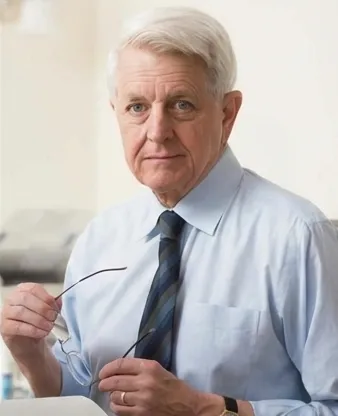
Physicist, innovator, and catalyst of the “Megatons to Megawatts” deal
Photo credit: Peter Goldberg/Lewis & Clark College
"I think there are always opportunities. There are always people who see something that can be fixed. The average college graduate will probably have an opportunity in his or her life to do something that actually improves things. But the trick is recognizing [that opportunity]."
"Thomas Neff was the genius who pulled this whole thing together. He had the idea, communicated it well, and sold it to top people on both sides."
Table of Contents
Thomas L. Neff was a physicist at MIT’s Center for International Studies whose vision reshaped nuclear history. In 1991, as the Soviet Union collapsed, he proposed an unprecedented plan: convert highly enriched uranium (HEU) from dismantled Russian nuclear warheads into fuel for American power plants.
Over the next two decades, this idea became the Megatons to Megawatts deal. By 2013, it had transformed 20,000 Russian warheads into electricity — supplying nearly 10% of U.S. power for twenty years, and representing the largest single act of nuclear disarmament in history.
The Original Idea: A Grand Uranium Bargain
On October 24, 1991, Neff published a New York Times Op-Ed titled “A Grand Uranium Bargain.” This short article planted the seed for a $17 billion deal, eliminating one-third of the world’s bomb-grade uranium.
Full text of this Op-Ed is available here.
BIOGRAPHIC SKETCH
Thomas L. Neff
*This Biographic Sketch was written by Thomas Neff in 1986. He would imagine and propose his Megatons to Megawatts idea five years later as “The Grand Uranium Bargain”, published in The New York Times on October 24, 1991. The following has been edited for supplemental context and clarity.
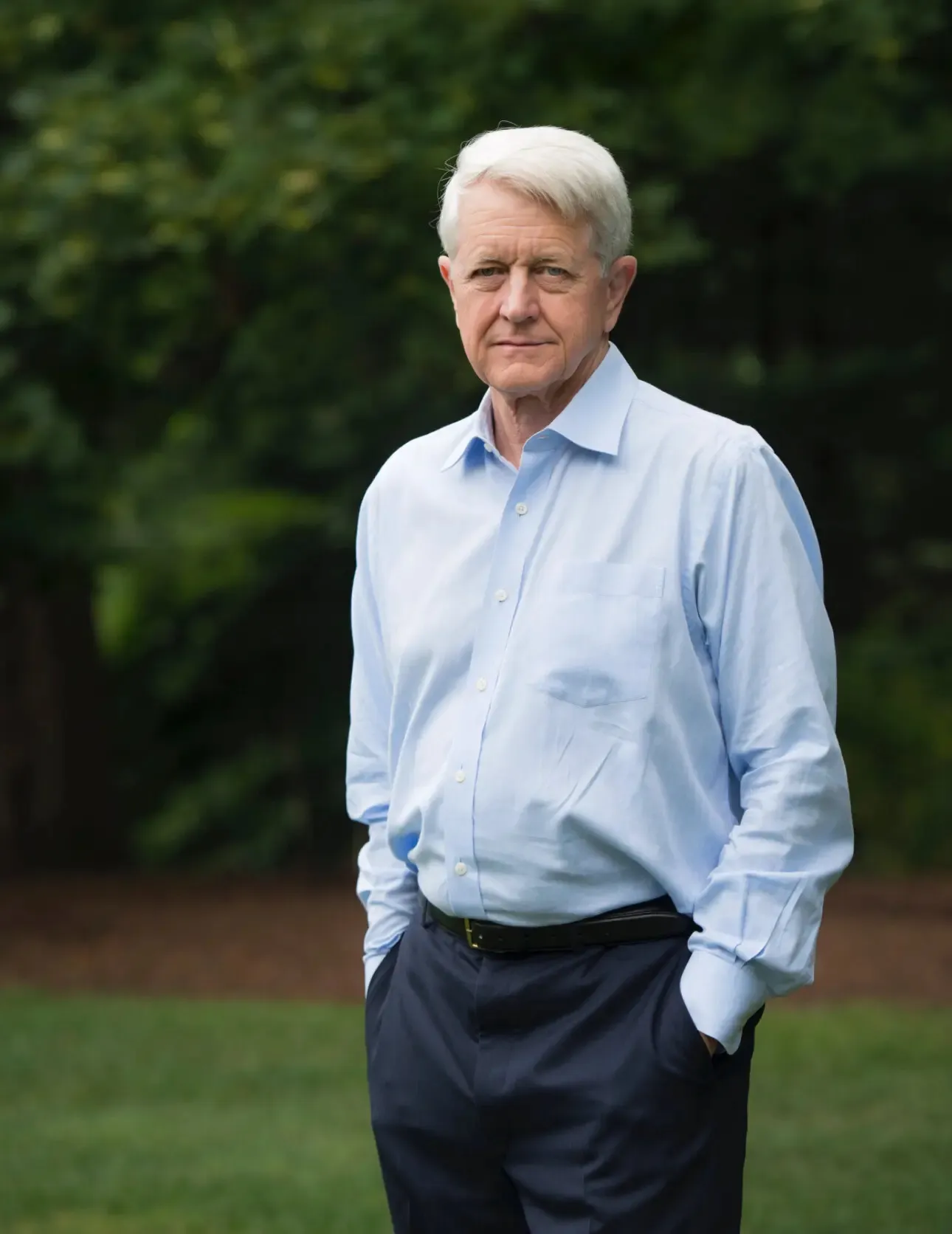
Photo credit: Peter Goldberg/Lewis & Clark College
The following narrative is intended to provide both a personal history and an elucidation of interests and objectives underlying a rather complex career path. While I began professional life in theoretical physics, there have been two major new themes in my work during the past decade. The first relates to science and technology and their relationships to national and international policy issues. This work has ranged from topics in science policy to examination of stresses on international regimes resulting from technological change.
The second major area of work has focused on international energy trade. My interest has been primarily in the framework of policy and trade relations and in the structural shifts that change - at times violently - the international environment for business, government and societies; this interest transcends energy, though the latter has been both important in its own right and fruitful in providing insights into broader issues.
These themes and my engagement with them are discussed more fully in what follows.
ACADEMIC HISTORY
1973 Ph.D., Physics, Stanford University
1966 M.S., Physics, Stanford University
1965 B.A. Summa Cum Laude, Lewis and Clark College, Portland, Oregon
I graduated from Lewis and Clark College with multiple concentrations in physics, mathematics, and English. While the school was strong in the humanities – in which I have great interest, a significant fraction of my physics was self-taught.
I was awarded a Danforth Fellowship for graduate work and was admitted to Stanford in physics, despite a comparative disadvantage in formal preparation. At this time I planned an academic career in physics.
PROFESSIONAL HISTORY
2/75 – 1/77 Program Coordinator, Panel on Public Affairs, The American Physical Society, and Research Associate, Center for Theoretical Physics, M.I.T.
1/74 – 1/75 Executive Assistant to The President, The American Physical Society, and Research Associate, Theoretical Physics, Stanford Linear Accelerator Center
9/72 – 12/73 Research Associate, Theoretical Physics, Lawrence Berkeley Laboratory
I was one of the first theory students to go up to the new Stanford Linear Accelerator Center for thesis work, a move that broadened horizons in several ways – through interactions with S. Drell, W.K.H. Panofsky and others involved in science and public policy activities, and through exposure to a wide range of visitors, including Yuval Ne’eman and other scientists involved in broader policy activities. These wider interests included an early exposure to strategic arms limitations issues, with the first round of SALT talks and ABM Treaty negotiations then underway.
After a year and a half at Berkeley, I returned to SLAC at the request of W.K.H. Panofsky, the Director, who had just become President of the American Physical Society. Panofsky made me his half-time executive assistant and delegated considerable responsibility. I helped develop and coordinate studies of science and public policy issues conducted by the APS. I also drafted analyses and testimony on legislation relating to science and technology, including that replacing the AEC with ERDA and the NRC. I subsequently assisted in institutionalizing this activity in a new Panel on Public Affairs. I also represented Panofsky in many activities, including quite successful discussions in a 1974 lunch meeting with then Vice President Ford concerning the restoration of independent scientific advisory capabilities in the Executive Office.
My basic interests during this period were in the roles of science in national and international policy formation and U.S. policy toward science; I also dealt with U.S.-Soviet scientific relations, which were under recurrent strains and where the Society was being asked by its members to develop policies and take positions.
Ford Foundation-MITRE Corporation Nuclear Energy Policy Study
12/75 – 2/77 Senior Staff Member, Nuclear Energy Policy Study (Ford Foundation/MITRE Corporation)
During my postdoctoral appointment at the Center for Theoretical Physics at MIT, I continued work (with Philip Morse, Herman Feshbach, and Victor Weisskopf) on APS activities and then moved on to the Ford-MITRE study.
During this time I concluded that I would not be satisfied with a full-time physics career, given my other interests.
Between 1975 and 1977, I served as senior staff member for the Ford Foundation-MITRE Corporation study, Nuclear Power Issues and Choices. This work involved evaluation of public and private nuclear technology development programs, as well as analysis of important linkages to economic and geopolitical issues.
Major issues in this study included relationships between research and development programs and ultimate commercial development, government versus private sector roles, cost and technical uncertainties and ways to take these into account in program design, connections between technological decisions and the nature of nonproliferation and international security problems, and international technology transfer issues. The conclusions of this work, which I participated in presenting to President Carter early in 1977, called into question conventional wisdom about the approach and timetables of existing programs. While I questioned the subsequent international policy approach taken by the Congress and the Carter Administration (Foreign Affairs, Summer 1979), the conclusions of the study have proven fundamentally sound.
MIT Research Roles
7/85 – 7/24 Principal Research Scientist, Research Affiliate and Senior Member, Center for International Studies, Massachusetts Institute of Technology
3/83 – 6/85 Director, International Energy Studies Program, M.I.T. Energy Laboratory
2/77 – 3/83 Manager, International Energy Studies Program, M.I.T. Energy Laboratory
At MIT, I have continued work in both technological and international issue areas, though international interests have gradually expanded to dominate my research.
Between 1977 and 1980, much of my international activity flowed from continued work on international nuclear issues, including private high-level bilateral meetings between groups from the U.S. and Japan and the U.S. and the Federal Republic of Germany; participants ranged from members of the Bundestag and Gaimusho to utility officials. The objective of these meetings was to find common ground for discussion of nuclear technology development, technology trade, and international nuclear policy regimes during a period of acute conflict over these issues among members of the western alliance.
During this period, I also continued to be interested in policy areas in which technological and social issues intersect.
During the last five years, much of my research has focused on the interaction of economic and political forces in the evolution of international energy markets, with special emphasis on structural, economic, and security issues arising in oil and nuclear fuels trade. This work has also included studies of natural resource policy formation in both developed and developing nations, industry structure and performance, and linkages to broader issues of economic development, trade, and international relations.
I’ve found it most interesting to work in areas where economic forces play central roles but where there are also important macro-level political forces and institutional constraints. This work has required utilizing approaches from several disciplines, yielding both policy-relevant research results and, at times, new disciplinary insights.
My research has been broadened and complemented by consulting and advisory experience in the U.S. and abroad. I’ve served as an expert advisor on energy markets, technology, and security issues to the U.S. Department of State, the Arms Control and Disarmament Agency, the Office of Science and Technology Policy, and the InterAmerican Development Bank. I have also worked as a consultant to domestic and international companies, agencies and governments on energy trade, resource development, investments, and acquisitions.
Nuclear Trade
My interest in technological issues and international markets has also been mirrored in a seven-year research activity focusing on international nuclear trade issues. This work has dealt with nuclear technology trade, nuclear power in developing countries, nuclear weapons proliferation issues, and international nuclear fuel markets.
Markets for uranium and fuel cycle services have been the locus of a large set of economic and policy concerns, many of which are of broader applicability and interest. These include not only energy security issues, but also governmental natural resource policy, cross-border investment and finance, price formation in immature markets, bilateral trade relations and protectionism, nonproliferation and multilateral regimes, technology development and technology transfer, and others. Research conducted here not only broadens our understanding of international energy markets –but also that of international trade and natural resource development more generally.
This work is reported in the first comprehensive book on this market: The International Uranium Market published by Harper and Row/Ballinger in August 1984.
Energy has been a recurrent theme in my research over the past decade largely because it has been an interesting and important cut through larger issues. These include international trade policy and business strategy, issues of trade and security related to technology, and problems of natural resource development. These also seem likely to continue to be central areas of concern within and among nations and are important areas of future research and policy interest.
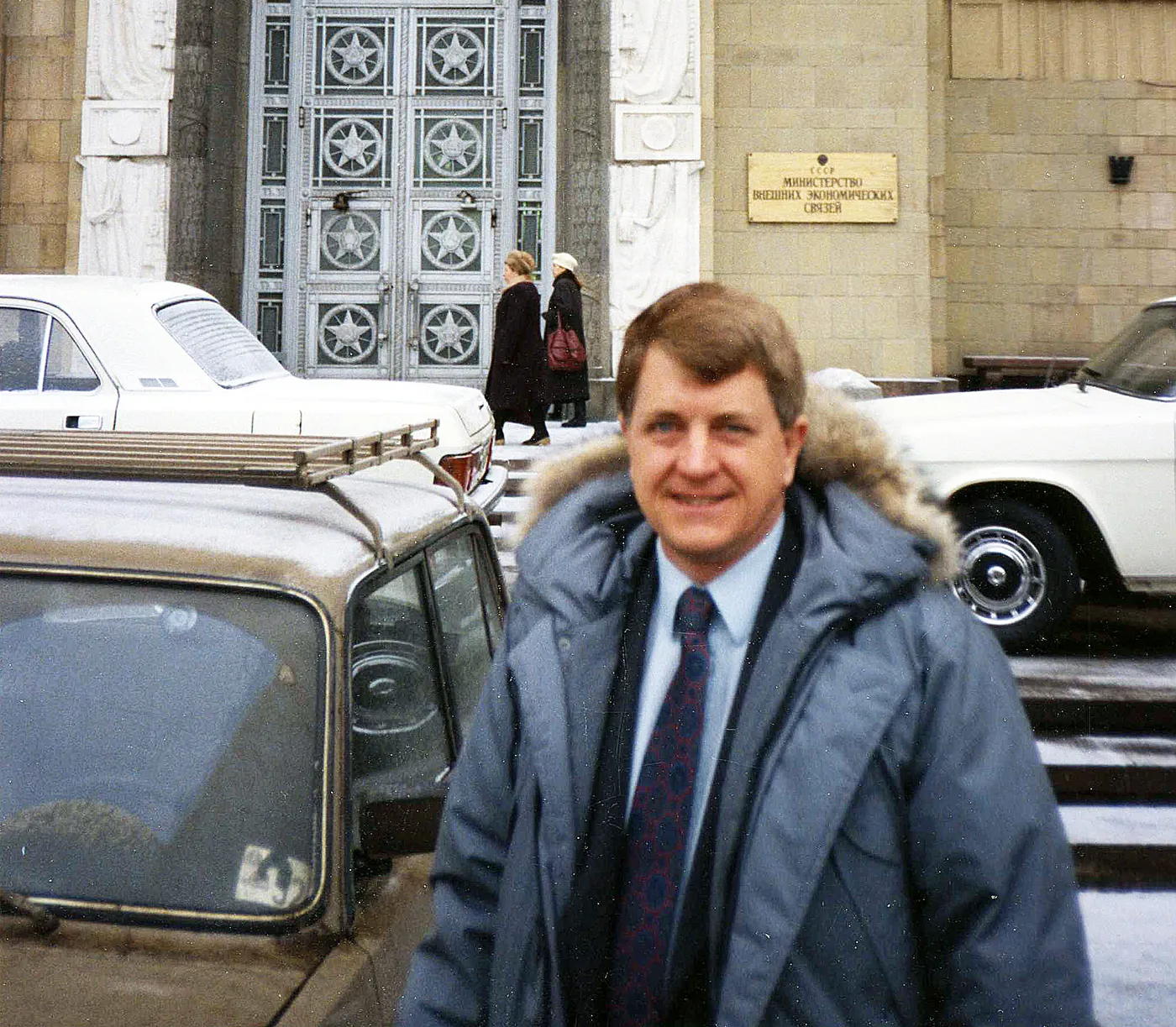
Photo: 1991—dedicated by Beth Harris
Articles & Profiles
- New York Times – “From Warheads to Cheap Energy” by William Broad (2014)
- MIT Technology Review – “A Farewell to Arms” by Anne-Marie Corley (2014)
- Lewis & Clark Chronicle – “The Power of a Transformative Idea” by Jeffrey Lott (2014)
- The Economist – "Thomas Neff’s idea rid the world of a third of its nuclear warheads" (2024)
These articles trace Neff’s path from his Oregon childhood through his quiet but persistent diplomacy. They highlight his ability to bridge science, economics, and politics to achieve what governments could not.
Documentaries
Russian documentary featuring Neff (Watch on YouTube)
- Nuclear Iceberg (dir. Tom Selinski)
Awards & Recognition
- Leo Szilard Award for Physics in the Public Interest (1997)
- Lewis & Clark Distinguished Alumnus Award (2014)
- Fellow of the American Physical Society (1993)
- Ettore Majorana Award, Ettore Majorana Conference on Subnuclear Phenomena (NATO International Institute, Erice, Sicily, 1971)
- Danforth Fellow (1965-69)
"For proposing and working to keep on track the historic agreement for the US to purchase uranium from the former Soviet Union weapons stockpile and to transform it from highly enriched uranium to low-enriched uranium for civilian purposes, thereby significantly reducing the numbers of nuclear weapons."
Legacy & Writings
Beth Harris, Tom's wife, is curating many of Thomas’s articles and writings for future publication. His unfinished book project, based on decades of documents and personal experience, promises to shed new light on one of the most extraordinary cooperative ventures of the nuclear age.