
Women. Peace. Leadership.
Julia Vassileva
Photo taken in the traditional Bunraku Theater, during my research in Osaka, Japan. April 2024.
It is a pleasure and honor to be able to write this first blog post on AC4’s new WPL website, as the first WPL Visiting Scholar during the academic year 2024-2025.
The topic is very close to my heart – for more than a decade now, I have been studying and working in international affairs, and on this path, I have unfortunately encountered numerous personal examples of the difficulties of being a woman – a young woman – and the barriers and obstacles – both external and internal – which prevent women from participating in leadership in all domains, peace, security, and beyond. The barriers to meaningful inclusion are often invisible, taboo topics, disregarded as insignificant. Far too often during my research, I heard people ask, “Why should women be there in the first place?” Unfortunately, instead of being a self-evident fact, the need to justify why, for what purpose, on what grounds, and with which goals, women should lead and be included in all discussions, is still ubiquitous.
My research on peace – in the Caucasus, Eastern Europe, and Asia – has yielded one obvious result: While the global community, including states and international organizations, has repeatedly committed to increasing women’s participation in peace efforts and progress has been achieved in many areas, numerous challenges persist. Women remain underrepresented, particularly in high-level negotiations and leadership roles.
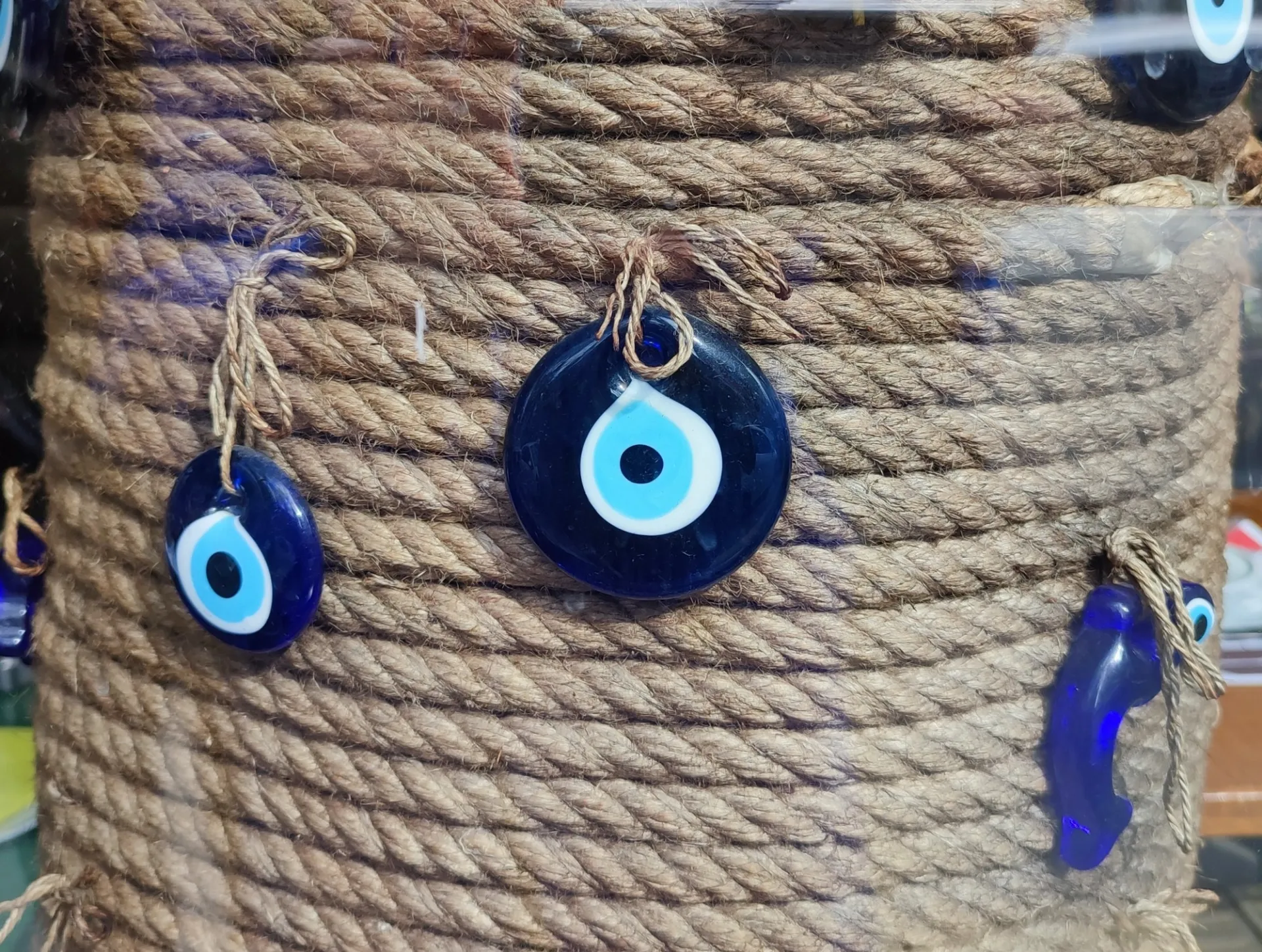
Photo of nazars taken during my research stay in Ankara, Türkiye. March 2023.
It is great that AC4’s new Women, Peace, and Leadership Program delves into the many facets of this critical issue, striving to empower women and build networks of mutual support. The program thereby uncovers pathways for women’s full and meaningful involvement in leadership, negotiations, and peace initiatives. Particular attention is devoted to the concept of “Leadership” which replaces the concept of “Security” in relation to the “Women, Peace and Security” agenda. This emphasizes the shift in focus, and a new and important trend towards a broader conceptualization of the role of women in peace efforts and negotiations.
The new WPL website is also designed to match those aims. For example, the new icon contains the lotus flower – a powerful and versatile symbol found in many cultures and traditions worldwide. While on the one hand symbolizing transcendent beauty, the lotus's ability to thrive in challenging conditions – grow from mud – symbolizes inner strength, perseverance, and the ability to rise above difficulties and obstacles. Through ongoing and future research, events, and initiatives, the WPL program highlights the ways in which women can be empowered to “rise”, lead, and participate.

Photo of chandelier in the Opera & Ballet State Theatre, taken during my research in Tbilisi, Georgia. February 2023.
One of the key findings of my research globally on the topic of women’s leadership and inclusion, is the importance of empowerment of women, building networks of solidarity, mentorship, mutual support, and addressing the topic in the most holistic way possible. AC4’s WPL program sparks discussions on these matters, and through the important work of the WPL program Director, Dr. Beth Fisher-Yoshida, provides an inspiration to rethink and reimagine the role of women in peace and leadership. Thereby, the program is a dynamic platform for exploring sustainable pathways to empower women and amplify their voices in shaping peace.
I sincerely thank Professor Fisher-Yoshida and the entire AC4 research community for being such an inspiration and for placing importance on this topic.

Photo of the beautiful Butler Library of Columbia University, New York. January 2025.