
Frank von Hippel Oral History
Scientist-to-Scientist Cooperation and the Origins of the US–Russia HEU Agreement (Megatons to Megawatts)
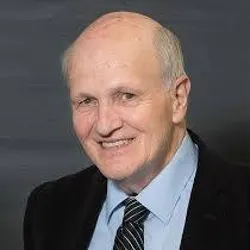
Frank von Hippel — Senior Research Physicist and Professor of Public and International Affairs emeritus at Princeton University
For clarity, this transcript includes minor edits made by Frank von Hippel and footnotes provided by Columbia University, AC4 research institute.
Jeffrey L. Hughes
Well, Frank, thank you very much for taking your time to sit with us and talk about the history of the HEU (Highly Enriched Uranium) deal, and indeed the prehistory of the HEU deal, which you were central to and without which might not have occurred. We mentioned that we had some notional questions to begin to think about the entire deal, but as I say, we're kind of proceeding chronologically, and so this is an evolving process, and they don't apply mechanically to you. And so, in fact, a lot of the best interviews at the American Institute for Physics and so on, have a free-form character, and so we want to follow the instincts of your recollections and what's important.
Also, of course, these events were long ago. I mean, I was looking at your CV briefly, and I was seeing that you were getting your first public service award in 1977 for advice on science on policy, and that's coming up on half a century. And that the pre-history to the HEU deal is, which, by the way, we should say, the “HEU deal” and the “Megatons to Megawatts agreement”, we will use as synonyms for each other, which for the later readers of the interview, the deal proper was from 1993 to 2013.
But I imagine that an important element of our conversation today with you will be on this pre-history that goes back into the 1980s and indeed, we don't have to start here, but I would welcome your thoughts further on the “pre pre-history.” Because your background, in brief, was your MIT undergrad, Oxford PhD theoretical physicist, and early in your career, you were Assistant Professor of theoretical physics at Stanford, and among those that passed through your physics classroom include Tom Neff, who had the original idea for the HEU agreement. Ernie Moniz,[2] later Secretary of Energy, was very involved throughout the 90s and the 2000s in implementing the agreement. Jim Timbie,[3] who was a factor all along, a physicist moving to public policy, and others of your students. John Holdren[4] became Obama's science advisor and was very involved before that. Actually, back to the 80s with you with the Soviets in some of the interactions, if I recall correctly. And then Richard Meserve,[5] who was involved in reaching out to Russia with Dan Poneman[6] and others in the 90s, and then NRC (Nuclear Regulatory Commission)[7] Chairman, etc, etc. So you had quite an interesting group of theoretical physicists that also became very engaged in public policy and sort of rose to the occasion.
So anyway, recollections back then of how that cohort of physicists then moved into public policy, and your interactions with them, many continuing over time, will be of interest. And also, again, recognizing these events were long ago, moving from the “pre pre-history” just to the pre-history when you were reaching out with the Soviets, if you have any general thoughts about how scientific cooperation builds a platform for future, even larger, effective cooperation, you may also have some vignettes about some of the relationships that you built with people who were critical to that, like Evgeny Velikhov[8] or Sagdeev (Roald Sagdeev).[9] And indeed then your interactions again with Neff, and bringing him together with Mikhailov (Viktor N. Mikhailov)[10] in October 1991.
So that's a quick framing for some of the future audience for the interview about the backdrop, your role in it, and we would love to hear any thoughts that you may have, in general. You may have a general statement that you just want to riff on for a while, and then we can cycle through with more specific follow-up questions to prompt you and your memories, as appropriate.
Frank von Hippel
Okay, well, let me just respond to a couple of things you said in your opening. One is, how did we all, this group of Stanford physicists, migrate into public policy, and it certainly wasn't my influence. Even though I did teach them some first-year graduate physics courses, it was the Vietnam War. I think that really got us all questioning our priorities with regard to how we were going to spend our lives, and a real concern for where the country was going. And in a way, I hope the current [foment] has a similar impact on a new generation of folks to get them involved in public policy.
So the other thing is about the Soviets that we engaged with, in particular, the leadership of the Committee of Soviet Scientists for Peace and Against the Nuclear Threat.[11] (They weren't good at making short, snappy names for their organizations; they didn't want to leave anything out!) I don't think it's an accident that the Chairman of that group and the Deputy Chairman were both fusion physicists, because fusion really was the most open area of physics research internationally. And I think that was because people did not expect, and they correctly did not expect, any short-term economic payoff for that research. And therefore, you know that advancing it in a cooperative manner made sense, rather than competing. And, in the case of Sagdeev, that started with the Atoms for Peace conferences.[12] I think with the 1954 Atoms for Peace conference (the 1955 International Conference on the Peaceful Uses of Atomic Energy) in Geneva—that may have been ‘55—when the US and the Soviets both brought their fusion physicists to present on their ideas. And that may have been when the Sakharov (Andrei D. Sakharov)[13]'s tokamak[14] sort of took over the field. (Apparently, there are some different ideas resurfacing now.) So they were comfortable with Americans. Both of them knew good English. Both of them had traveled internationally quite a bit. When I met Velikhov for the first time in 1983, when the leadership of the Federation of American Scientists, including John Holdren—I was the chairman, and John was the vice chairman at the time—but it was really driven by Jeremy Stone,[15] who was the full-time president of the FAS. So we came in with one other FAS staffer, and Velikhov met us at Sheremetyevo airport, and he was wearing a Princeton tie.
Jeffrey L. Hughes
He's a real diplomat!
Frank von Hippel
But Princeton at the time was the center of the US fusion program. It has a small national laboratory, a DOE National Laboratory, and the plasma physics lab. So it was great. And they were also wonderful, warm, humorous characters. And if you’d like, I’ll just expand a little bit on that.
Jeffrey L. Hughes
Yes, please.
Frank von Hippel
We had a meeting in Moscow, and then we flew to Tbilisi for some reason; they decided that's where we would have our main meeting. Gromyko (Andrei Andreyevich Gromyko)[16] was
Jeffrey L. Hughes
Foreign minister.
Frank von Hippel
long-term foreign minister. And his son came along, he was an Academician,[17] with some TV cameras to record this event. And Jeremy got very nervous that we might be exploited somehow, and so he asked me to ask Velikhov: enough with the cameras! And so Gromyko and his cameras went away. But the reason for the meeting, just to go back a step further, was that Velikhov's scientists group had formed in reaction to Reagan's March 1983 Star Wars speech[18] promoting what the critics called “Star Wars.” And as far as I can reconstruct, Velikhov organized this committee of Academicians and they wrote an open letter to the Western scientific community, reminding us of the back and forth that had occurred in the late 60s and early 70s that had laid the basis for the ABM (Anti-Ballistic Missile) Treaty,[19] which limited the number of interceptors each side could deploy to an insignificant number. And I don't recall whether they went through the argument, but the basic argument that was made in the late 60s and 70s was, first of all, the defenses can be easily neutralized, and if not, they can be overwhelmed. And, in fact, what happened is ultimately the Soviet Union deployed 64 interceptors around Moscow, and then we deployed 1000s of extra warheads by putting multiple independent vehicles on our ICBMs and sea launched ballistic missiles. So they said, "Have you changed your mind?" And we wrote back, saying, "No, we haven’t—the FAS certainly has not changed its mind." And then Jeremy followed up and actually set up this visit so we could brainstorm. Jeremy had gone to Moscow several times in the period leading up to the ABM treaty to promote it himself. So he'd been part of that debate. And then, we had been boycotting the Soviet Union, after Sakharov was shipped off to exile in Gorky in 1979, when he came up against the Soviet invasion of Afghanistan. So we did lobby, especially Jeremy, for Sakharov, for the release of Sakharov in that meeting and in subsequent meetings.
Jeffrey L. Hughes
I recall a picture of you with Sakharov, too, which probably helped in some ways.
Frank von Hippel
That came later, after Sakharov, in fact, was released in late 1986 or early 1987.
Jeffrey L. Hughes
I was actually on a plane back from the Soviet Union that Sakharov was brought on to. So I actually observed that departure to the United States.
Frank von Hippel
Oh, yeah, that's later on then that Sakharov was allowed to travel to the United States.
Jeffrey L. Hughes
Right, anyway, sorry to interrupt your train of thought.
Frank von Hippel
Yeah, so that's the two points I wanted to make in response to your introduction about the effect of the Vietnam War on our group, and probably many other folks, in terms of changing their career priorities. And then how I first met Velikhov, and we opened up a channel with a sort of brainstorming style. In parallel, there was also a discussion going on between the National Academy of Sciences Committee on International Security and Arms Control,[20] which opened up maybe a few months before our visit on a more formal basis, more set-piece discussions, more organized discussions than we had. And Velikhov, by the way, was the chairman of the Soviet Academy Committee, which was engaging with the US Academy Committee.
Jeffrey L. Hughes
Yeah, he's ubiquitous. I think your point about fusion, I recall in his memoirs that he talked about as a fusion scientist being given leave to travel to the West, which clearly helped influence his outlook on them.
Frank von Hippel
You've read his memoirs.
Jeffrey L. Hughes
Yes, yes.
Frank von Hippel
The first time I tried, I thought, this is just a crazy stream of consciousness, but then, in fact, I've returned to it, and I've gotten more and more out of it with time.
Jeffrey L. Hughes
I did the same thing, and I cited throughout my Megatons to Megawatts account. He is quite an interesting and persistent character. He has a lot of imagination, and he brings initiatives to the table; and then if it's not in his wheelhouse, he moves on, but he's done something catalytically constructive.
And so, you and Velikhov in the 80s working out of this — you've traced the history now back even further to the 60s and the 70s, and some of the scientific cooperation and interactions on the ABM Treaty.
Frank von Hippel
Those interactions, by the way, were not only Velikhov's, but key roles were played on the Soviet side by two mentors of Velikhov, both of whose positions I think he inherited. One was Artsimovich (Lev Artsimovich)[21] and the other one was Millionshchikov (Mikhail Millionshchikov),[22] and they were the first generation of Soviet physicists to engage in these—actually, they did it on the edges of the Pugwash[23] meetings. It was something called the Soviet American Disarmament study group, or something like that, which was co-chaired on the US side by Paul Doty,[24] who was actually a biochemist who started breaking the physicist dominance, and on the Soviet side by Millionshchikov. And the discussion was—initially a debate where the Soviets were saying, defense is good, offense is bad, and then slowly being persuaded by the US participants that it would be counterproductive.
Jeffrey L. Hughes
I don't want to take us too far in the pre pre-history direction, but it is interesting to reflect that Khariton (Yulii Borisovich Khariton)[25], who was the head of the the Soviet and then late Russian nuclear complex for over 50 years—he did his work sometime in the 1910s, 20s, at Rutherford’s Lab,[26] and doing stuff when science was very international. And it was sort of an international web of science which was broken by the Cold War, but there were still sort of these incipient outreaches. Anyway, it's interesting how this...
Frank von Hippel
It's not relevant here, but I have a good story about Khariton. At some point, I met him, actually.
Jeffrey L. Hughes
Yes, yes, it was in your memoirs, and that runs it forward. It shows the importance of trust and trust building. When Khariton came to visit you, not having met you before, but — so you and Velikhov, then, based on that track record up to the mid 80s, where he enlisted you to brief Gorbachev,[27] and that began to build some trust with Gorbachev on what might be done, and if I have the sequence properly, with Velikhov leaning forward, that was able to lead to some other collaborative agreements on monitoring of warheads and the like.
Frank von Hippel
Maybe I can just go through that if you’d like.
Jeffrey L. Hughes
Sure.
Frank von Hippel
We had a discussion with Velikhov's group for a couple of years—well, a year and a half, I guess—before Gorbachev came into power.
Jeffrey L. Hughes
You've got a lot of patience.
Frank von Hippel
We were trying to ...
Jeffrey L. Hughes
You were motivated.
Frank von Hippel
We had no idea that things might take that turn, but we were doing our best. And then the first thing Gorbachev did in the nuclear weapons area was to pick up where Khrushchev[28] had left off, and to try to get a Comprehensive Test Ban Treaty (CTBT).[29] And the way he did it was with a moratorium, a unilateral moratorium, which Khrushchev had done in, I think, 1958. And the Eisenhower Administration did ultimately respond and joined in the moratorium. But the Reagan administration was not interested in doing that, so it was a time-limited commitment that Gorbachev made—in fact, it remained unilateral, I think it was initially to the end of 1985, and I think it was ultimately extended another year. But the Reagan administration brushed it off. And so Velikhov tried to keep this initiative alive, I think, it was really for the politics within the Politburo (Political Bureau).[30] People were saying, "It's not working. Forget about it. Let's let our boys get back to testing."
And so, in the fall of 1985, Velikhov and I were both invited to Copenhagen for the centennial of Niels Bohr’s[31] birth and to talk about Bohr's idea of an open world, which Bohr thought would be a prerequisite for nuclear disarmament. Recently I was having a debate with Tom Cochran,[32] and I fished out Velikhov's talk at the conference. And at the end of the conference, he says, the "Reagan administration, among other things, said, ‘Well, how do we know they really did stop? Maybe they're making small tests.’" That was why, in fact, the partial test ban hadn't become a comprehensive test ban, because the Soviets weren’t willing to agree to the level of onsite inspections that the US, the Kennedy administration, was demanding. So Velikhov said, “Well, why don’t we do it ourselves? “at the end of this speech. “And why don’t we—what the hell, with the governments—let’s just do something!” And he repeated that, and it didn't register on me—I was jet lagged during the speech, but when we sat together on the bus going back to the hotel, and he said to me, "Why don't we do something? Why don't we get some group interested, a non-governmental group interested in monitoring?"
And so I looked around to see, and Tom Cochran was very interested. And there were a couple of other groups. Jack Evernden,[33] with the US Geological Survey,[34] was interested. But he would have never been allowed to by the Reagan administration. And then there was the Parliamentarians for Global Action (PGA)[35]—they also were interested. And so, actually, we were trying to encourage them to keep the moratorium going. And they did. And so then in April 1986, a couple of the co-chairs of the parliamentarians, one from Iceland and one from the Netherlands. (The one from Iceland became sort of the Franklin Roosevelt of Iceland.) He became the president of Iceland for many terms. They invited me along as their scientific advisor to a meeting with Shevardnadze (Eduard Shevardnadze)[36].
Jeffrey L. Hughes
Foreign Minister of the Soviet Union.
Frank von Hippel
The purpose was to encourage the Soviet leadership to extend the unilateral test moratorium. And so we met with Shevardnadze, and then I asked if Velikhov was around, and somebody said, "Oh yeah, no, we don't think so. We saw a picture of him on TV skiing in the Caucasus."
Jeffrey L. Hughes
He did like to ski.
Frank von Hippel
Then it turned out that he was in Moscow, and I went over to his office at the academy, and I walked into his office, and the first thing he said to me was: "You got any ideas?"
Jeffrey L. Hughes
That's a good question.
Frank von Hippel
And I said, "Well, there are some groups that are interested in your idea of monitoring the moratorium." And he said, "Well, let's invite them to Moscow." And so we did. The three groups came in May 1996, and it turned out that only the NRDC (Natural Resources Defense Council)[37] was able to move.
Jeffrey L. Hughes
1986, is that right?
Frank von Hippel
Yeah, May 1986. Only the NRDC group was able to move forward. The parliamentarians somehow were constrained to do this only if it was bilateral, if the US joined the moratorium as well.
Jeffrey L. Hughes
Yeah, I was intrigued by that thought because there's Pugwash going on, but then some of the very effective steps end up being developed bilaterally between you and Velikhov, so it seems like they were both constructive, but the bilateral may have been particularly important between the Soviets and the US to build these bridges.
Frank von Hippel
Well, yeah, but the parliamentarians were demanding a situation in which the US had a moratorium, as well as Russia. Then they would work to verify that we were both having a moratorium, and that wasn't going to happen.
Jeffrey L. Hughes
Purist approach.
Frank von Hippel
Yeah, cautious approach, I think. And so Tom [Cochran] had the chairman of his board along, so he was able to commit the organization, NRDC, that they would raise the funds, and the parliamentarians made a major contribution because Tom didn't know any seismologists.
Jeffrey L. Hughes
I should just briefly interrupt, Tom Cochran is a physicist as well, to make it part of your account.
Frank von Hippel
Tom and I had worked together on fighting the plutonium breeder reactor program.
Jeffrey L. Hughes
Clinch River.[38]
Frank von Hippel
Yeah. So, they made a commitment, and Velikhov said, "Well, come back as soon as you can with your seismologists." And they actually did come back in July with seismologists, and I think Tom said, 25 tons of equipment, and flew to Kazakhstan. And this was being done in partnership with the Institute of Physics of the Earth[39] on the Soviet side. So it was a joint project.
Jeffrey L. Hughes
I remember seeing a picture of Tom [Cochran] and Velikhov in Kazakhstan.
Frank von Hippel
Yeah, that’s right, and it was good that they moved so fast, because actually Gorbachev hadn't had time to discuss it with the Politburo. And so he did get around to it in July, and the hardliners in the Politburo didn't like this unilateral stuff at all! And so at the end of it—Velikhov told me the story—at the end of it, Gorbachev turned to him and said, "Well, maybe we can't do it," and Velikhov told me later, he said, "Sorry, boss, they're already there."
Jeffrey L. Hughes
It's a delicate situation, but sometimes it's better to apologize and ask permission.
Frank von Hippel
Yeah, and Velikhov, he really was bold, I must say, remarkably bold. So, actually, I didn't say that at the May meeting. Mikhailov was there.
Jeffrey L. Hughes
So that's important.
Frank von Hippel
Mikhailov was, although he was there, sort of incognito.
Jeffrey L. Hughes
So he was, by then, a First [Deputy] Minister in MinAtom (Ministry of Atomic Energy).[40]
Frank von Hippel
Well, at the time, he was the head of the lab, which is responsible for testing. That was Research Institute of Nuclear Impulse Technology.
Jeffrey L. Hughes
Oh yeah, Research Institute of Nuclear Impulse Technology.
Frank von Hippel
It wasn't either the weapons design labs; they had a separate lab based in Moscow.
Jeffrey L. Hughes
Oh yes, yes. He had moved back to Moscow because his wife didn't like living in Arzamas-16.[41]
Frank von Hippel
I think they really specialize in instrumentation for tests.
Jeffrey L. Hughes
Which he had overseen and been involved in about 100 tests to that point.
Frank von Hippel
Right. So, he was there. And I think he was there really to defend the interests of ...
Jeffrey L. Hughes
The nuclear complex.
Frank von Hippel
They didn't want this to be too intrusive. And so, the seismic stations that the NRDC group set up were a couple of hundred kilometers from the test site, but the test site was quite remote, really in the deep interior of the Soviet Union, which is unlike the situation with the Arctic test site. The Soviet Union had two test sites: one was on Novaya Zemlya,[42] an island in the Arctic, but it never became an issue, because the Norwegians had very fancy arrays on Svalbard,[43] the Arctic archipeligo, and in Norway, and so they already could monitor that test site, actually down to the level that the NRDC group demonstrated in Kazakhstan. The NRDC demonstrated the sensitivity of their seismic stations by having ten tons of buried chemical explosives set off on the test site.
Jeffrey L. Hughes
Wow. That's not something you do every day in the Soviet Union.
Frank von Hippel
Well, I suspect the Soviets did it for them.
Jeffrey L. Hughes
Right, but still…
Frank von Hippel
They didn't bring in their own explosives. So anyway, Mikhailov got the sense of what was going on here, and I think that may have helped open up to him the possibility of cooperating with American groups. That's why I mentioned that he was at that event.
Jeffrey L. Hughes
Well, if I might interrupt briefly to mention that was before the joint verification experiment,[44] which was around 1988-89, that became vital in Mikhailov's going to Nevada for monitoring tests and meeting US weapons scientists. So I remember later in your memoirs, and related essays, that when Mikhailov was later Minister—I'm rolling the tape forward a little bit here—but he was meeting with his Secretary of Energy, O'Leary (Hazel R. O’Leary),[45] and then you were coming over from the White House, and then you showed up and he said, "Oh, here's Frank von Hippel. Now, I know we can do business," or something like that.
Frank von Hippel
That's right. That was in the 90s.
Jeffrey L. Hughes
Wasn't that about 93, I think.
Frank von Hippel
That's right. I'm just trying to remember the context of what was going on there in that first meeting with O'Leary.
Jeffrey L. Hughes
Yeah, well, we can come back to that. So now Mikhailov has witnessed Velikhov—this outreach with you— and he got some buy-in. And then later this led into the joint verification experiments—the first outgrowth of Russian weapon science labs and US weapons labs like Los Alamos.[46] Sig Hecker (Siegfried S. Hecker),[47] later director of Los Alamos, was part of the lead of the US team, and Mikhailov was leading the Soviet team. And that would be later important on a different avenue than the HEU agreement—on the [nuclear] materials control and accounting.
But I suspect, and I'd be interested in your sense, that when Mikhailov later comes to the October 1991 meeting that you helped organize with the Federation of American Scientists and NRDC, that would be the first opportunity, growing out of these earlier buildings of plausible interactions with the Soviets, where Mikhailov and Neff would meet. And I'd be interested in any kind of recollections you have of that meeting with Mikhailov and Neff being there, and how that HEU genesis concept was discussed and later written up by Chris Paine.[48] I'll stop there for a minute.
Frank von Hippel
You're right to bring up the joint experiment, which was between the US weapons labs and the Soviet weapons labs, and that was to solve an artificial problem that had been created by the Reagan administration. The Reagan administration was claiming that the Soviets were cheating on the Threshold Test Ban Treaty,[49] which limited the tests to 150 kilotons, and the seismologists were saying: ‘No, you’ve got to take into account the fact that the rock is harder along the path from the Soviet test site to the seismometers than it is in the Nevada case. If we correct for that—the fact that seismic signals propagate better from the Soviet site—then they seem to be complying with the treaty.’ But the Reagan administration hung out for these seemingly impossible [conditions]—they wanted [verification] actually on-site.
Jeffrey L. Hughes
The “Prince of Darkness”...
Frank von Hippel
But then things had changed so much. It opened up so much by that time that the Soviets—what was the year? What was the date of the JVEs (Joint Verification Experiments)?
Jeffrey L. Hughes
I think President Reagan, or Shultz (George Shultz),[50] may have announced it in the Rose Garden in 1988, and I think that there was a test in the Soviet Union, and then there was a test in Nevada, and so it may have played out over 1988-89. I could be incorrect.
Frank von Hippel
Well, that was the requirement, which seemed to be impossibly intrusive, because basically it involved the scientists of the other country on the test site, and actually in placing instruments in a borehole within 10s of meters parallel to the borehole down which the warhead was sunk. But the Joint Verification Experiment was another example of what I call “nuclear glasnost”[51] (openness). I don't know whether Velikhov was involved, or whether somehow they caught on within the Soviet nuclear establishment.
Jeffrey L. Hughes
I believe he was very involved, and he was actually in Nevada for the test in the US. And if I recall correctly, this may have been his memoirs, or may have been somewhere else, but he was elected as the temporary mayor of a town in Nevada!
Frank von Hippel
Yeah, I remember that in his memoir. So, the threshold test ban had been negotiated by Nixon, I think, during his impeachment hearings, which I guess were in 1973. It was his effort to show that he was still president and could do foreign relations. But then Reagan got hung up on this accusation, on the question of whether the Soviets were cheating. And so [the JVE] resolved that. And then finally we got the Senate to ratify both the threshold test ban and the peaceful nuclear explosions limitation. So the labs were doing their own things. And there was a first meeting between the lab directors—I think it must have been before the joint verification experiment—and one of the US lab directors said, "We never thought of you as the enemy. We always thought of (the other US weapons lab) as the enemy!" And so you know that Hecker has his very big two volumes [about the ensuing period].
Jeffrey L. Hughes
Right, "Doomed to Cooperate" (Doomed to Cooperate: How American and Russian Scientists Joined Forces to Avert Some of the Greatest Post-Cold War Nuclear Dangers), a phrase taken from Ryabev (Lev Ryabev),[52] one-time Minister and later long-time Deputy Minister, “Don” of the nuclear complex, which also echoes a phrase of Sakharov from decades earlier (Progress, Coexistence & Intellectual Freedom).
Frank von Hippel
I see. So anyway, we had, in parallel, the NRDC seismologists being in Kazakhstan. Velikhov had organized an International Conference on the Test Ban in July 1986,[53] at the same time, and I was one of the invitees. That was the first time that Velikhov asked me to present conference conclusions to Gorbachev. So I gave Gorbachev a PowerPoint… It was not a PowerPoint; it was transparencies.
Jeffrey L. Hughes
Right, the good old days.
Frank von Hippel
And so that was the first time. There was a second time—it was a bigger event in 1987, where I was invited to present the results of the Scientists’ Conference on Nuclear Disarmament at that point to Gorbachev. And I wondered, "Why me?" There were plenty more senior people around. And I concluded—and I guess I could still ask Sagdeev whether he has an opinion on this, as Velikhov is gone, but Sagdeev is still around—my theory has been that it was because Chairman of all the American scientists – not just this small NGO, it sounded like it could be misunderstood, that this is
Jeffrey L. Hughes
Like the ruler of American science.
Frank von Hippel
“Chairman of all the American scientists – not just this small NGO.” So, that's my theory.
Jeffrey L. Hughes
Or Velikhov's words, probably to Gorbachev, that you were a worthy presenter.
Frank von Hippel
Yeah, and I think this was really about internal politics, and to try to get the hardliners to go along with Gorbachev. And our meeting—this small meeting we had with Gorbachev—was the headline story on the next day's Pravda.[54] And so I do think it was domestic politics that was going on. It was funny when I came back from this. I was interviewed by a local newspaper, the Trenton Times, and they asked me, "Would you be willing to meet with President Reagan?" And I said, "Sure, I don't think that he would be interested. He wouldn't be interested, but I should be happy to do that," and they had the headlines: "Von Hippel willing to meet with President Reagan!"
Jeffrey L. Hughes
All right, I would note by this time, President Reagan had, perhaps strongly influenced by Secretary Shultz, made a turn towards embracing Gorbachev, more and willing to test glasnost and the like.
Frank von Hippel
Although they never got to the point where they were interested in the Comprehensive Test Ban Treaty.
Jeffrey L. Hughes
Right, yeah: you can't take on everything at the same time. But by this time, I was actually in the Reagan White House and the NSC (National Security Council),[55] as a young apprentice there in 1986, and you could see some changes there. And indeed, I was involved in the Nuclear Risk Reduction Center,[56] that had Shultz and Shevardnadze standing in the Rose Garden, which was a “Warm Line,” as compared to the “Hotline.” So it wasn't a huge nuclear deal, but it was a sign of the turn of the Reagan administration reaching out to embrace the prospect of nuclear cooperation with the Soviets.
And then the Soviets started to unravel. Recall when you started getting worried about what happens with the Soviet Union, because at some point Neff—this is even before they collapse, not a long time before, but I guess it was after the coup attempt on Gorbachev in 1991 August—this idea that "maybe the center won't hold and what do we do then?" came up. And I don't know what your recollections are about, "Oh my gosh, we’d better get together our Soviet scientific colleagues, such as they are, and how do we begin to think about this in an NGO and crossover within weapons labs?"
Frank von Hippel
Well, later on, I became involved with this when I joined the Clinton administration for a year and a half, but during this period, and in particular for the meeting that Mikhailov came to…
Jeffrey L. Hughes
October '91.
Frank von Hippel
Yeah, the initiative really was coming from the NRDC. Tom Cochran had been at the NRDC, and they, for some reason, were generous in making the FAS a co-sponsor, and even may have given us lead listing. But in fact, they were doing the organizing, they were doing the work, and so they invited, and Tom and Chris are still around.
Jeffrey L. Hughes
I just got an email from Tom, and we're going to interview him soon, too.
Frank von Hippel
Okay, so he can give you more of the background of how they actually arranged this, and my recollection—I haven't refreshed it—is that this meeting was about the conversion of
Jeffrey L. Hughes
warheads to more peaceful status?
Frank von Hippel
Well, maybe it may have been warheads, but I think it's also about the labs, the weapons labs—"what could they do besides making nuclear weapons?" They were just like our weapons labs; they were grossly oversized for the new context, and so it may have been that meeting, I think it was at that meeting that a group of Soviet weapons scientists came with a proposal—they had set up a company to provide nuclear explosion services.
Jeffrey L. Hughes
Oh, I think this was in conjunction with Mikhailov on how to get rid of chemical weapons.
Frank von Hippel
That was the first application—they were going to destroy chemical weapons. But it was called Chetek or something like that?
Jeffrey L. Hughes
Yeah, I think you're right. It would be efficient, but not popular.
Frank von Hippel
And so we didn't have much success, and later on, there were some DOE efforts, the Nuclear Cities Initiative.[57]
Jeffrey L. Hughes
Right. Just to stop you there and roll you back to the October meeting, because it's important in the HEU history, from the records I've found, that Neff, in looking at the frail Soviet Union, began to think about "How do we take these weapons materials and then put them into a form that could be used in civil reactors that the US could either buy or barter for with food and the like?" And that, by some dint of your own historical relationship with Neff, you became aware of that idea. And then, as the NRDC-Federation of American Scientists meeting in October began to come together, you invited Tom to that meeting…
Frank von Hippel
That was my one initiative.
Jeffrey L. Hughes
It was important because I believe the Department of Energy didn't allow sitting weapons scientists to go, but you ended up having retired, very distinguished weaponeers that had headed the design division, etc, there that gave credibility. But Mikhailov — I believe Cochran had close, pretty good relations with Mikhailov and has written histories about their nuclear complex — somehow, Mikhailov was invited, so he was there. And that meeting then provided an important opportunity for Neff to take the initiative. I'll just let you see if you have any recollections about that.
Frank von Hippel
No, I think Tom [Cochran] is the right one to talk to about what kind of relationship they were building on that resulted in Mikhailov coming to that meeting.
Jeffrey L. Hughes
You were aware of Neff's idea beforehand and invited him to the meeting.
Frank von Hippel
I think it was completely coincidental that Tom [Neff] had contacted me in that period about his idea. He was aware that I was involved with nuclear disarmament in the Soviet Union in some ways. And I said, "Oh, it just happens that there's this meeting coming up, and why don't you join us?"
Jeffrey L. Hughes
Wow. Just as an aside for the later readers of the interview: this meeting was one that Neff, with his soon-to-be-published [New York Times] op-ed, that he had a copy of it in his pocket, decided not to go back into the [NRDC/FAS] meeting after lunch session or something. And Mikhailov was smoking in the hallway. Neff then approached him with his idea and made the pitch to do the HEU Deal.
Frank von Hippel
Yeah, I think I introduced them, but…
Jeffrey L. Hughes
Wow, there you go. That's not insignificant.
Frank von Hippel
But I'm not positive about that recollection. But I think I did, because I do recall Mikhailov was a chain smoker, we didn't want him to chain smoke in the meeting room. So he was largely excluded from the meeting, and he was out there leaning against the wall in the corridor. And I did introduce Tom to him, and then Tom made his pitch. And I may have been there for at least part of the pitch.
Jeffrey L. Hughes
Hmm…that's only appropriate.
Frank von Hippel
And from then on, it was really Tom really engaging. I was just a witness.
Jeffrey L. Hughes
Yeah, you've been very generous in Neff’s deserved credit for the Deal. I think to run the tape to the end of the Deal, I think you had an expression that this was” the biggest single step in arms control.” And also words to the effect that it's one of the few times you can credit an initiative of this scale to a single individual.
Frank von Hippel
Yeah, I think I did say that [which] one can really credit to a non-governmental individual. That’s right. But it was a big Deal on any scale. And I did get involved a couple times. At least once, I remember, I was involved with a meeting with Senator Domenici (Pete V. Domenici)[58] when Tom Neff was trying to rescue—one of the times he tried to rescue the deal. Domenici actually put it in some funding, I think.
Jeffrey L. Hughes
I was very involved in that. By the way, I first met Tom [Neff] in the State Department right after his op-ed. It was like November '91. And later at the Department of Energy, I had the pleasure, the challenge of working with him, being an outsider in the government, and he was willing to criticize the US going off the rails, as well as the Russians. And I [much later] characterized him as the “Sherlock Holmes” of the case. He was doing his own reasoning thing. [But] this particular issue [you mention with Domenici was later,] was after the natural uranium feed agreement, which was split off from the SWU (separative work unit)[59] part of the deal, had created problems and stopped the agreement. And then this was related to the USEC[60] privatization that had revealed its own holdings that then tanked the natural uranium market, and the agreement that was all set to go forward with the Russians to get it going again. And so Domenici got the money to pull that off the market.
Frank von Hippel
Yeah, and I do remember. I think that was probably right after the senator refused to ratify the CTBT, and I asked Domenici, "Why did all the Republicans line up against the CTBT?" He said that the majority leader had made that into a party issue—party discipline, basically imposed party discipline, on the senators that they all had to, and I think Domenici himself actually was at least ambivalent about voting against the test ban. He was from New Mexico, and in fact, later on, after I was in the Clinton administration, I was for five years on a review panel for the non-proliferation program at Los Alamos. And I happened to be at Los Alamos once when Domenici came through, and they called him St. Pete.
Jeffrey L. Hughes
Right, right, I remember.
Frank von Hippel
They just pulled the whole lab together into an auditorium to listen to him talk about it. And he actually did talk about the test ban. He was in favor of the test ban, and the labs had been convinced, I think, by all the money that came with the science-based stockpile stewardship program.[61]
Jeffrey L. Hughes
Right, right.
Frank von Hippel
So it wasn't inconsistent with his taking care and feeding of the Los Alamos.
Jeffrey L. Hughes
Right. If I could just take us back for a second—and again, we've already mentioned generous accolades that you've awarded to Tom Neff, justly deserved—I was intrigued, when I was researching my tome, trying to capture some of this history, and now hopefully we're adding to it with more detail with some of these interviews, that both you and Tom wrote advocacy letters for the HEU agreement that are published in the Congressional Record. Yours were in conjunction with Senator Pell (Claiborne Pell).[62] And Nunn–Lugar (Nunn–Lugar Cooperative Threat Reduction Program)[63] was [also] in the process of being developed, because Senator Nunn[64] was very concerned about "What about all these nuclear weapons and materials in Russia, and how do we get governmental aid on it?" And Tom's proposal by this time had already been published in the New York Times in October of 1991, and so there was a push by Senator Pell to try to finance, but with governmental means, the HEU deal, and either use agricultural products or federal funding, which in some respects would be a logical, quick way to do it. But anyway, I'll find the Congressional Record thing, but you were writing an advocacy right next to Tom on behalf of the deal. So it's a long time ago, but anyway…
Frank von Hippel
I've forgotten that entirely.
Jeffrey L. Hughes
And then, because of the politics of the moment, and the challenge of: "Well, we're hurting at home. How do we send federal dollars over to Russia?" It was very difficult for even Nunn–Lugar to get through. And [Congressman, and later Defense Secretary,] Les Aspin was also involved. And then it was ultimately Nunn–Lugar was able to, on a second try, get that federally funded defense department-based program to go through, whereas the HEU deal was an idea that was out there, and the seeds have been planted in Mikhailov’s mind as much as as anyone…
And Velikhov—from what I've been able to pull together after Yeltsin[65] succeeds Gorbachev after the collapse of the Soviet Union in December '91, and I think partly at Velikhov's instigation, and certainly with Mikhailov's agreement—met at Sarov, and Khariton was there. And I think the idea of selling some of their precious patrimony, like HEU, came up.
And what I didn't know at the time, even though I was in the government, but only learned after declassified records, was that the first meeting between Bush, 41,[66] and Yeltsin was at Camp David in February [1992], and the HEU deal was raised at that point by Yeltsin. And then there was a discussion, and it turned out that Velikhov had already briefed Scowcroft (Brent Scowcroft).[67] And so there was some skepticism by Secretary Cheney (Dick Cheney)[68] about "Well, we have enough HEU." And then Brent Scowcroft says, "No, Dick, you can downblend it. You can make it useful for civil purposes, and companies are interested." And so again, the role of Velikhov and helping spur the transfer of ideas. And Mikhailov had already been appointed Minister, but he would only be seated in March, and so that's why he wasn't there. But thereafter he became an important champion on the Russian side, having the political cover to begin to make this happen, because of his own interests in having his nuclear complex hang together. So anyway…
Frank von Hippel
It's a little off subject, but I'd like to add a couple of things that you reminded me of—when I was in the Clinton administration from September '93 through '94
Jeffrey L. Hughes
The Office of Science and Technology Policy (OSTP),[69] the assistant director for national security.
Frank von Hippel
Right. And Velikhov was critical in a couple of things in that period. One was in getting the lab-to-lab program going. And there was a misunderstanding, but that's another story. But he offered the Kurchatov Institute.[70]
Jeffrey L. Hughes
Right, right. I've been there many times.
Frank von Hippel
…for the US labs to work on upgrading the security of Soviet nuclear material.
Jeffrey L. Hughes
One of my old bosses, Charlie Curtis,[71] partnered with Matt Bunn[72] and you, on helping move that along.
Frank von Hippel
And then the second thing—the initiative that I was involved with Velikhov when I was inside [the US government at OSTP]—was the shutting down of the Russian plutonium production reactors. There were three that were still operating because they were providing heat and electricity to the associated nuclear cities.
Jeffrey L. Hughes
That was in Tomsk, if I recall.
Frank von Hippel
Tomsk and Zheleznogorsk.[73] And Velikhov came to me with an idea, which, in the end, didn't pan out. But his idea was: The US has gas turbines for natural gas. They're derivative from jet engines. We haven't done that, but this is an opportunity to convert one of our military industries, to give it a civilian dimension. And so why don't we replace the heat and electricity coming from those reactors with gas turbines, and then we can shut this down? The reactors were continuing to produce weapons-grade plutonium. So anyway, that was his idea. I think the lead lab in the US was a Pacific Northwest lab,[74] and they had an idea of converting the fuel of the production reactors from natural uranium to highly enriched uranium. And they said that would be another way to get rid of highly enriched uranium. They pushed that for a number of years until somebody came to me—one of the nuclear safety regulators within Minatom—and said this could set us up for another Chernobyl. Basically what they wanted to do was put in HEU, and then to replace the neutron absorption that the U238 did in the fuel in turning and absorbing neutrons to plutonium by some neutron absorbers. And so they would have hot spots in the fuel channels with the HEU, and he thought it would weaken the fuel channels and cause the water to get into the graphite and cause steam explosions, as in part of Chernobyl. So I was a long time out of the White House at that point, but I went to Vice President Gore's National Security Advisor…
Jeffrey L. Hughes
Leon Fuerth,[75] very involved in the Russian issues.
Frank von Hippel
And I told him. And I think we finally went with the Russian idea, which was to have coal plants. They didn't want to be at the mercy of Gazprom[76], which could turn off their natural gas supply in the middle of winter; they wanted to have a pile of coal.
Jeffrey L. Hughes
Right, right.
Frank von Hippel
So that was one thing. The other thing is in relation to the Nunn–Lugar. We tried to get money for the lab-to-lab program from Nunn–Lugar and Ash Carter[77] who was ...
Jeffrey L. Hughes
Assistant Secretary of Defense at that time. Oh, he must have been at Harvard en route to go into the Defense Department.
Frank von Hippel
Well, no, at that time, he was the assistant secretary. And Rose Gottemoeller[78] and I were trying to get money for the lab-to-lab. And he refused. [The budget] was for DOD, and he was damned if he's going to give any of it to DOE. And so in the end, actually, Domenici saved us on that front as well. It's my recollection. I hope it agrees with yours.
Jeffrey L. Hughes
You mentioned the initial visit in 1994 to use the Kurchatov Institute as a test bed to showcase how we might secure their nuclear materials. Charlie Curtis, deputy secretary of energy, reprogrammed $2 million to cover that lab-to-lab visit. And then you're right, Senator Domenici was very supportive of getting a separate line of funding that wasn't at odds with the Defense Department funds. And Senator Nunn was very supportive of that, too. So DOE, the Department of Energy, which hadn't been funded for these activities, started growing from 2 million up to hundreds of millions of dollars for securing materials in Russia, which, once the Russians saw that this was a good deal at Kurchatov, invited this outreach for helping across the country.
Two quick points, and I don't want to divert our conversation here too much, but you reminded me that while stressing the role of scientists in this, which was vital in my book, I was intrigued to learn how promptly Secretary of State Baker (James A. Baker III)[79]—after that meeting at Camp David that I mentioned earlier in February of 1992—had talked to Yeltsin even before Camp David. And then, once this HEU deal idea was tabled, he quickly went to Russia, Moscow, met with the foreign minister, and they actually set up a team to begin talking about: "how will we actually do this deal?" And the General Burns[80], not the son, William J Burns, but the father, a retired Air Force General and long associated with ACDA (Arms Control and Disarmament Agency),[81] led these negotiations. And I remember at the time, Neff was very frustrated, like: "Well, why haven't we done this yet?" But actually, in governmental terms, there was this back and forth with the Russians and DOE teams and State Department teams that were working this out. And so I think it was by the summer of that year [1992], President Bush, 41, was able to announce that we were working with the Russians to begin to outline a contract on how to down-blend this material. So to some extent, without that political endorsement, providing that running room for the scientists, that wouldn't have worked as well. So, it was then a handoff to the Clinton administration, that was kind of bipartisan.
Frank von Hippel
That's interesting.
Jeffrey L. Hughes
Just a final point I'd make related to earlier points on Tomsk reactors, and related to the HEU agreement. Some of these technical issues about—hot spots that you were talking about within a reactor and so on—some of those issues seemed quite amenable to being resolved between the Russian scientists and the US DOE scientists. And for example, in the HEU deal, we were talking about earlier the transparency at the test sites, but in the HEU agreement, we had weapons scientists (Los Alamos and Livermore[82]) actually residing in the downblending facilities in Russia for some periods. And there were technical disagreements that would come up, but then they would be resolved quickly. And so these weapon scientists in sensitive nuclear facilities were a less problematic issue than the natural uranium in the market in the United States. So it's interesting that the ability to resolve things technically as compared to when you have to deal with the domestic political ramifications, as you were mentioning earlier, with Velikhov and his own domestic factions.
Frank von Hippel
That's very interesting. I'd better start reading your book.
Jeffrey L. Hughes
Well, it's been a while. You gave very helpful comments earlier. But it's been added to it as more stuff continues to come out, and you've got your hands in many technical activities.
So are there any particular vignettes with Tom that stand out—Tom Neff at either Stanford or over the years, or at the end and after that we're reflecting on—that you care to share?
Frank von Hippel
Our paths crossed as we were both making the transition [from physics research to technology and public policy]. And it took me a longer time. I went to Argonne National Laboratory[83] after Stanford because I didn't want to have to both teach and research. My idea was, for my own career, that I was going to work on technology assessment. And there was a group at Argonne which was doing technology assessment. That was a fashionable thing in those years.
Jeffrey L. Hughes
We had a highly technical OTA, [Office of Technology Assessment,] for the Congress as well at that time.
Frank von Hippel
Right, and the idea was, we should assess the potential of new technologies like AI [Artificial Intelligence] today and try to maximize the benefits and mitigate the adverse effects.
Jeffrey L. Hughes
Dario Amodei's[84] approach to Anthropic on AI, for example, is along those lines.
Frank von Hippel
But what happened at Stanford—yet another student of my graduate students in the firmament of the Vietnam War had—actually two of my graduate students and an undergraduate—started an initiative, which they called “Stanford workshops on Social and Political issues.” And one of those students, Joel Primack[85], who just died very recently, recruited me to be an advisor to one of these workshops, which was on science advising. And his thesis advisor was actually Sid Drell.[86]
Jeffrey L. Hughes
Oh, yeah, yeah, I knew him.
Frank von Hippel
Who was—we didn't know at that time—he was a member of the President's Science Advisory Committee (PSAC),[87] and he was the chairman of the panel on strategic weapons. And so Joel asked him, "You advisors are very smart, and I'm sure you're giving good advice. Why is the policy so terrible?" And this is the Nixon administration, and Sid said, "Well, I'm sorry I can't talk to you about it, it's all classified." And so Joel said, "Okay, I'll find out." And he organized a group of students to do research on science advising. And so that's actually got me involved as their faculty advisor. And the group actually came up with a great idea, which was turned into the congressional science and technology fellowships[88]. But they didn't answer Joel's question. And so then, after the group was finished, we actually spent the following summer writing a report on science advising. The system was much more confidential than it was later. It was before the Open Advisory Committee Act.[89] So the government would say, "Well, we've consulted the greatest scientists, and we decided to do X," and then we would learn a few years later that scientists had said, "Well, there may be a problem with X." And so our report became a report on the misuse of the advisory system.
Later on, when [Primack and I ] published a book in 1974, we added the fact that young scientists were joining non-governmental organizations, and they were having an impact. So anyway, Joel also got me involved. The first thing in my transition was there was a period of activism, and the American Physical Society[90] was infected with this, and somebody—perhaps Joel—suggested: "Why don't you do summer studies? Let's do summer studies like these student groups were doing at Stanford." And then they decided to have a summer study on summer studies, and Joe proposed me to organize that, and I did. The summer study on summer studies proposed two studies for the following summer. One was on nuclear reactor safety, which I volunteered to organize. That year (1974) Panofsky (Wolfgng K. H. Panofsky)[91] was President of the APS.
Jeffrey L. Hughes
Panofsky had been on the aircraft [observing the Trinity test]...
Frank von Hippel
He was then the director of the Stanford two-mile-long linear electron accelerator, which he had built. So he was President of the American Physical Society that year, and he asked Tom to be his assistant. And this was Tom's first step into this area.
Jeffrey L. Hughes
And Tom had worked at Stanford Linear Accelerator Center (SLAC) as well as at Berkeley, so he was kind of leaving pure science to go to Washington with Panofsky.
Frank von Hippel
I can't remember what Tom's thesis was, but I think it was at SLAC and so maybe Panofsky decided he was a likely [promising] young man. But in the meantime, Panofsky picked a former JASON[92] person to be the chairmsn of this summer study on reactor safety. I was like the director or whatever, and I actually organized it. But we took a dislike to each other immediately. I decided that all he wanted to do was become a consultant on reactor safety and get a credential. And at that point, I was actually in Washington on a one-year fellowship with the National Academy of Sciences, but anyway, it's a long story. So anyway, we got crosswise, and Panofsky saw this, and he said, "Well, the obvious thing was to get rid of von Hippel and find somebody else to direct this study with Hal Lewis (Harold W. “Hal” Lewis)[93] who was the chairman.” And ultimately, Panofsky backed off on that, and Lewis and I sort of coexisted, managed to [coexist], during what turned out to be a very significant study. And I give Tom credit for prevailing on Panofsky, "Don't kick von Hippel off of this." But later on, I talked to him and he said no, he hadn’t.
Jeffrey L. Hughes
Tom's very honest and straightforward.
Frank von Hippel
And I concluded that there was a steering committee of eminent physicists, Hans Bethe (Hans Albrecht Bethe)[94], Weisskopf (Victor Frederick Weisskopf)[95], and a third one.
Jeffrey L. Hughes
They are not going to let an MIT person just wander around!
Frank von Hippel
It was Panofsky. They were sort of the review group for the American Physical Society. And I was friends with both Bethe and Weisskopf, and I found a letter—when I was going through my files—from Weisskopf to me, saying, "We'll take care of it, Frank." But anyway, Tom was part of that. He was an executive assistant to Panofsky as chairman of the American Society during that crucial period in my transition.
Jeffrey L. Hughes
There was a study, if I recall, in one of Tom's obituaries—they showed Tom in sneakers going to the White House. And it was a report, I believe, on one of these studies that was on reprocessing, and “uranium for fuel, not plutonium,” was sort of the message, if I recall.
Frank von Hippel
Yeah, that was actually a study that Tom went on to after he was an assistant to Panofsky. As part of Tom’s transition, this is a very high-level study that the Ford Foundation funded on the future of nuclear power, and in particular on the plutonium issue.
Jeffrey L. Hughes
I think he was doing that in part for Joe Nye[96], who was at the State Department at the time, it was this whole issue of, "what should the US fuel cycle be?"
Frank von Hippel
Yeah, it could be, although Bundy (McGeorge Bundy)[97] was the head of the Ford Foundation. And it could have been somebody went directly to Bundy rather than Joe Nye initiating, but maybe Bundy would have more than welcomed it.
Jeffrey L. Hughes
So if we run the tape forward to the end of the [HEU] agreement, do you recall any crossing Tom's paths and reflecting on the [Deal]—you said some nice things about the agreement and Tom's role in it that were published in a Bill Broad[98] piece around January 2014, I think. Did you ever have any later conversations or your own reflections on the role of the agreement in the post-cold war relationship between the US and Russia and the scientists and Russia?
Frank von Hippel
We started a journal in our Science and Global Security Program at Princeton. And I think we invited Tom to write an overview of the HEU deal in the journal.
Jeffrey L. Hughes
You're correct. He wrote some articles early on in the early 90s on the HEU agreement that were very prescient in many ways. You're right, that journal was an effort between you and Sagdeev to have a joint US-Soviet science and global security enterprise that really became the posting ground in English and Russian for creative and analytical thinking on these tough nuclear issues, transparency issues, and so forth.
Frank von Hippel
Is my recollection correct that we did have Tom write an article for us?
Jeffrey L. Hughes
He wrote at least two and maybe another one. They tended to be in the early period. Jim Timbie—another one of the Stanford cohort as grad students in physics in the early 70s—wrote a piece about the midway point. I guess that would have been around 2004 or so in that journal, which kind of took stock.
Frank von Hippel
Okay, Jim Timbie, right, right.
Jeffrey L. Hughes
So that was about the midway point. And I'm not sure that there's a capstone kind of, "here we're done looking back. Here's what it accomplished, here's lessons learned." I take that on a little bit in the book, but it's different from these more focused articles.
Frank von Hippel
Right. And when he wrote the article—one of the times he was fighting to save the HEU deal—and so he was making the case. But I don't know whether my recollection is correct.
Jeffrey L. Hughes
Yeah, I think one of the ones that were in the mid 90s of the character you just mentioned might have been more in the Bulletin of Atomic Scientists, and he was saying, [USEC] privatization might be very problematic [for the HEU Deal], and then there was a paired piece by Phillips Sewell[99] from USEC that was saying, "Well, wait a minute, here's the countervailing considerations." So science advising sometimes—as Einstein said, politics is harder than physics—you can have good advice, but it can be hard to change course or execute.
I know we've taken a lot of your time already. But if I recall correctly, we've talked about the motivation of scientists and the cooperative steps—they don't come easy, taking a lot of your time [to travel] to Russia and do things and so forth. In your own case, I believe there's a family relationship to physicist Franck from Europe who was involved in the Manhattan Project, and had his own public policy concerns and made them broadly known. I don't know how you factor that into your own sense of obligation to take action or not? James Franck…
Frank von Hippel
Okay, you asked about James Franck. And actually, James Franck was my mother's father. And he was a Nobel Prize winner in physics. He was very close with Niels Bohr in part initially because his experiment really was the clearest demonstration at that point that, in fact, the energy levels Bohr had postulated for atoms really existed. So he was in World War I, and he was recruited as a young physicist by Haber (Fritz Haber)[100].
Jeffrey L. Hughes
Nobel Prize in Chemistry.
Frank von Hippel
Yeah, it's a chemical weapons program that Germany had—Fritz Haber. Although Haber had to have justification, the trench warfare was just chewing up everybody. This would be a way to clear the trenches and get the war over, and save a lot of lives. That was sort of, I think …
Jeffrey L. Hughes
Made war too terrible to happen again?
Frank von Hippel
Well, I don't think they considered it that terrible, although it was a terrible way to die, obviously.
Jeffrey L. Hughes
I'm sorry, I was confusing that with the inventor of the machine gun.
Frank von Hippel
But later on, the argument for using nuclear weapons—Hiroshima and Nagasaki—was very similar. "Let's get the war over. Save a lot of lives, both Japanese and (American).” But anyway, he realizes it was more complicated than Haber had represented it. And so he was one of the older scientists recruited into the Manhattan Project. He was Jewish.
My grandfather had a number of moments of conscience in his career. But the one that's relevant here is—he was invited to join the Manhattan Project. He went to Chicago. He was responsible for overseeing the Seaborg (Glenn T. Seaborg)[101]’s group, which was developing the separation of plutonium, which I've been fighting [ever since]….
Jeffrey L. Hughes
They are identifying [and creating plutonium] for the first time.
Frank von Hippel
Yeah, in fact, I told this story to a nephew once, and he said, "Oh, you're fighting with your grandfather." So, when he signed up, having had this World War I experience. He said to the person who recruited him—it was Arthur Compton,[102] the head of the Met Project (Metallurgical Project)[103] at the University of Chicago.
Jeffrey L. Hughes
Nobel Prize winner.
Frank von Hippel
And the main thing that was going on in Chicago was the building of the critical pile—Fermi (Enrico Fermi)[104] and Szilard (Leo Szilard).[105] And he said to Compton, "Well, I'm signing up for this because we certainly don't want the Nazis to get a nuclear weapon first. But if it turns out they don't, and we get one, I want to be able to give my views on the use of it to the highest authority (which meant to the President)." And Compton said okay, and in fact, Bohr independently did meet with Roosevelt. My grandfather didn't. When the time came, my grandfather set up a very interesting committee with Szilard, Rabinovich (Eugene Rabinowitch),[106] who later on founded the Bulletin of Atomic Scientists,[107] and Seaborg was another member, getting interested in nuclear policy. And they produced the “Franck Report,” which then later became famous as sort of the first nuclear arms control document. And they made the argument, which Bohr had already made to Roosevelt, that if the US unilaterally and in a surprise attack used nuclear weapons against Japan, it would start a nuclear arms race with the Soviet Union. And David Holloway[108] has in his history that the Soviets already had a small nuclear weapons program before Hiroshima, but after Hiroshima, it became a crash program like our program had been.
Jeffrey L. Hughes
And, of course, they penetrated our program, and it sounds like they wanted [the bomb] too.
Frank von Hippel
And the test that they made was actually of our design—the first test with the Nagasaki weapon design, because they were concerned that if their test failed—they had their own design, but if their test failed, they would be executed.
Jeffrey L. Hughes
Right.
Frank von Hippel
So they said, "We know this one works.” So anyway, [The Franck Report] argued [in an effort to avert] the arms race, and they said, "Let's instead do a demonstration for the UN on maybe a desert island or something like that and show them, and we'll be able to say, 'Look at this, this is a weapon we developed, but we have not used because we need to control this.'" And so Roosevelt died, I think in April of 1945; they wrote their report in May 1945. And Truman didn't know anything about the nuclear program until he was told after Roosevelt died. So actually the US nuclear policy was being made by a group called the Interim Committee,[109] which was headed by the Secretary of War.
Jeffrey L. Hughes
Stimson (Henry L. Stimson).[110]
Frank von Hippel
Yeah, and so Compton took their report to—Compton was on an advisory committee to the Interim Committee—Oppenheimer,[111] Fermi.
Jeffrey L. Hughes
Perhaps James Conant.
Frank von Hippel
No, it was the three lab directors (Oppenheimer, Compton and Lawrence) plus Fermi, basically. And Stimson said, "Well, why don't you guys think about whether a demonstration would be possible?" And, they went to Los Alamos, and they came back and then said, "We thought about it. And we think that the highest priority is to use the bomb to finish the war." So, that's what happened. And so my grandfather Franck became actually one of the sponsors of the Bulletin of Atomic Scientists with Eugene Rabinowitch, his longtime research collaborator, becoming editor. But he didn't remain active on nuclear weapons issues or weapons policy. He was much more comfortable doing his research—he returned to his research on photosynthesis, and he told my oldest brother, a physical biochemist, "It's so much better to be working on the science of life than the science of death." I did spend time with him, but I wasn't really in the nuclear weapons mode. And so I would have all told you, it's sort of secondhand. And then there was also Niels Bohr—my name is Frank after my grandfather. It was actually originally spelled “ck,” but I thought that von Hippel was complicated enough, and then my middle name is Niels after Niels Bohr, so I was sort of dedicated like a book.
Jeffrey L. Hughes
I guess you were always going to be a physicist—become a physicist, before you could address policy.
Frank von Hippel
Yeah, although my father wanted me to be an astrophysicist and [then] I might not have switched—astrophysics turned out to be much more interesting than elementary particle physics, and that may also account partly for some of the others moving away from physics into policy. The big ideas that really still prevail were established as we were graduate students and postdocs, and nothing much more has happened in elementary particle physics theoretically, except the Higgs boson,[112] I guess.
Jeffrey L. Hughes
That took a big piece of equipment [at CERN]! So [your quick overview of physics history sketches] a family legacy. In fact, when you were in Chicago, was the football stadium still around that they had the famous reactor under that you were able to see in person, if you recall?
Frank von Hippel
I'm just trying to recall—I think it was, but the University of Chicago had gotten out of the league football somehow, and I actually was in the Fermi Institute.[113] I was a postdoc in the Fermi Institute, and it was the director at the time, Herb Anderson,[114] who had, with Fermi and Szilard, established [the “Met Lab”]. Yesterday, I gave a colloquium at Columbia, and they had [earlier] established the feasibility of a chain reaction in an experiment at Columbia.
Jeffrey L. Hughes
Right, Fermi was there, and they started the pile there before they moved it to a bigger concept in Chicago. So you're kind of following the trail of the reactor.
Frank von Hippel
And so Herb Anderson, whom I didn't really get to know was—Fermi was dead when I got there; he died early. But Herb Anderson was actually the director—his successor is the director of the lab, his former graduate student. So I actually first became uncertain—I discussed with my grandfather—that maybe I wasn't going to make a splash as a theoretical physicist. I had this experience. I went into Anderson's office, and the secretary said, ‘Well, why don't you fill out this form so the director can introduce you at the Institute's weekly seminar?’ And so I filled out the form, and I gave it to her. She said, ‘Oh, you forgot to fill out this page.’ And I looked at the page, and it was publications. And I said, ‘I haven't had any publication.’ So she said, ‘You'd better start.’
Jeffrey L. Hughes
Look to your left, look to your right…
Frank von Hippel
And so this Romanian postdoc had come a couple of weeks before, and he'd already written two papers in those two weeks. So I came to my grandfather, and I said, "Well, I'm not sure that I'm going to make it." And he said, Well, let me tell you this story. And the story was about—a conversation between a rabbit and a lion. Rabbit says to the lion, "How many babies do you have a year? And I have a couple litters every year—five or six bunnies," and the lion said, "Well, I only have a baby every other year, but when I have a baby, it's a lion!" But I didn't produce any lions.
Jeffrey L. Hughes
Well, we all have different talents. And you've certainly had lots of social skills, as well as your physics skills,to be able to [succeed in] relationship building in some very unlikely conditions. And we thank you for your service as a Princetonian, and a scientist, and a Stanfordian, and MITee, and a contrarian sometimes, a critic of policy, as well as an advocate of policies like the plutonium shutdown agreement you were very involved in.
Well, number one— if there's any sort of final reflections that you have, just sort of stirred up our conversation, that's great; if not, that's fine. And I guess another sort of parting question would be— based on everything we've seen in the past about the HEU agreement, and despite all the clashes with Russia now—do you envision that such a blend down agreement could ever be possible again to address either highly enriched uranium or the more challenging problem of weapons and civil plutonium, which, like John Holdren and Velikhov were also involved in? So I'll stop there.
Frank von Hippel
Thanks, and by the way, I'm very impressed with your talents as an interviewer.
Jeffrey L. Hughes
This is my first one ever, and I've been up half the night for other reasons.
Frank von Hippel
The circumstances were pretty unique. And we had a collapsing Soviet Union. The price of oil was down to $20 a barrel, and there were people selling things on the streets in Moscow. They didn't have enough money to keep the weapons lab.
Jeffrey L. Hughes
Yes, I remember visiting throughout the 90s and seeing it firsthand.
Frank von Hippel
So that was one unique thing. And so this is a multidimensional agreement—getting rid of material and also the Soviets use the income to prevent the potential hemorrhaging of materials and talent.
There was one guy I'm aware of who actually did go to Iran and teach the Iranians how to do implosions. The cover story was that it was for making diamond dust. And so I went to—I'm sure you have too—a number of the cities, and I was impressed by their commitment, their dedication—they're feeling a responsibility for the materials and expertise. And so it was not imminently breaking down, the worst-case scenario we were worried about. And there was also the Nuclear Cities Program. And then the State Department had this program for funding key scientists.
Jeffrey L. Hughes
Right, the ISTC (International Science and Technology Center)[115]—actually Baker and Mikhailov announced that in early 1992 and Baker—after this visit to Moscow to try to advance the HEU agreement, after that Camp David meeting I mentioned—went all the way out to Chelyabinsk (Chelyabinsk-70),[116] and Mikhailov and the C-70 director (one of the Soviet Union’s closed nuclear weapons cities) counterparts were there. So that was again the political, diplomatic side swinging into action that also helped give additional running room within Russia; things were synching together. And not to divert you from what you were saying here—what you're mentioning, your visiting these cities, reminds me that you were very involved in RANSAC (Russian–American Nuclear Security Advisory Council)[117]. And again, it was you and Velikhov and Secretary O'Leary and Ken Luongo[118] and perhaps Matt Bunn again, and it was a sort of an NGO.
Frank von Hippel
It was really Ken Luongo—I was a treasurer for a while.
Jeffrey L. Hughes
But you were also going to cities and continuing that kind of dialogue.
Frank von Hippel
And my last visit to Arzamas-16 was actually because we had set up a Non-Proliferation center in Arzamas-16.
Jeffrey L. Hughes
Right, Mikhailov ended up retiring there, I think.
Frank von Hippel
Yeah, and this visit was actually just after 2001, after Putin took over. And they were very nervous. And my wife and I went there, and they had a guy sitting outside our door all night.
Jeffrey L. Hughes
Maybe protecting you!
Frank von Hippel
And then when I wanted to jog in the morning, it was clear that I couldn't go alone, and the guy didn't want to jog with me, and so I didn't.
Jeffrey L. Hughes
Oh, you were very kind—I remember Sig Hecker had that experience, but I think he jogged.
Frank von Hippel
Well, RANSAC—that was really Ken Luongo, but it was great—and unfortunately, Ken went on to other things I guess after that ran out. He's sort of a lobbyist for the nuclear industry.
Jeffrey L. Hughes
Well, Ken had been very involved, in fact, at the outset, at the Velikhov Institute (Kurchatov Institute) in the MPC&A (Materials Protection, Control, and Accounting) program[119] when he was in DOE. And perhaps just as you got tired of government, and limits on how far you could push the ball, I think Ken had had enough within DOE, and then started RANSAC. And I kind of lost touch with him, but he was always very committed to keeping up the congressional funding for these programs. And I think [RANSAC] did reports to try to sustain [funding].And then Matt Bunn and the Nuclear Threat Initiative[120] that was formed took up that role of annual reports on the report card, on what [the U.S. was] doing with securing the Russian materials.
Frank von Hippel
While I was in the Clinton administration, Ken was really leading the charge on the lab-to-lab program and involved me. And I think he really invited me in, and that was really one of the most rewarding things I did. So I was very grateful to Ken for that, and also to Hazel O'Leary—I sometimes describe her as the “Gorbachev of the Department of Energy,” as sort of a revolutionary leader trying to change the culture in the Department of Energy.
Jeffrey L. Hughes
I remember her well. I know her role with regard to nuclear testing, and it was a contrarian one, but that ultimately prevailed. And then, as you mentioned earlier, the stockpile stewardship program evolved as an alternative to nuclear testing, which we use to this day.
Frank von Hippel
It's sort of not tied to enough, but my first involvement with Hazel O'Leary was before I went into the White House, and she invited me to the meeting.
Jeffrey L. Hughes
Something at DOE, perhaps?
Frank von Hippel
No, no. I'm just trying to think of the name of the legislation, the 1992 amendment, which said all US testing had to end by 1990.
Jeffrey L. Hughes
Hatfield–Exon–Mitchell Amendment[121]— think it was like, "15 more tests and you're done."
Frank von Hippel
Hatfield–Exon–Mitchell. That legislation allowed 15 additional tests if needed for reliability or safety.
Jeffrey L. Hughes
And the Chinese and the French popped some off in that time period, which perhaps complicated the deliberations.
Frank von Hippel
Actually, we should talk about that because—that's another story— I was invited to the meeting that Hazel had. She didn't just sign off on the 15 tests; the labs came in with 15 additional tests they wanted to do, and she didn't sign off. She decided that she wanted to know more. And in addition to the DOE people, she invited in some outsiders. And for some reason, the outsiders were Sid Drell, James Schlesinger,[122] and me. Sid was a senior weapons expert. Schlesinger, during the Nixon and Ford administrations, had been the head of the CIA, the Secretary of Defense, I think.
Jeffrey L. Hughes
And also the head of the AEC (Atomic Energy Commission).[123]
Frank von Hippel
Yeah, but I had never had a clearance, and so I explained that to them. And they said: "Don't worry, she'll give you a clearance." And then I said, "Well, since I'm not an expert on weapons, can I suggest a fourth person, who is a retired weapons scientist from Livermore, Ray Kidder,[124] whom Senator Edward Kennedy had recruited to rebut some of the arguments of the labs against the test ban?" I had actually had dinner with Hazel and the head of the Institute for Advanced Study[125] before she went in. I was friends of the wife of the head of the institute, and for some reason, she invited me for dinner. But at the time, I was campaigning for a low-threshold test ban, and working with Dan Ellsberg[126] actually on that. And Ellsberg was spreading my memos around. So, somehow that resulted in me being invited to be in on that meeting.
Jeffrey L. Hughes
This is part of the Sakharov culture of spreading things.
Frank von Hippel
Right, right. So, anyway, that was the first time I met Hazel. And then when I was inside [the government], actually, it became more difficult because of the bureaucratic rules: you could only communicate with people at your level! And so I couldn't communicate directly with Hazel. I had to communicate either through my supervisor, Jack Gibbons,[127] the President's science advisor, or through Ken and then up to her, but anyway, I can't remember why I got into this, but…
Jeffrey L. Hughes
Yeah, I guess you were talking about RANSAC and your role in nuclear cities. And then you tied it back to Hazel, who was very involved throughout the 90s in the HEU agreement, particularly in the Gore–Chernomyrdin meetings[128] that would happen in a systematic way with the Russians, once it was established.
Frank von Hippel
The science-based Stockpile Stewardship Program actually was proposed at that meeting there that I was at. What happened is that the Associate Directors for both Livermore and Los Alamos presented the proposed 15 tests. Ray and I were unimpressed. Actually, Sid Drell and Schlesinger were both willing to see them go forward, but it was clear that Hazel was also not impressed. And so at one point, the head of Sandia,[129] who was there, but not really a major participant, because his lab did not do nuclear tests, spoke up. He said, "Well, if you give us as much money for not testing as you've been giving us for testing, we might be able to see it your way." And that was actually the transition into the discussion of the science-based Stockpile Stewardship Program. The guy who actually stood the program up was in the room as well.
Jeffrey L. Hughes
Vic Reis,[130] former head of DARPA (Defense Advanced Research Projects Agency),[131] DDRE (Director of Defense Research and Engineering),[132] and another Princeton PhD in engineering physics. But that whole program—I remember seeing a two-page paper on “The Elements of Stockpile Stewardship,” and it was kind of a very conceptual thing. And so it was interesting to see it come to fruition. It was a ten-year test to see if one can develop the virtual testing and the science and the computation. And indeed, the NIF (National Ignition Facility)[133] facility that proved fusion in principle in 2022 was kind of the high-challenge alternative to doing the underground testing, and now it's maybe opening up a new energy future that is without fission.
Frank von Hippel
I'm skeptical. I actually was an external reviewer of National Academy review of a study of laser fusion as a possible source of power for electric-power production—no, I reviewed the National Academy draft report, and my comment was: when my son was young, we were out walking, he was about five years old, and the moon was up that night—we were out at night—and he said, "Well, Dad, now that they solved solar power, how about lunar power?" And I explained to him that the moon was 100,000 times less bright than the sun. And he said, "Yeah, but if one smart person can solve solar power, maybe 100,000 smart people could solve lunar power." And I said, "Well, do you think 100,000 smart people are 100,000 times as smart as one smart person?" He said, "Well, maybe not." And so I quoted that in my review of the academy study on the potential of this laser fusion energy and said that it reminded me of lunar power.
Jeffrey L. Hughes
You can apologize to ASI (artificial superintelligence) later in the coming few years!
Frank von Hippel
We'll see, we'll see.
Jeffrey L. Hughes
We'll see, that's right. So if there are any final thoughts—I know we've taken a lot of your time here.
Frank von Hippel
It's fun. It's been fun. And thank you. I thank you and all of you for this opportunity to go down memory lane. And I'm really impressed by how much stuff you're on top of. And I will read your current [book] version [of the HE Deal].
The one last thing is—I think I didn't respond to earlier on—is the role of this back channel, scientist-to-scientist discussion. I think it was very important. I'm familiar with the Pugwash history. I gave the example of the ABM treaty that resulted from the scientist-to-scientist discussion. And so the Neff HEU deal is, for me, an example of [of the effect] that scientists can have, and it's terrible that it's broken down the way it has.
During the 1990s, I had a similar kind of relationship with the Chinese weapon scientists. I went over for the first time in 1988—they were inspired by the US-Soviet lab-to-lab relationship, and they reached out to us, and the labs actually joined in. The first meeting that we had in 1988, Garwin (Richard Lawrence Garwin)[134] and I were the two Americans who went, but it got much bigger. There were lab-to-lab discussions going on in the background. And then came the Cox Report.[135] And I can't remember the date of the Cox Report, but Cox (Christopher Cox)[136] was chairing a House of Representatives study on…
Jeffrey L. Hughes
Wen Ho Lee[137] and the spy scandal at Los Alamos.
Frank von Hippel
The idea was that the Chinese had stolen the W88 design,[138] the most advanced warhead we had, and the lab people were unable to go—US lab people were unable to go [to China,] after that. And then the last meeting on the Chinese side—I'm trying to remember the director, he later became the director of the Chinese weapons lab. Hu Side. And in fact, I think he [had] met Wen Ho Lee, which was one of the things that they were using to accuse Wen Ho Lee. And actually, when I came into the White House, one of the first things I learned was that the Chinese were preparing a test, and I thought that this could bring down …
Jeffrey L. Hughes
The wish for a test ban.
Frank von Hippel
The commitment that we've made not to test. After we dealt with the 15 tests, we made the commitment that we wouldn't test as long as other countries didn't test. And here China was preparing to test. So I actually snuck out and sent an email to Hu Side, and I said, "Please don't test." And they did, but the Clinton administration didn't take that as a reason to resume ours.
Jeffrey L. Hughes
You did a “Velikhov” initiative.
Frank von Hippel
Yeah, that's right, yeah. But well, anyway, there's a lot more to talk about, but I think I've taken a lot of your time as well.
Jeffrey L. Hughes
That reminds me that Tom Neff passed away. I lose track of time: was it 2024? And I remember, Frank—again tracking back all the way, thinking back to Stanford graduate students—that you gave very nice Memorial remarks at Tom's service. So anyway, that was a symbolic kind of full circle for me. So thank you for the dedication which you put into that.
Frank von Hippel
Well, we were up in New Hampshire, and then it was on our way to Princeton, headed to Concord, and it was just such a surprise, and he shouldn't have died so young.
Jeffrey L. Hughes
Thank you again, Frank, for your time. And I guess the other thing I was going to say—I guess we don't have to put it in the transcript—but I remember in our conversations about [your memorial talk remembering Tom] that I think you were busy dedicating time to taking in refugees.... So anyways, just you're indefatigable on so many fronts, and so kudos to you and your wife.
Frank von Hippel
Thank you. Okay…
Jeffrey L. Hughes
Okay, thanks again. Look forward to seeing you soon.
Frank von Hippel
Until next time.
[1] Federation of American Scientists (FAS)
Founded in 1945 by Manhattan Project scientists, FAS is a US nonprofit dedicated to reducing nuclear dangers and promoting science-based policy.
[2] Ernest J. Moniz
American physicist; Former US Secretary of Energy (2013–2017) and Under Secretary of Energy (1997-2001).
[3] James P. Timbie
American physicist and policy analyst; former senior advisor at the US Department of State.
[4] John P. Holdren
American physicist and science policy leader; Director of the White House Office of Science and Technology Policy under President Barack Obama.
[5] Richard A. Meserve
American attorney and nuclear policy expert; served as Chairman of the US Nuclear Regulatory Commission (1999–2003).
[6] Daniel B. Poneman
American energy and national security expert who served in senior roles across multiple US administrations, including Deputy Secretary of Energy (2009–2014).
[7] US Nuclear Regulatory Commission (NRC)
An independent federal agency established in 1974 to regulate civilian use of nuclear materials in the United States.
[8] Evgeny P. Velikhov (1935–2024)
Soviet and Russian physicist; long-time vice president of the Soviet Academy of Sciences and founding director of the Kurchatov Institute. Velikhov was a key bridge between Soviet nuclear scientists and Western counterparts.
[9] Roald Z. Sagdeev
Soviet and Russian plasma physicist and science policy leader. Director of the Space Research Institute of the Soviet Academy of Sciences (IKI) for 15 years, he was a key figure in US–Soviet scientific cooperation during the Cold War. Sagdeev later became a professor at the University of Maryland.
[10] Viktor N. Mikhailov (1934–2011)
Russian nuclear physicist and Minister of Atomic Energy (MinAtom) of the Russian Federation (1992–1998). Mikhailov was responsible for running and safeguarding Russia’s nuclear complex during the chaotic post-Soviet transition.
[11] Committee of Soviet Scientists for Peace and Against the Nuclear Threat
A Soviet scientific advocacy group formed in 1983 in response to nuclear escalation and the Strategic Defense Initiative. Led by figures such as Velikhov, the committee initiated dialogue with Western scientists and helped re-legitimize cooperation inside the Soviet political system.
[12] Atoms for Peace Conferences
International conferences launched following President Dwight D. Eisenhower’s 1953 “Atoms for Peace” speech, aimed at promoting peaceful uses of nuclear energy and scientific exchange during the Cold War.
[13] Andrei D. Sakharov (1921–1989)
Soviet physicist and Nobel Peace Prize laureate. Originally a key figure in the Soviet nuclear weapons program, Sakharov later became the USSR’s most prominent advocate for human rights and nuclear restraint.
[14] Tokamak
A device for achieving controlled nuclear fusion by confining extremely hot plasma within a torus-shaped magnetic field; first developed in the Soviet Union in the 1950s, the tokamak became the dominant experimental design for fusion research worldwide and an important domain of U.S.–Soviet scientific cooperation during the Cold War.
[15] Jeremy J. Stone (1935–2011)
American civil society leader; long-time president of the Federation of American Scientists (FAS). Stone was instrumental in reopening U.S.–Soviet scientific dialogue after periods of political rupture, including advocacy for Andrei Sakharov and support for early test-ban and arms-control engagement.
[16] Andrei Andreyevich Gromyko (1909–1989)
Long-serving Soviet Foreign Minister (1957–1985), a central figure in Cold War diplomacy and arms-control negotiations.
[17] Academician
An elected full member of the Soviet (later Russian) Academy of Sciences, representing the highest scientific rank in the USSR.
[18] Reagan’s March 1983 “Star Wars” Speech
President Ronald Reagan’s address proposing the Strategic Defense Initiative (SDI), a space- and ground-based missile defense system, which profoundly altered U.S.–Soviet strategic stability debates.
[19] Anti-Ballistic Missile (ABM) Treaty
A 1972 US–Soviet treaty limiting missile defense systems to preserve strategic deterrence; widely regarded as a cornerstone of Cold War arms control.
[20] National Academy of Sciences – Committee on International Security and Arms Control (CISAC)
A bilateral US–Soviet/Russian scientific forum that provided structured, semi-official dialogue on nuclear weapons, verification, and arms control.
[21] Lev Artsimovich (1909–1973)
Soviet physicist, the USSR Academy of Sciences member, and 1958 Lenin Prize recipient.
[22] Mikhail Dmitrievich Millionshchikov (1913–1973)
Soviet physicist and senior science administrator involved in early US–Soviet scientific dialogue on arms control.
[23] Pugwash Conferences on Science and World Affairs
Founded in 1957 following the Russell–Einstein Manifesto, Pugwash is an international forum bringing scientists, scholars, and public figures together to reduce the dangers of armed conflict, particularly nuclear war. Through informal, off-the-record dialogue (“Track II diplomacy”), Pugwash played an important role in shaping arms-control concepts that later influenced official treaties, including the Test Ban and ABM negotiations.
[24] Paul Doty (1920–2011)
American biochemist and science statesman who played a pioneering role in US–Soviet arms-control dialogue. Founder of Harvard University’s Program on Science and International Affairs, Doty co-chaired early informal US–Soviet scientific exchanges that helped shape thinking behind the ABM Treaty and later arms-control efforts.
[25] Yulii Borisovich Khariton (1904–1996)
Chief scientific leader of the Soviet nuclear weapons program for decades.
[26] Rutherford’s Lab
The Cavendish Laboratory at the University of Cambridge, led by Ernest Rutherford, a central hub of early 20th-century nuclear physics.
[27] Mikhail Sergeyevich Gorbachev (1931–2022)
General Secretary of the Communist Party of the Soviet Union (1985–1991) and first President of the Soviet Union. Gorbachev’s policies of glasnost (openness) and perestroika (restructuring) transformed Soviet politics and enabled unprecedented arms-control initiatives, including test moratoria and deep US–Soviet engagement.
[28] Nikita Sergeyevich Khrushchev (1894–1971)
Leader of the Soviet Union from 1953 to 1964. Khrushchev pursued early nuclear arms-control initiatives, including a unilateral nuclear testing moratorium in 1958, and played a central role in Cold War crises such as the Cuban Missile Crisis.
[29] Comprehensive Test Ban Treaty (CTBT)
A multilateral treaty banning all nuclear explosive tests; adopted by the UN General Assembly in 1996 but not yet entered into force due to incomplete ratification.
[30] Politburo (Political Bureau)
The principal policymaking body of the Communist Party of the Soviet Union, exercising ultimate authority over state and security decisions.
[31] Niels Bohr (1885–1962)
Danish physicist and Nobel Laureate, one of the founders of modern atomic physics. Beyond his scientific contributions, Bohr was an early and influential advocate of international openness and cooperation in nuclear affairs, arguing that transparency and shared scientific knowledge were prerequisites for avoiding nuclear catastrophe.
[32] Thomas B. Cochran
American physicist and senior scientist at the Natural Resources Defense Council, influential in nuclear arms control and verification efforts.
[33] Jack Evernden
US seismologist at the US Geological Survey whose work on seismic monitoring contributed to the technical foundations of nuclear test verification and test-ban enforcement.
[34] US Geological Survey (USGS)
US federal scientific agency providing expertise in earth sciences, including seismic monitoring relevant to nuclear test verification.
[35] Parliamentarians for Global Action (PGA)
An international network of legislators founded in 1978 to promote cooperative approaches to global security, arms control, human rights, and international law. During the late Cold War and early post-Cold War period, PGA facilitated dialogue between elected officials and scientific experts, including initiatives related to nuclear testing moratoria and verification.
[36] Eduard A. Shevardnadze (1928–2014)
Soviet and Georgian politician; Soviet Foreign Minister (1985–1990). Shevardnadze supported arms control diplomacy during the Gorbachev era and facilitated engagement with Western scientists and parliamentarians, helping sustain momentum toward cooperative nuclear agreements.
[37] Natural Resources Defense Council (NRDC)
US environmental and security advocacy organization. NRDC scientists, notably in nuclear test-ban verification and seismological monitoring, worked directly with Soviet counterparts in the 1980s. These collaborations built technical trust and verification practices later essential for arms-control and disarmament agreements.
[38] Clinch River Breeder Reactor
A proposed US fast breeder nuclear reactor project in Tennessee intended to demonstrate plutonium-based fuel cycles. The project became a focal point of debate over nuclear safety, proliferation risks, and economics before being canceled in the 1980s.
[39] Institute of Physics of the Earth
A leading Soviet/Russian geophysics institute specializing in seismology and Earth sciences, involved in nuclear test monitoring research.
[40] MinAtom (Ministry of Atomic Energy)
Russian government ministry responsible for nuclear weapons, nuclear energy, and related facilities during the post-Soviet period.
[41] Arzamas-16 (now Sarov)
A closed Soviet nuclear weapons city (now Sarov), home to the primary Russian nuclear weapons design laboratory.
[42] Novaya Zemlya
An Arctic archipelago used by the Soviet Union for nuclear weapons testing.
[43] Svalbard
A Norwegian archipelago in the Arctic Ocean whose location and advanced seismic monitoring stations have made it strategically important for detecting and analyzing underground nuclear tests, particularly those conducted at the Soviet/Russian test site on Novaya Zemlya.
[44] Joint Verification Experiments (JVE) (1988)
Reciprocal U.S.–Soviet nuclear test monitoring experiments conducted at test sites in Nevada and Kazakhstan. JVEs demonstrated that intrusive verification was technically feasible and politically survivable.
[45] Hazel R. O’Leary
US Secretary of Energy (1993–1997). O’Leary supported transparency, lab-to-lab cooperation, and alternative approaches to nuclear stewardship during the 1990s.
[46] Los Alamos National Laboratory
One of the primary US nuclear weapons laboratories.
[47] Siegfried S. Hecker
American nuclear scientist; former Director of Los Alamos National Laboratory. Hecker played a major role in post-Cold War US–Russian lab-to-lab cooperation, materials protection, and nuclear security initiatives.
[48] Chris Paine
American nuclear analyst and writer at the Natural Resources Defense Council (NRDC).
[49] Threshold Test Ban Treaty (TTBT)
A 1974 U.S.–Soviet treaty limiting underground nuclear weapons tests to yields below 150 kilotons, later supported by intrusive verification measures.
[50] George P. Shultz (1920–2021)
American statesman; US Secretary of State. Shultz was central to the late Cold War shift toward engagement with the Soviet Union.
[51] Glasnost
A Soviet policy of political openness and transparency promoted under Mikhail Gorbachev, enabling greater public debate and international engagement.
[52] Lev Dmitrievich Ryabev (1930–2019)
Senior Soviet and Russian nuclear official who served as First Deputy Minister of Atomic Energy. Ryabev was a central figure in post-Cold War nuclear cooperation and later described U.S.–Russian scientific engagement as being “doomed to cooperate,” reflecting the shared risks of nuclear stewardship.
[53] International Conference on the Test Ban (July 1986)
A Moscow-based scientific conference convened during the Soviet nuclear testing moratorium, bringing international scientists into direct dialogue on verification and arms control.
[54] Pravda
The official newspaper of the Communist Party of the Soviet Union and one of the most influential media outlets in Soviet public life.
[55] National Security Council (NSC)
White House body coordinating national security and foreign policy across U.S. government agencies.
[56] Nuclear Risk Reduction Center
Bilateral US–Soviet (later Russian) communication centers established in 1987 to reduce risks of nuclear miscalculation.
[57] Nuclear Cities Initiative (NCI)
A US Department of Energy program aimed at stabilizing former Soviet “closed nuclear cities” by supporting civilian employment and infrastructure.
[58] Pete V. Domenici (1932–2017)
US Senator from New Mexico (1973–2009). Domenici was a crucial congressional supporter of nuclear laboratories and nonproliferation funding.
[59] Separative work unit (SWU)
A standard unit measuring the effort required to enrich uranium.
[60] USEC (US Enrichment Corporation)
A US government-owned corporation created in 1992 to manage uranium enrichment services and serve as the US commercial agent for the US–Russia HEU Purchase Agreement; it was privatized in 1998, a shift that significantly affected uranium markets and aspects of deal implementation.
[61] Stockpile Stewardship Program (US)
A science-based approach to maintaining nuclear weapons reliability without explosive testing. Developed in the 1990s, it helped make US support for test bans and cooperative disarmament politically viable, indirectly reinforcing the HEU Deal.
[62] Claiborne Pell (1918–2009)
US Senator from Rhode Island, long active on arms control and nuclear nonproliferation issues.
[63] Nunn–Lugar Cooperative Threat Reduction (CTR) Program
A U.S. Department of Defense program established in 1991 to secure and dismantle former Soviet weapons of mass destruction.
[64] Sam Nunn
US Senator from Georgia and co-author of the Nunn–Lugar Cooperative Threat Reduction Program.
[65] Boris Yeltsin (1931–2007)
First President of the Russian Federation, overseeing early post-Soviet nuclear cooperation.
[66] George H. W. Bush (1924–2018)
41st President of the United States; oversaw the end of the Cold War and early US–Russia nuclear agreements.
[67] Brent Scowcroft (1925–2020)
American military officer and diplomat; US National Security Advisor under Presidents Ford and George H. W. Bush.
[68] Dick Cheney
US Secretary of Defense under President George H. W. Bush, and Vice-President.
[69] Office of Science and Technology Policy (OSTP)
White House office advising the President on science, technology, and national security policy.
[70] Kurchatov Institute (Russia)
Russia’s leading nuclear research center, founded in 1943.
[71] Charles B. Curtis
American energy and national security official who served in senior roles at the US Department of Energy, including Deputy Secretary.
[72] Matthew Bunn
American nuclear security scholar; Professor at Harvard Kennedy School. Bunn played a leading role in analyzing and sustaining post-Cold War nuclear security programs, including materials protection and threat reduction, and later helped institutionalize reporting and accountability mechanisms. Bunn overlapped with von Hippel at OSTP.
[73] Tomsk and Zheleznogorsk
Closed Russian nuclear cities associated with plutonium production, reactor operations, and nuclear materials management.
[74] Pacific Northwest Lab
Pacific Northwest National Laboratory, a US DOE lab engaged in nuclear materials, environmental science, and nonproliferation work.
[75] Leon Fuerth
US national security advisor to Vice President Al Gore.
[76] Gazprom
The Russian state-controlled energy giant and natural gas company.
[77] Ash Carter (1954–2022)
US Secretary of Defense and former physicist with deep involvement in nuclear security policy.
[78] Rose Gottemoeller
US arms-control expert and former NATO Deputy Secretary General.
[79] James A. Baker III
US Secretary of State under President George H. W. Bush.
[80] William J. Burns
Senior US diplomat and Director of the CIA, with extensive experience in arms control and U.S.–Russia relations.
[81] Arms Control and Disarmament Agency (ACDA)
US government agency (1961–1999) responsible for arms-control negotiations, treaty verification, and policy analysis; merged into the U.S. Department of State in 1999.
[82] Lawrence Livermore National Laboratory
A major US nuclear weapons design and research facility.
[83] Argonne National Laboratory
US national laboratory originally associated with the Manhattan Project, focused on nuclear science and energy research.
[84] Dario Amodei
AI researcher and CEO of Anthropic.
[85] Joel Primack (1945-2025)
American physicist and formerly a professor of physics and astrophysics at the University of California, Santa Cruz.
[86] Sidney D. Drell (1926–2017)
American theoretical physicist and arms-control expert at Stanford Linear Accelerator Center (SLAC).
[87] President’s Science Advisory Committee (PSAC)
High-level advisory body to US presidents on science and technology policy during the Cold War.
[88] AAAS Congressional Science Fellowship (est. 1973)
A program created to place scientists and engineers directly in Congressional offices, strengthening independent legislative capacity for science and technology advice; later expanded into the AAAS Science & Technology Policy Fellowships (STPF) program.
[89] Federal Advisory Committee Act (1972)
US legislation requiring transparency, public access, and balanced representation in federal advisory committees. The Act significantly shaped how scientific and technical advice is provided to the U.S. government, including in areas related to nuclear policy and arms control.
[90] American Physical Society (APS)
The principal professional society for physicists in the United States, founded in 1899. Beyond its scientific mission, APS has played a sustained role in public policy debates, including nuclear arms control, test bans, and scientific responsibility, through statements, studies, and fellowships.
[91] Wolfgang K. H. Panofsky (1919–2007)
German-born American physicist and arms-control advocate. Longtime Director of the Stanford Linear Accelerator Center (SLAC), Panofsky was a prominent adviser to the U.S. government on nuclear weapons policy and verification and a leading voice linking scientific responsibility with national security decision-making.
[92] JASON Defense Advisory Panel
An elite, independent group of senior scientists advising the U.S. government on defense and security issues.
[93] Harold W. Lewis (1923–2011)
American physicist and science policy advocate, active in arms control debates.
[94] Hans Bethe (1906–2005)
German-American physicist and Nobel Laureate, key scientific leader of the Manhattan Project and later arms-control advocate.
[95] Victor Weisskopf (1908–2002)
Physicist and science statesman, Director-General of CERN (European Organization for Nuclear Research) and prominent voice for nuclear restraint.
[96] Joe Nye (1937–2025)
Political scientist known for the concept of “soft power”; senior US national security official.
[97] McGeorge Bundy (1919–1996)
US National Security Advisor during the Kennedy and Johnson administrations; later president of the Ford Foundation.
[98] William J. Broad
Science journalist for The New York Times, widely known for reporting on nuclear weapons and arms control.
[99] Philip G. (Phil) Sewell (1930–2012)
US nuclear-industry executive and senior official at the United States Enrichment Corporation (USEC).
[100] Fritz Haber (1868–1934)
German chemist and Nobel Laureate (1918) who led Germany’s chemical weapons program during World War I.
[101] Glenn T. Seaborg (1912–1999)
American nuclear chemist, Nobel Laureate (1951), and co-discoverer of plutonium. During the Manhattan Project, he oversaw plutonium separation research at the University of Chicago’s Metallurgical Laboratory.
[102] Arthur H. Compton (1892–1962)
American physicist and Nobel Laureate (1927), Director of the Manhattan Project’s Metallurgical Laboratory at the University of Chicago.
[103] Metallurgical Project (Met Lab)
The University of Chicago–based Manhattan Project laboratory responsible for reactor development and plutonium production research, including the first controlled nuclear chain reaction in 1942.
[104] Enrico Fermi (1901–1954)
Italian-American physicist, Nobel laureate (1938), and a central figure of the Manhattan Project.
[105] Leo Szilard (1898–1964)
Hungarian-American physicist and inventor who conceived the nuclear chain reaction, co-authored the Einstein–Szilard letter urging U.S. atomic research, and later became a leading advocate for nuclear arms control.
[106] Eugene Rabinowitch (1901–1973)
Biophysicist and co-founder of the Bulletin of the Atomic Scientists. A collaborator of James Franck, he played a central role in early postwar efforts to educate the public on nuclear dangers and arms control.
[107] Bulletin of the Atomic Scientists
Founded in 1945 by former Manhattan Project scientists, including Albert Einstein and Leo Szilard, the Bulletin of the Atomic Scientists is a journal and public-education organization best known for the “Doomsday Clock,” which symbolizes global existential risk from nuclear weapons, climate change, and emerging technologies.
[108] David Holloway
Historian of science and nuclear weapons, best known for Stalin and the Bomb.
[109] Interim Committee
A US government advisory body formed in 1945 to guide decisions on atomic energy and nuclear weapons use, chaired by Secretary of War Henry L. Stimson.
[110] Henry L. Stimson (1867–1950)
US Secretary of War during World War II and chair of the Interim Committee, which advised President Truman on the use of atomic weapons against Japan.
[111] J. Robert Oppenheimer (1904–1967)
American theoretical physicist and scientific director of the Manhattan Project’s Los Alamos Laboratory; later a prominent public intellectual on nuclear weapons and international control.
[112] The Higgs boson
A fundamental particle that explains why other particles have mass (why they aren’t weightless), predicted in the 1960s and confirmed in 2012 at CERN.
[113] Enrico Fermi Institute, University of Chicago
An interdisciplinary research institute founded in 1945 at the University of Chicago, building on the university’s central role in the Manhattan Project and early nuclear science.
[114] Herbert L. Anderson (1914-1988)
American physicist and close collaborator of Enrico Fermi and Leo Szilard. He helped establish the feasibility of a nuclear chain reaction and later served as Director of the Enrico Fermi Institute at the University of Chicago.
[115] International Science and Technology Center (ISTC)
Established in 1992 to provide civilian research funding to former Soviet weapons scientists, reducing proliferation risks and brain drain.
[116] Chelyabinsk-70 (Snezhinsk)
A closed Russian nuclear weapons city, home to the All-Russian Scientific Research Institute of Technical Physics (VNIITF), one of Russia’s two principal nuclear warhead design laboratories.
[117] Russian–American Nuclear Security Advisory Council (RANSAC)
A nongovernmental dialogue forum co-led by U.S. and Russian experts. RANSAC facilitated sustained engagement with nuclear cities and practitioners, reinforcing cooperation beyond formal treaties and helping maintain trust during politically difficult periods.
[118] Kenneth N. Luongo
American nuclear security expert; former senior official at the US Department of Energy and the executive director of RANSAC.
[119] Materials Protection, Control, and Accounting (MPC&A)
A US–Russian cooperative framework focused on DOE and Minatom labs working together securing nuclear materials at facilities across Russia and the former Soviet Union.
[120] Nuclear Threat Initiative (NTI)
An independent, nonpartisan organization founded in 2001 by former US Senator Sam Nunn and philanthropist Ted Turner to reduce global threats from nuclear, biological, and chemical weapons, with a particular focus on securing nuclear materials, strengthening nonproliferation norms, and advancing cooperative threat reduction efforts.
[121] Hatfield–Exon–Mitchell Amendment (1992)
US legislation limiting the number of remaining underground nuclear tests and helping accelerate the transition toward a testing moratorium and stockpile stewardship.
[122] James R. Schlesinger (1929–2014)
American economist and public official; served as U.S. Secretary of Defense (1973–1975), Director of Central Intelligence, and Secretary of Energy, playing a key role in Cold War defense and energy policy.
[123] Atomic Energy Commission (AEC)
US federal agency (1946–1974) responsible for nuclear weapons development, nuclear power, and regulation; later abolished and divided into successor agencies including the DOE and NRC.
[124] Ray Kidder (1923–2019)
American nuclear weapons physicist at Lawrence Livermore National Laboratory.
[125] Institute for Advanced Study
Independent research center in Princeton, New Jersey, founded in 1930; associated with figures such as Albert Einstein and influential in theoretical physics and policy-relevant science.
[126] Daniel Ellsberg (1931–2023)
American military analyst and whistleblower who released the Pentagon Papers in 1971; later an outspoken critic of nuclear weapons and US war planning.
[127] Jack Gibbons (1929–2015)
Physicist and science policy expert who served as Assistant to the President for Science and Technology and Director of the White House Office of Science and Technology Policy during the Clinton administration.
[128] Gore–Chernomyrdin Commission (U.S.–Russian Joint Commission on Economic and Technological Cooperation)
Bilateral US–Russian commission, established in 1993 and led by US Vice President Al Gore and Russian Prime Minister Viktor Chernomyrdin, addressing energy cooperation, nuclear safety, and post–Cold War economic relations.
[129] Sandia National Laboratories
US Department of Energy national laboratory specializing in nuclear weapons engineering, systems integration, and stockpile stewardship, with major sites in New Mexico and California.
[130] Victor H. Reis
American physicist and science administrator who served as Director of Defense Research and Engineering (DDRE) and previously as head of DARPA. He played a key role in establishing the science-based Stockpile Stewardship Program as an alternative to nuclear testing.
[131] Defense Advanced Research Projects Agency (DARPA)
US Department of Defense agency founded in 1958 to fund high-risk, high-reward research; instrumental in developments ranging from the internet to advanced defense technologies.
[132] Director of Defense Research and Engineering (DDRE)
Senior Pentagon office responsible for overseeing defense research, development, and advanced technology programs, including coordination with DARPA and national laboratories.
[133] National Ignition Facility (NIF)
A high-energy laser facility at Lawrence Livermore National Laboratory designed to study inertial confinement fusion and nuclear weapons physics; it achieved fusion ignition in 2022.
[134] Richard Lawrence Garwin (1928–2025)
American physicist and longtime science adviser on nuclear weapons and arms control; associated with IBM Research and widely influential in Cold War and post–Cold War scientist-to-scientist dialogues, including Pugwash and U.S. government advisory roles on strategic weapons and verification.
[135] Cox Report
Common name for the 1999 U.S. House report on Chinese espionage and nuclear security, formally titled Report of the Select Committee on U.S. National Security and Military/Commercial Concerns with the People’s Republic of China.
[136] Christopher Cox
American politician and lawyer; chaired the U.S. House Select Committee.
[137] Wen Ho Lee
Taiwanese-American nuclear scientist at Los Alamos National Laboratory.
[138] W88 design
A modern U.S. thermonuclear warhead design deployed on Trident II submarine-launched ballistic missiles.