
Giorgio Gratta Oral History
The Physics of Diplomacy: Giorgio Gratta on the Quest for Xenon-136 and Post-Soviet Cooperation
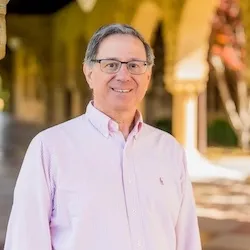
Giorgio Gratta —Ray Lyman Wilbur Professor of Physics at Stanford University; Experimental Particle Physicist and Neutrino Researcher
For clarity, this transcript includes minor edits made by Giorgio Gratta and footnotes provided by Columbia University, AC4 research institute.
Jeffrey L. Hughes
Greetings. This is the AC4 Megatons to Megawatts project which is continuing our interviews with scientists and policymakers that were involved in the run up to, and the fabric of the agreement dealing with the Russians. And today we have with us Stanford University physics professor Giorgio Gratta, which we are very appreciative of, and I'll introduce him in a little bit more detail in a moment. I should say, for the for the general reader or viewer, that the Megatons to Megawatts agreement was a deal between the United States and Russia that from 1993 to 2013 that helped rid the world of 500 metric tons of highly enriched uranium (HEU) taken from Russian nuclear weapons and diluted them down for use in civil reactor fuel that was purchased by the United States, and which produced some 10% of U.S. electricity over that period without carbon – which makes it also of particular interest to the Columbia University Climate School. And the “HEU Deal” was also part of the development of a broader pattern of scientific cooperation, which will be very relevant to, I think, the discussion today with Professor Gratta.
Professor Gratta completed his undergraduate and graduate doctoral education in Rome. He later worked at CERN for six years as a Caltech postdoc. Then in 1995 he became a professor at Stanford, where among his continuing research interests are a quest to detect neutrinos, and in particular, a special type of neutrinoless double beta decay neutrinos, which if detected would have large theoretical significance in physics. And a key detector material that he would need was an isotope of Xenon, defining a challenge for him to figure out where to procure this material at reasonable cost, and Russia became a leading candidate for supplying that. And that's how I came to know him in the late 1990s, and how Professor Gratta became involved with Tom Neff, who was one of the protagonists in the HEU agreement, including proposing the original idea. Together they had their own adventures in various parts of Russia, running down the details on producing the isotope of Xenon and how they could procure it and how to get it to the United States. That was just the first among many challenges that Professor Gratta had in actually bringing his experimental vision to fruition over decades, in a sense on the scale of a challenge of the HEU Agreement in its own right.
So again, Professor Gratta, thank you again for being here, and perhaps I should turn to you to just tell us a little bit about the context of the significance of neutrinos and detectors. I mean, just from the simplest standpoint, these neutrinos were produced from the Big Bang; they're in the cosmic background. They're also produced by the sun and in supernovas. And they're produced in radioactive decay. There are lots of candidates for them, and I was astounded to learn there's trillions of them going through us as we speak, and because they have no charge, little or no mass, they can even pass through our planet undisturbed. They were christened a “ghost particle,” I believe by Wolfgang Pauli [in 1931], but he then apologized to his physics colleagues by saying, "Oh no, I've posited a particle that no one can detect!”
And so while it's among the most abundant particles about the planet, yet among the hardest to track down. And so anyway, with that as a layman's preface, I turn it to the Stanford chairman of physics department (until recently) for his view on what launched him on this quest for understanding the neutrino.
Giorgio Gratta
Sure, thanks for having me. And as we already said just before the interview, nice to see you after so many years.
So as I started at Stanford in 1995, I actually made a switch in my scientific career, in a sense, going from collider physics – because until then, when I was with Caltech, I was actually working at CERN using accelerators to do physics – and switching from that to neutrino physics, because I guess I had a hunch that there would be something interesting there. The first generation experiments that I did, maybe the first and the second, had to do with detecting neutrinos emerging from nuclear reactors. Nuclear reactors are one of the many sources of neutrinos, and in fact, using nuclear reactors with an experiment in Japan, as it turns out, we, for the first time, discovered that neutrinos undergo “flavor” oscillations. That is, there are three types of neutrinos, and as they propagate in vacuum, they turn into each other, and this is a quantum mechanical phenomenon that can only occur if neutrinos have a finite mass. So once you detect neutrino oscillations, as we did, it becomes established that the mass of the neutrino is non-zero. Now, of course, the mass of the neutrino from the point of view of its motion, if you want, or the point of view of kinematics, as we say, looks like zero because it's so exceedingly small. But through the phenomenon of oscillation, we also discover that while the mass is small it is non-zero. Now that's a crucial thing because once you establish that it is non-zero, then it makes neutrinoless double beta decay, which I'll talk about in a minute, detectable –if neutrinos are “Majorana particles,” [which are their own antiparticles]. So that's actually what led me, after working on reactor oscillations or on oscillation experiments from using neutrinos from reactors, to actually switch and plan the next generation experiments in neutrinoless double beta decay.
All right, so it turns out that neutrinos, unlike other spin one-half elementary particles such as the electron, can have only two states as opposed to four states. So this goes back to Dirac in the 1930s, and it was found that if you have a spin in one half particle, such as the electron, it can only be described by a wave function, as we call it in quantum mechanics, that has four components. And you can think somewhat naively, but not too wrong, that the four components represent the “spin up” particle, and the “spin down” particle. So now that's two states. And then the spin up antiparticle and the spin down antiparticle. So there's four states for two particle and antiparticle species and spin up and spin down. So that's actually described by something called Dirac's equation, and has served us really well to describe essentially all spin one half particles, whether electrons or others.
Neutrinos also have a spin one half. However, they also have another peculiarity. Unlike electrons, they don't have charge. They don't have electrical charge, and it was very quickly found, in fact, by Ettore Majorana in Italy in the 1930s, that a particle with no charge doesn't need to have those four components, or this wave function doesn't have to have four components. But actually, you can get away with two components only. And you can again naively think of this as due to the fact that since there's no charge, there's nothing that tells you what is a particle and what's an antiparticle, and you can imagine the antiparticle with spin up being sort of the same thing as the particle with spin down, and so two of the four combinations are the same… are they identical. And so that means you only need two components to this. All right. So then, the issue is that the distinction between the four component k's and the two component k's only becomes visible if the particle has a mass. If the particle is massless, then there is no “observable,” as we say, that can distinguish between the two-component case and the four-component case. And so, if the particle is massless – essentially whether it's a Dirac particle or a Majorana particle – is, if you want, a matter of philosophy, not of physics, because it is not measurable, and so physicists lose interest at that point.
But after the oscillation measurements confirmed that neutrinos have a small mass that is finite, it then became kind of natural to start looking for neutrino double beta decay. That is the process that would allow you to distinguish the two components from the four component particle particle type. So essentially, this really is an issue that goes to the root of the quantum mechanical nature of particles, and for that reason is something which is very appealing to people interested in the foundations of physics. Okay, so that's how the entire idea started. And now you, sorry, you're about to say something…
Jeffrey L. Hughes
I was just reflecting on that. I think it was the ability to measure the neutrinos coming from the sun because there had been one of the neutrino detectors had found that – wait there's a discrepancy in what we would predict the sun neutrinos to be emitting and what was observed, and it was the discovery of that oscillation phenomenon – the changeability of one into the other – that resolved the anomaly and proved it had mass.
Giorgio Gratta
Right. So I glossed over this because I was just talking about how my research evolved and how I got there through reactor neutrinos. But yes, I mean this solar neutrino detection you refer to preceded [results from our team] just by a few months. Actually, it turns out that we were, a few months later, able to claim that we had discovered oscillations. [But those details are complex and] I don't want to get into that. I mean, [the solar neutrino detection is] not actually what's called the “vacuum oscillation.” It's a process which is a little bit more complicated, but it eventually reaches the same conclusion, [compared to detection of] something called “atmospheric neutrinos” that are higher energy neutrinos which also lead to the same conclusion that there is essentially flavor mixing in neutrinos that is mixing between the different species of neutrinos.
So this all happened within a year. There was actually the Super-Kamiokande in Japan discovery that atmospheric neutrinos indicate that there are oscillations, and then there was the Sudbury Neutrino Observatory [SNO] in Canada establishing the same thing with solar neutrinos. But there were also some confusing indications, in part also from Super-Kamiokande, having to do with solar neutrinos, as normally they used to be called those days, but the SNO experiment in Sudbury, Canada, really cleared that up, and through some rather complicated way of constraining things; they could establish that the issue was not that we didn't understand the sun, but rather the issue was that neutrinos were behaving in this kind of peculiar way. And the third piece of the puzzle, which as I say just came a few months later, was the observation of oscillations in reactor neutrinos with the experiment I participated in. That was also in Japan, actually something called KamLAND, still in the Japanese Alps in the same mine where Super-Kamiokande was located.
And so when you get all these pieces together…. I just want you to know, I cannot resist telling you how beautiful this thing is, in that you actually observe a phenomenon that is not quite oscillations, but is something related to oscillations having to do with solar neutrinos. Those are neutrinos of a certain energy emitted by the sun, and you use that to extract some fundamental physics parameters. Now you actually observe muon neutrinos, which are much higher energy neutrinos, and they somehow produce fundamental parameters which are consistent with solar neutrinos. And then finally, you get teams looking at neutrinos coming from nuclear reactors on Earth. This is the first, you know, measurement done with artificial neutrinos, if you want. So those are produced by nuclear reactors. I was being a little bit loose in, you know, in saying neutrinos. Those are actually “antineutrinos.” Unlike the solar neutrinos, which are real neutrinos, the reactor neutrinos are actually reactor antineutrinos. And again, you extract the fundamental parameters, and you get the same fundamental parameters. So at this point, suddenly within a year, everybody, or almost everybody, agreed that this is it: neutrinos flavor mix, and suddenly we knew all those mixing parameters.
And by now, of course, we know this much, much better because there have been other experiments and so on. In research, I tend to be really interested in taking big risks with potentially larger rewards. And so once it was established that there was neutrino flavor mixing – and again I don't say oscillations because that doesn't apply to solar neutrinos, so I want to use a more general language, and in that case, I say “flavor mixing” of neutrinos. Once [an insight is] established, then you know, for my taste, I don't particularly care of refining the measurement. I just want to go on and use that as a stepping stone to do something again very fundamental or very new, and in this case that is trying to verify whether neutrinos are “Majorana particles,” that is, two component particles, or Dirac particles with four components.
Okay, so now it turns out that the most sensitive probe to this puzzle, to this question, is something called neutrino double beta decay: that is, a decay whereby a nucleus decays into another nucleus that has changed two neutrons into two protons in the process. Usual beta decay – that is the decay that happens in, for instance, spent fuel from reactors – is single beta decay, and you get one neutron decay into one proton, and then a neutrino and an electron coming out. And the double beta decay, when this happens, is like a double version of the same decay. And for some somehow serendipitous reasons, this can happen in spite of the fact that the single beta decay should happen much faster, but there are some special cases where the single beta decay is disabled for some energy conservation. Doesn't matter for what reason, but I mean it's essentially disabled, and so the double beta decay becomes potentially visible. When that happens, that is the most sensitive probe to the Majorana or Dirac neutrino nature of neutrinos.
All right. So now I just said that this only happens in some special cases, and one of those cases is actually the case of xenon-136 which is one of the isotopes of the element xenon, which is a noble gas that is present in the Earth’s atmosphere. Xenon is not very common in Earth’s atmosphere, and so it turns out that just producing xenon, never mind which isotope, just the natural mix of xenon isotopes is non-trivial and is quite expensive, and that is distilled by air in our atmosphere. And since there isn't much, you have to process lots of air to actually extract some xenon. Okay, now, but only eight and a half to nine percent of the natural xenon is the isotope 136, which is the one that can potentially double beta decay, and so that was my first order of business.
So there were actually two challenges at that time evolving in parallel – and by the way, requiring some faith that as you are developing one, you know, trying to solve one challenge – also maintain faith that the other challenge will be resolved in some way. But the two challenges were, one, to essentially design and then build a detector that would be able to field with the isotope of xenon that would actually detect the decay if the decay occurred, and two, the other challenge was to actually find the xenon to fill the detector with, and that xenon had to be [enriched to] mostly the isotope 136, which is only about nine percent of the natural mix that occurs in our atmosphere.
So now concentrating on this enrichment problem, I remember going to some conference and some colleague, who I will not further identify, telling me I was crazy, that there was no way of getting 100 kilograms of xenon-136 separated because this was such a tremendous effort, and this would just simply not work. And in fact, originally the detector was supposed to contain 100 kilograms of xenon, which seemed like a round number. You know, it was about the right amount, but then of course a lesser amount whether it's under 50 or 98 kilograms or something might work. That was just a matter of settling on a particular number. It's important that once you settle a number, then you build your detector for that size, you know, for that amount of xenon, and you can't at that point you can't change that. So anyway, so that effort was started, and also some attempt in trying to figure out where to find this isotopically separated xenon. And very quickly it became clear that, at least those days, this could only be done or could preferentially be done in Russia. Or at least you could only afford it if it was done in Russia.
And here I need to tell you what my understanding of the problem [was at that time]. The Soviet system was clearly not a capitalistic system, and that meant you didn't need an account number to get stuff done – which didn’t mean that necessarily stuff got done very well. But at some point, if you had a good channel to get stuff done, they would just do it without asking for an account number, which doesn't work in our system generally. And so when they developed their enrichment capabilities for uranium they did it in the Soviet way. That is, they built it really large, and indeed they had so much capacity that they started just for fun enriching other things, which again, in our world, would not really happen. (I can tell you that even today I'm trying to buy some enriched tungsten now in Russia, just small amounts, and yeah, they have stashes of this. Whether they'll sell them to us these days is unclear, but they have stashes of all sorts of strange stuff that was produced essentially just because they could). So it became clear that Russia was the go-to place, though they didn't, of course, have 100 kilograms of enriched xenon-136. But they had samples that had been made in various trials because of this tendency of trying all sorts of strange stuff. And so then of course the issue was to try to figure out whether production was feasible at our scale, how expensive this would be, and whether there was a channel to actually purchase this.
Okay…actually maybe I need to test the timing of this. You know, I don't necessarily remember everything. And in fact, Jeff, you seem to remember or to have better records of timing. But one thing I need to explain immediately is that I said 100 kilograms. But in fact, our experiment became called EXO-200 and actually used about 200 kilograms, a little bit less, 180 kilograms. And I still have gas cylinders with 200 kilograms of xenon-136 enriched in Russia. And how we went from 100 to 200 is actually very simple. At some point through this process it became more or less clear that 100 kilograms would be about a million dollars, and so I was unclear whether funding for this would be available from the US government. And so I managed to talk to the then director of SLAC [National Accelerator Laboratory]]. You know, as far as Stanford was concerned, this was a collaboration between my group on campus in the physics department and a group at SLAC. And I managed to convince the director of SLAC at that time, Jonathan Dorfan, to essentially put a million dollars worth of his discretionary funding towards this experiment.
Jeffrey L. Hughes
It might have helped that in 1995, I believe it was, the Nobel Prize was awarded for some neutrino detection purposes.
Giorgio Gratta
There was actually some of that. But this was at that point when double beta decay was not as popular as it is now. So I don't know, but certainly it was clear that people were onto something with neutrinos, and so I mention this because I think Jonathan Dorfan was crucial in many ways for making some of our challenges work out, and in my opinion it doesn't get enough credit for that. But this was crucial because [this funding commitment] was essentially a stand-in for money, and so once you know the owner of the money says okay, you can use this money, that's it; there's no committees and it's very, very straightforward. So I could then in various trips to Russia, go there essentially with spending authority without ifs or buts.
And then by the time the deal eventually goes down with Russia, I did get money from Congress – from DOE essentially – and that was again a million dollars! So we ended up buying twice the amount of xenon. And actually, in the first negotiations with the Russians, I remember we wrote the contract such that I was essentially guaranteeing the purchase of 100 kilograms, but there was also an option written down to extend the deal to 200 kilograms at the same unit price, and that's exactly what happened.
The other thing, which is a little bit quirky, before we get into the the trips with Tom Neff and so on, which also produces some confusion that I think is worth explaining, and that is that we had collaborators from civilian scientific entities in Russia – in particular ITEP, the Institute for Theoretical and Experimental Physics in in Moscow. Now ITEP has since been absorbed within the Kurchatov Institute, but at that time it was an independent research entity.Since we're now talking about personalities and relationships with Russians, you know there is a certain honor in the Russian personality, particularly for scientists, that they take extremely seriously and deserves lots of respect, where scientific endeavors are above everything else, and you'd rather die than give up your equipment or your right to do the right thing as it's supposed to happen. There is in the “neutrino world” another institute in Russia, south of Moscow, INR, with a very colorful character with a big beard, and he actually worked in this other neutrino experiment in Baksan, that is an underground laboratory in the Caucasus, and he described how at some point some evil characters came to steal the gallium of his experiment, and he got a rifle and watched his gallium and made sure that they wouldn't get to his gallium! And again I don't know the exact details but it's a very colorful and picturesque story.
So, those two things, in some sense, evolved in parallel. One was the collaboration with a civilian lab in Moscow, and the other thing was actually pursuing the enrichment world. And incidentally, our Russian civilian colleagues always told me that I knew better how to get in touch with the enrichment places in Russia than they did, because they were cut out of this thing, had no means to inquire, and so that for them was really off limits.
Jeffrey L. Hughes
Wow.
Giorgio Gratta
So that's the way things used to work.
Jeffrey L. Hughes
Honor among scientists….
Giorgio Gratta
Yeah, exactly. You know, we never had [written] agreements, no nothing. We just trusted each other. So with the million dollars provided by Jonathan Dorfan,
Now I could tell you all sorts of funny stories about how we proceeded, but now comes the part that you probably know better, because now with some combination of things, I got in touch with Tom Neff. And with yourself in some way… I think actually I initially talked to Tom, but you say that it was actually Sid Drell who initiated this, and that's quite possible, but honestly I don't remember this part. I only know that at some point, in some way, I got in touch with Tom Neff and I think Tom probably said we should give Jeff Hughes a call. I again, I'm not 100% sure, but that's me. That's the way I kind of remember it. And so then again, either maybe he talked to you first, or somehow, and then we [connected]. But maybe you're right. Maybe this actually went first through Ernie Moniz – and then this was when Richardson was secretary [of Energy], actually, I think right? This was when Richardson was secretary, Moniz was under secretary, and you were working in Ernie’s office, and somehow we were connected…
Jeffrey L. Hughes
Well, my my recollection, for what it's worth, is that [our initial contact] may have even been under Pena, while Pena was still secretary before Richardson, because, but I remember a call came in for Moniz from you, and that his assistant told me, "Oh, Professor Gratta from Stanford is on the phone [on the suggestion from Sid Drell of Stanford and SLAC, for Ernie]. Ernie, like you to take the call,” perhaps because it was dealing with things like Russian nuclear materials, etc. And so I remember talking with you, and putting together your need for procuring stuff from Russia. And Tom, being a former Stanford PhD physicist from SLAC, that either I just gave you his phone number, or I called Tom to kind of preface your call.
Giorgio Gratta
Maybe it went the other way around. Okay, yeah.
Jeffrey L. Hughes
But anyway, that’s what I recall because that was sort of my first contact with the world of double double beta decay, talking to the Italian accented physicist on the phone, and my sense that Tom was the person that could begin to help you with your very esoteric needs for that. So I'm intrigued that it sounds like you may already have had pretty good contacts with Russian scientists well before this period, which is interesting.
Giorgio Gratta
Yes.
Jeffrey L. Hughes
And [at the time our earliest contacts] was during Pena, by the way, because they changed the configuration of the secretarial suite when he came into office, and I recall – and again it was a long time ago, so memories can differ – but I remember at some time that you and Tom were in Washington, and it was sort of an impromptu meeting, and so we had to meet outside the secretarial suite [due to lead time for security wave-in processes, etc.] in a kind of a collective new waiting lounge area where we we sort of traded notes on on where things stood with your efforts to procure the xenon.
Giorgio Gratta
So I remember Jeff, this meeting you're alluding to, but I also remember another meeting in Ernie's conference room, or his office [on my project]. I think the way Moniz was at least leaning was at a much higher visibility, if you want, than it became later. So we had this meeting with a bunch of people, whom I now don't remember, but you know, having in their title ambassador or something or other. And so there was a meeting in Ernie's office with yourself. I don't think Tom [Neff] was there, but I may be wrong, and with a bunch of people that I never met again. And there may have been maybe an ambassador to Russia or something or other. And so the meeting started in this sort of much more substantial way. In fact, actually, I do remember one kind of amusing thing, and that is that this was at Forrestal, of course, [the DOE headquarters in Washington, DC], and somehow they also invited P. K. Williams – who I think passed away maybe five or six years ago, 10 years ago, maybe. And PK Williams [who went by PK] was actually the person in the [DOE] office of science who was in charge of my grant. Essentially, he was the person looking after university funding, and so you know this is like several steps down from what happens in Forrestal. I mean, you know, PK's office was in Germantown, and you know that's where the money…
Jeffrey L. Hughes
…Money is dispersed from. That matters!
Giorgio Gratta
Yeah, yeah. But then I remember being somewhat embarrassed because the way Ernie had invited this team of people, I had some sort of fancy invitation [i.e., VIP security pass granted] that essentially allowed me to skip all the security stuff. So I was actually very ceremoniously taken around the metal detector and into the lobby and then upstairs. And as I was doing this, I must have turned red because PK Williams coming from DOE Germantown was actually run through the [typical security drill], so I was extremely embarrassed by this kind of thing. Anyway, so there was this sort of fancy meeting with Moniz, but then actually what happened within DOE beyond that I honestly don't know. Because then the thing for me turned into how do we get in touch with Russia, and then with the right Russians [to procure xenon], which were not the Russian scientists I knew. And this is where Tom [Neff] became part of the equation again. Whether he was at this meeting, I don't remember.
But from then on, my main connection was actually with Tom, and I spent quite some time over the phone with Tom. I can tell you some other amusement. Okay, so through some combination of DOE, you guys there, and Tom, we got to organize the first trip to Russia, which I believe took us to the electrochemical plant in Krasnoyarsk or near Krasnoyarsk, and the Kurchatov Institute in Moscow…
Jeffrey L. Hughes
Velikhov’s Institute….
Giorgio Gratta
Yes, yes. So this trip was actually together with Tom [Neff], and actually another character that was inserted in the deal at that time: Guerman Kornilov. Guerman was a nuclear engineer, in terms of background, from the Soviet Union. He's exactly my age, within a few days. And Guerman had essentially moved to the US, and became an American. And he was one of the lead people on behalf of a company called “GNSS,” an American company in Washington…
Jeffrey L. Hughes
GNSS was a sub-element of, or subcontractor, if you will, to TENEX which was the authorized
touching point for the world [on nuclear commerce with the west first created] when the Soviet Union existed, and GNSS has its own complicated story. By the way, with the HEU deal – which we won't go into detail now – but Alexander Chernov headed that company, and he was [Minatom and Tenex’s] enabler in Washington, and in the US market, for the HEU Deal.
Giorgio Gratta
Yes, exactly. So one of the first things we concluded, or decided, was that the technical negotiation could happen directly with the enrichment companies in Russia, but then the commercial part had to be dealt with by GNSS because they knew how to move stuff around, how to transfer money, and do whatever needed to be done. So at that first meeting, or sets of meetings in Russia, Guerman also came along. And so from the US there was Tom Neff, Guerman Kornilov, and myself. And actually another thing, I think Guerman knew Tom quite well because Kornilov’s father, another Kornilov, had been the director of one of those electrochemical plants. I think maybe was the director of the Krasnoyarsk plant, and then died of a heart attack. So before all this xenon stuff happened I think Tom Neff was friendly with Kornilov's father, and so then that was actually another connection that was there.
And so we went there. In fact, I can probably find some photographs. I think I have a photo of Guerman, Tom, and I having espresso at some coffee shop in Moscow before going to some of those meetings. And those were the first trips where we actually went to those Russian plants. And then, on the way back from [the Urals and Siberia], I think Tom, Guerman, and I stayed a few more days in Moscow before returning to the US, and visited ITEP with my friends. And in fact, I emphasize my pre-existing friends. And I have very fond memories, because Danilov took me to the Bolshoi. I still remember Sleeping Beauty was performed and the male dancer was amazing. I don't know anything about ballet actually, but I was extremely impressed by this guy. So then, when I had dinner at [Misha’s] home with his wife, and I mentioned this: she goes, "Oh, the great” whomever. Of course, I have forgotten his somewhat Georgian-sounding name, but anyway, he was a famous male dancer. So I stayed a few more days past my trip with Tom and Guerman.
Anyway, that was the first trip [to Russia in pursuit of xenon], and I think we spent quite a bit of time at some point, talking business. So there was actually a mix of visiting some of those exotic locations, and then also spending time in a meeting room trying to understand prices and so on. And I have to say this was all very rationally complicated because the technical discussion was always crystal clear and easy, but then, for the business part, my impression was that the Russians were essentially fighting amongst each other.
There were perhaps three enterprises potentially making, that is enriching xenon, and there was all sorts of jockeying between them. And in fact, at the end of some break point in a meeting, they would say, "Okay, well now Maria Alexandrovna will take you to the museum, and then we need to have our own discussion, and it has to be in Russian because it otherwise would be too inefficient. And anyway, probably we don't want you to hear what we're saying or whatever. So they kicked me out – and this was actually at some conference room at Minatom [in Moscow, and not at the plants]. There is actually some museum, maybe some Pushkin museum, nearby. And so Maria Alexandrovna – a made up name, I'm just recreating what happened – some lady took me to this museum while they were ironing out some other details back at Minatom. And I should also say that in the end, it's unclear to me, you know, the way they described this to me is that they would actually do the 200 kilograms as one-third, one-third, one-third from the electrochemical plant in Krasnoyarsk, the UEP Ural Electrochemical Plant in near Ekaterinburg, and the Kurchatov Institute in Moscow. Later on, somebody insinuated that this was only a ruse, and everything was produced in Krasnoyarsk, while the others were just doing something else. I have no idea actually how this thing really worked out, but we got our 200 kilograms of enriched xenon-136 as a result.
Jeffrey L. Hughes
Well, you were getting privileged access to what were oft times closed facilities, sometimes and even to the US government that was engaged in cooperative programs with Minatom. Not all portions of the facilities, but some of the facilities you just mentioned, do overlap with the production facilities of those involved in the HEU agreement. They were probably trying to figure out how to preserve what proceeds they could for their own facilities, and not [simply] send it [all] to Moscow…
Giorgio Gratta
Yes, exactly. There was definitely some of that. That's what I kept hearing. So okay, a few other kinds of cute stories from that. I mean, that was such a good time actually. The idea that you could go to everybody was very friendly. They were all generally technically extremely knowledgeable and again really friendly. So we visited a centrifuge cascade, a small centrifuge cascade at the Kurchatov Institute in Moscow. That's in some sense relatively, I would say, easy. You know, it's not exotic. But then the other trips were like an electrochemical plant in Krasnoyarsk, and this was actually a production facility, not a research facility. And so some of those centrifuges, of those cascades of centrifuges, were just humongous. And there was some sort of drama as you get into the plant; you go through double fences with people with machine guns and all this kind of stuff. This was actually, as you say, a really privileged sort of access to some of those places. I remember in one of those plants – now I don't recall which one in Ekaterinburg or in Krasnoyarsk. By the way, we say Ekaterinburg and Krasnoyarsk, but the plants are actually a long drive from either one of those places from downtown. And so when visiting those places, and you get special IDs – of course, handwritten because it was somewhat low tech. But you know there was a person with a Kalashnikov gun guarding the plant, and you actually have to hand over the ID, and he actually reviews it. And then – this was fantastic – they give you a lab coat and the typical Soviet scientist headgear…
Jeffrey L. Hughes
Slippers for your feet sometimes…
Giorgio Gratta
And maybe slippers for going over shoes. So that was all, very interesting, exotic, and great, actually. Actually the photograph with Tom [Neff] that I put on our Stanford department's newsletter [in memoriam in 2024] was taken at the end of the meeting in Krasnoyarsk. They took us on a cruise on the Yenisei River, and oh, of course, there was lots of food. I remember once eating and drinking some ridiculous amount of stuff, including vodka, and marvalling that I was still able to walk straight, more or less. And you cannot do too much of that stuff; otherwise, you really get sick.
Jeffrey L. Hughes
It's your physics training!
Giorgio Gratta
That's right. And so we went on a cruise on the Yenisei River, which was great, including with a bunch of people from the plant, which was very good. So then I also went to Novouralsk, that is the plant near Ekaterinburg, and I believe I went there by myself actually, so that was maybe a year later, always in the summer. You don't want to go into Siberia in the winter! In fact, I have a little anecdote about Siberia in the winter. Double beta decay experiments are extremely sensitive to any radioactivity, and so in fact, one of the things that initially produced some concern was that well, if we get the enriched xenon material from centrifuges that are being used for uranium enrichment, will there be some contamination from uranium, and could that radioactivity disturb our experiment, and so on. And so we paid lots of attention to measuring the radioactivity of whatever was being shipped by Minatom, and it turns out that we learned that centrifuges used for our material were never used for uranium, so contamination was not a real issue. But in the process of all this, because of these concerns for radioactivity, we decided that the xenon would not be shipped by air freight but instead would all be shipped by surface – by land and sea. And the reason was that airplanes fly into the peak of the cosmic radiation, coming from outside of the atmosphere, and we were concerned that it could actually activate the xenon (even if it was pretty clear that this should probably not be an issue). But we just said, to be double sure, ship everything by surface. And so that meant that Minatom shipped the xenon cylinders from Siberia by train to Saint Petersburg, and then they put it on a ship in Saint Petersburg, and it sailed from there to Baltimore.
Jeffrey L. Hughes
Actually, as it turns out, that's the same route that the HEU shipments went. I wonder if this was the same shipping company, perhaps.
Giorgio Gratta
Yes, yes, yes,. Absolutely, this was. I forgot the name of the company.
Jeffrey L. Hughes
Jack Edlow. [Edlow International.]
Giorgio Gratta
Edlow – yes, yes, yes. Edlow. And actually this was the best shipping ever. I mean, these people would send you…. I guess they were used to uranium…so they would actually, every day, send a bulletin you would get by email, saying the coordinates of the ship, and then you could track the ship as it was moving through the Atlantic and so on. And then from Baltimore those cylinders were put on a truck, and sent [to Stanford].
Jeffrey L. Hughes
Cosmopolitan xenon!
Giorgio Gratta
Yes, exactly. But the amusing thing is that, as usual, our experiment was very complicated. We were slower than we had expected. My Russian friend says that you take the schedule done by a physicist, multiply by pi [(π)], that is 3.14, and that's the real schedule! Because you know, again, we are not, I guess, very good at estimating. I mean, it's just that these are very complicated, different, difficult experiments to devise and build. Whereas the Russian enrichment facilities, who well know their business – it's no different from any other enrichment – so they were more or less on schedule…
Jeffrey L. Hughes
I was going to say, on this on this issue of enrichment and centrifuges, I recall talking with Tom Neff, and maybe with Ryzhov at Minatom, that there was a [technical] issue about once their centrifuges were used for xenon enrichment, they couldn't go back to be used for enriching uranium, which therefore created an economic issue. So perhaps Minatom may have had to use some new [or excess] centrifuges that they were willing couldn't go back to uranium enrichment for some reason. I'm not sure if that's correct or not.
Giorgio Gratta
I think there's lots of stuff that while the Russians were friendly, they also had their own confidential information to keep. And they were, I think, very careful in hiding what they wanted to hide. I believe that the issue was that the centrifuges optimized for uranium are very different, since the mass is much larger and very different from the one optimized for intermediate mass isotopes such as xenon. So they are actually physically different centrifuges, and so it's not so much you cannot use them after, but they are just different things: if you build a cascade for xenon, it cannot do uranium. Or, it would just be very inefficient for doing uranium. That's my understanding. But you know, as I say, there is plenty of confusion, maybe planted for good reasons.
Anyway, the amusing story I wanted to tell you about is that since the Russians were more on schedule than we were, they at some point, sent me an email that they were ready with their material to be shipped to the US. And I get an email saying, "Yeah, you know, we are running into a problem. We are ready. We could ship tomorrow. However, we noticed that the cylinders you sent us [may have a problem].” Okay, we had sent them cylinders that were American certified cylinders, high pressure cylinders that were temporarily used in Russia, even if they were not currently certified for use there. (Somehow the Russians had done some temporary imports where they could use our cylinders there.) An alternative option for the xenon would have been to ship the material in Russian cylinders, but then we would be stuck with Russian certifications not valid for use in the US. So anyway, we had sent them these cylinders, and then they said, you know, we notice though that the valves on your cylinders, which are very high quality valves, say they are only good to minus 40 centigrade, and we cannot guarantee that in the transit from our place to Saint Petersburg, the temperature will never go below minus 40 in the train, and so if it's okay with you, we would rather wait until the spring to actually ship them. Not because we don't have the xenon ready. If you want, we can ship it tomorrow, but then if the valve leaks, it's on you. Since our experiment was not ready, I said, sure, just wait until April to ship. Anyway, that was kind of an amusing thing having to do with Siberian conditions.
Jeffrey L. Hughes
Wow.
Giorgio Gratta
And then we got the xenon exactly as discussed, or as described, with a small little quirk. Okay, we shipped them 10 empty cylinders, and they found that one was actually leaking. These were very careful people. So they found that one was leaking, and so again I got another email saying, "Well, as we fill the cylinders, we can fill nine instead of 10, and we would prefer doing that because we think one of them is no good. Of course, I immediately said, "Sure, absolutely, I don't want to lose my valuable xenon in transit! And so that's actually what happened. One cylinder came empty, and they just added a little bit more to the other cylinders. Why am I telling you this? Because then one of those cylinders, we believe, had some contamination. Everything was great, but one of the cylinders had some contamination of what we somewhat jokingly, but not so jokingly, called “centrifuge oil.” This was some organic stuff which was nasty and extremely difficult to remove from the xenon. This is not something we are absolutely sure of. But in the liquid xenon in the detector, which is in liquid phase, cryogenic, etcetera, etcetera, we are extremely sensitive to certain types of impurities, which could damage our work, but also we can detect them with extreme sensitivity. And I think once we opened one of the valves of one of those cylinders, and the purity – that is, the ability of drifting electrons in liquid xenon-went down,got extremely bad. Eventually we concluded this was due to some fluorinated material that was introduced in the xenon, which, as I say, was probably centrifuge oil of some sort.I remember this was actually something that when we talked about technical details in Moscow, they did tell us that we may find actually some of the solvents were used to clean the centrifuges. This would be things like ethanol or something, which is not a big deal. But then there was this other stuff that they couldn't tell us what it was, and was some large fluorinated molecule, and that's what they called “centrifuge oil.” And so we had to do some reprocessing of the xenon to remove this stuff. Otherwise, the detector would not work. And as I believe, this was only one cylinder. So my conjecture is that this one cylinder was actually left open to the environment of the centrifuges for maybe longer than the others, maybe by mistake or something, and so we actually accumulated some of that stuff.
Jeffrey L. Hughes
I’ll take this opportunity to comment based on looking at some pictures of these various generations of detectors. You mentioned the one in Japan that had water. There are other detectors that are dodecahedral. They're very beautiful, almost like sculpture. But what struck me about your detectors, in particular, was its complexity. As you just mentioned, there's you know this copper container for the xenon that has to be welded shut, and then there's this cryogenically cooled stuff. There's the lasers to have to go through it to try to detect these isotopes transitioning to barium. I mean, just the sheer complexity, and that you can't even do it necessarily above ground. You have to….
Giorgio Gratta
This has to be done deep underground. Yes. Actually, I cannot resist Jeff turning my screen around…. You see my wall clock up there.
Jeffrey L. Hughes
Uh huh. Looks like a lid of one of your detectors.
Giorgio Gratta
Exactly. That's exactly what it is! And once the engineers designed and built this thing, I realized that they have 12 spokes, just because that's the structural analysis you know decided that way. And so at the end of the lifetime of the detector, I actually used one of the end caps as a wall clock.
Jeffrey L. Hughes
I think that if you flip it horizontally, you could design a sundial for that sort of neutrino bath.
In mentioning these underground sightings for neutrino detectors, I recall talking with you, once you had started on the trail of acquiring xenon in Russia, that you also needed to find a place to site the facility. And remarkably, it ended up at Department of Energy facility WIPP, which had been on your probably array of options, but it worked out there well (but also with a twist).
Giorgio Gratta
Yeah, well, it worked. I also suspect that's one reason why we managed to get, or helped getting traction, beyond the xenon. You know, we spent $2 million worth of xenon, but the entire experiment enterprise was more like 15 or $20 million. And actually, siting the experiment at WIPP in New Mexico means that we got Senator Domenici on our side. And we got lots of help from Pete Domenici, with funding, but also with being welcomed at the site there. And in fact, Pete Domenici came to a ceremony at the site, when we formally started taking data, and cut the ribbon. In fact, I have a very crisp memory of cutting the ribbon with Senator Domenici, and I was very casual; you know, I'm a scientist, okay. But for all these people at, at WIPP, they essentially viewed Senator Domenici essentially only second to God, and so they were all very tense about this. And so they explained to me, as they produced the largest pair of scissors I've ever seen, ceremonial scissors, they explained that according to their plan I was to hand over the scissors to Prince Domenici, and he would cut the ribbon, or maybe we would cut the ribbon together. I don't know, something like that. Actually Domenici spoke some Italian, so we were joking that we could actually have some conversation without the others overhearing what or understanding what we're saying. It was a very pleasant sort of conversation. But since I was somewhat casual about this at some point, and you know those DOE labs, at least from the point of view of independent scientists, they are so full of bureaucracy and crazy rules about everything, and we are always very annoyed by this. So once I got those scissors and there were the photographers and all that, I got to actually hand them over to him, and then I take them back and say, "Wait a second, do you have [DOE] training for those scissors?” And without missing a beat, he says, "Don't you?” But then he said, "Don't you worry. I make the rules!”
Jeffrey L. Hughes
That's a nice vignette.
Giorgio Gratta
Yes. Politicians have to be thinking on their feet very quickly. So that was kind of a cute sort of side story.
Jeffrey L. Hughes
One of the things that I recall that we had a conversation about, and this perhaps was in this was would have been in the [Secretary] Richardson period, perhaps in 2000 That I believe there was a peer review period where your proposal would be among those being reviewed, and I think we talked, and I urged you to send a paper to me that sort of was a summary of an overview of the program in kind of a layman's terms. Maybe it wasn't the one you would have given to the science committee, and that was the one I remember putting a cover note on to Jim Decker, not using Moniz's explicit endorsement, but explaining some of these overlays with New Mexico and the benefits with Russia nonproliferation and scientific cooperation. So anyway, certainly the science was all there to support it in its own right, but just your little vignette…
Giorgio Gratta
Yes, but lots of things have to converge. Absolutely, yes. And you know, Jeff. So I need to also say this.There were two people that I was always very fond of, and I would actually find it easy to pick up the phone and call. One was you, and the other one was Pete Lyons, who was actually in Domenici’s office. So I had lots of conversations with Pete Lyons, and he was a great, a great help
Jeffrey L. Hughes
Well, Pete, of course, was from Los Alamos and a trained scientist himself, and served Senator Domenici in the Senate, and then later he was Assistant Secretary for Nuclear Energy, and yeah, was a great guy.
So your project, EXO-200 detector, was successfully put into operation by getting the site and the xenon. And then there was the surprise of the accident at WIPP in 2014, in which your experiment nonetheless emerged unscathed. I believe, ironically, that the lab regulations which you mentioned can be a problem [can cut the otherway]: a new managing contractor tried to change to a cheaper form of “kitty litter” they put into the drums with radioactive waste that then created the problems [with some radioactive release].
Giorgio Gratta
Yeah, well, actually, there were two accidents, right? And which were almost simultaneous. And in fact, to be honest with you, it took me a while to believe their version that the two accidents were unrelated. Because it seemed like such a funny combination that they happened within, I think within like a week from one another.
Jeffrey L. Hughes
Rare, like a double beta decay!
Giorgio Gratta
Yeah, right. I mean, this was a place which actually had a really good safety record, and then suddenly two accidents, unrelated accidents. So the first accident actually was not the radioactivity accident. The first accident was a fire.
But you know, a fire in a mine is a very scary thing, and in fact, we actually had a shift on site. You know, those experiments required 24 hour, 24/7 attention. So we had people underground running shifts.
Jeffrey L. Hughes
Graduate students?
Giorgio Gratta
No, not only. I mean I also used to do the Christmas shift [at EXO-200] all the time. Okay, the week around Christmas was actually with a senior Stanford colleague of mine from SLAC; one of us would do New Years, the other one Christmas. That was actually our duty those days, at least for a while. Then at some point [experimental operations] became routine enough that – here is another interesting thing – we actually set up remote control centers. The reason was that you have lots of cryogenics, and this very valuable xenon, and this very expensive detector. And there are a number of situations in which the thing may fall apart, particularly if you lose cooling power and so on. And at least initially, you don't know entirely what to expect [of the equipment, etc.]. And so there were all sorts of procedures, some of which we automated, but not everything is automated. So then there were all the shifts.
But at some point, we became more comfortable with the system, and so then we essentially built control rooms and we relayed detailed communications of the situation from WIPP, which initially was also not entirely reliable. But eventually we were comfortable enough with the entire thing that we had control centers around the world. So there was a control center here in Stanford at SLAC, which was essentially a replica of what we had at WIPP, where in the underground, we had a bunch of computers and monitors to track the system. Having built essentially the identical thing at SLAC, slowly we started building more of those centers [involving our international collaborators] so that people could take shifts from there. So initially then the night shift was done from SLAC without a team having to go there at WIPP. And then we added one of the control centers in Moscow. Our ITEP colleagues were actually taking shifts, which was particularly convenient, because now they would do the night shift, which for them was day, and so there was never a night shift. Essentially, there was always somebody. Then we also had a control center in Switzerland, and we added two control centers on the east coast; one was in the US the other one was in Canada at McGill or Carleton University. So in this way there was never a really inconvenient time to take shifts.
Jeffrey L. Hughes
That's fascinating! I had seen the degree of international participation that was noted on some of the slides about the EXO-200 lab, and the wide variety of participants of scientists from around the world, but I had always envisioned it being managed from WIPP. But your web of cooperation around the world, including Russia, is quite fascinating and makes enormous sense.
Giorgio Gratta
Yes, yes. I mean, for example, with the Russian colleagues the issue was never one of trust, but was one of making sure the equipment is set up properly and so on. So more generally, we had very strict rules about that. So for instance, each control center, to be approved by the collaboration, had to have a phone line with a phone number that was clear that everybody knew about, so that you know in case of need you could know there would be easy connection, and then they had to have a certain type of internet connection with a certain bandwidth, a certain encryption, because actually again you don't want somebody to log in from some random place and destroy the experiment, and so there was a way to actually secure all this and so on. Which is also the reason why initially this didn't work right away. Initially you want to make sure the hardware works, and is doing the right thing, and then you start relaxing and you say, okay, so how do we make this thing a little bit less expensive, because having to fly crews to WIPP do 24/7 shifts is is quite expensive, but also sort of unpleasant because most of the time in those shifts nothing happens, so one spends the entire night sitting in front of this thing and essentially feeling like you're doing nothing! So at some point you want to start migrating those kinds of functions elsewhere.
Jeffrey L. Hughes
I'm curious if the EXO-200 experiment went beyond the HEU Deal, and beyond 2014 and Putin’s seizure of the Crimea, and whether your scientific cooperation with Russia continued, nonetheless, after that?
Giorgio Gratta
Ah, that is such a painful, sad story. So the experiment ended just before that – just barely. But of course we kept doing data analysis and producing papers, and the Russians were our collaborators. But then at that point, first of all, those Russians, at least the civilian scientists, never had really much funding. And that started making it difficult for them to visit. I used to have one or two of the colleagues from Russia spending some time in my group every once in a while and visiting Stanford, and this became much, much harder, because of visa issues and also their funding was very sort of sketchy. And then in recent times, I think now the problem is that I am always reluctant in communicating with them, lest we say things that make life…..
Jeffrey L. Hughes
Difficult for them….
Giorgio Gratta
Yes, exactly. So, for example, the last time I saw Danilov was two years ago at some conference in Italy, where we just ran into each other. Then we made a point in having dinner together and all that.
All of this collaboration has really collapsed, and it's somehow very painful to see that the kind of collaboration that used to be cultivated during the Cold War, and during the Soviet Union, has to say to a large extent fallen apart. Not entirely. But certainly I wouldn't go to Russia now. You know, I've been to Russia many times, and I had fond memories of visiting there, but I certainly wouldn't go now. Also, I suspect I wouldn't get a visa because Stanford is one of the universities that's being classified as an enemy of the Russian state…. it's very unfortunate…
Jeffrey L. Hughes
I might ask just a few specific questions relevant to the HEU deal and your enterprise. Just out of curiosity, did you ever meet with Mikhail Ryzhov, of MINATOM?
Giorgio Gratta
No.
Jeffrey L. Hughes
Okay, I ask because he was a protagonist in the HEU agreement, and I remember talking with him about the Xenon issue. Indeed, it became an issue that Moniz would raise near the end of meetings with Minister Adamov, for example, about you know this is an option out there, and it's progressing. It was a good example of the type of scientific cooperation that was possible – particularly if we were able to resolve the Iran issue. I also remembered one…
Giorgio Gratta
And Moniz, sorry if I interrupt you, Jeff. Moniz actually, when he was Secretary of Energy [2013-2017], made, as far as I understand, made some some inquiries about whether we could use, and actually produce more xenon for a larger experiment in Iran using [using their centrifuges]as a reason to bring them into some sort of scientific collaboration that will actually use the equipment and all that. Now Ernie must have had his own advice and his own sort of channels. My suspicion is that, for the same reason why the Russians told me that they couldn't use uranium centrifuges for xenon, you know, Iran presumably didn't have all these other centrifuges. They only had uranium centrifuges. So I suspect that that was not a technically viable idea, but I don't know. But anyway, nothing came out of that, which is sad…
Jeffrey L. Hughes
Yes, you know, I was working for Moniz then, during the Iran nuclear deal…
Giorgio Gratta
Maybe I talked to you about this. Maybe we talked about this.
Jeffrey L. Hughes
I'm not sure. There were all kinds of interesting ideas, like to turn – I think it was an underground section of [one of Iran’s nuclear enrichment sites,] Fordow into an earthquake study center using a shake table there [relevant to Iran’s earthquakes, and DOEs seismic expertise]. And there were all kinds of efforts to try to think about how we could have scientific cooperation in ways that also increase confidence and transparency. And producing xenon would have been an example. I also remember, and perhaps I'm confusing the 1990s with the period 2000 period you just mentioned, but I think there had been some discussion about leasing the material from Russia as well, that is, the xenon, as a way to reduce the overall cost footprint to you at the outset, and that they could get the xenon back [after your experiment was complete].
Giorgio Gratta
Honestly, I don't remember. I mean, if this was discussed, you know, it's possible that this was discussed before I got Jonathan Dorfan's million dollars for the first production, and then once I got the money, I said, okay, that didn't matter.
Jeffrey L. Hughes
Right.
Giorgio Gratta
But I don't remember. I mean, this was…
Jeffrey L. Hughes
…Was a long time ago. I understand.
Giorgio Gratta
Sorry.
Jeffrey L. Hughes
Do you have any further recollections about Tom Neff? You noted some in your very nice memorial for Tom in the winter 2024/25 edition of the [Stanford physics department] newsletter. Well, number one, do you have any sort of additional recollections sort of stirred up by this conversation? And bolstering your reflections back on those periods for your tribute, you reference talking to two contemporaries of Tom, Sandy Fetter and Michael Turner. I don't know if they told you any vignettes, since we're reviewing Tom's role in your adventure [as well as the HEU Deal], that that would might also throw some light back on his career as a physicist, as well as his motivations later in the pursuing as doggedly the HEU deal, as you have pursued your double beta decay experiments?
Giorgio Gratta
What I learned from Sandy Fetter and Michael Turner was actually about Tom's thesis up at SLAC which I didn't know anything about. And in fact they helped me find the thesis, which you know these days was type written with a typewriter, and you know…
Jeffrey L. Hughes
With hand drawn diagrams and equations…
Giorgio Gratta
…then handwritten, and so on… So that was one thing. And then, let's see, there was another thing, but this is not very relevant for the HEU Deal… oh yeah they unearthed for me a photograph of Michael Turner, some other colleague from Stanford, not Sandy Fetter, maybe Vahe Petrosian. Anyway, some pictures of Tom and Sally Ride playing volleyball together. Apparently, they had a team… Vahe was actually on the other team. So apparently, Vahe Petrosian, who is a colleague here, is an astrophysicist. He's originally from Tehran, from Iran, from Persia, and apparently there were enough people from Persia in those days that they also had a team, a volleyball team. And Sally Ride, of course, and Tom, was on the team with the Americans. And so they had the Americans against the Persians volleyball matches, and that's something that I think Michael Turner brought up, though perhaps not directly related here.
Jeffrey L. Hughes
That's great. Well, Giorgio, you've been extraordinarily generous with your time, and I don't know if you want the floor once more before we conclude. Again, besides thanking you, I don't know if there's anything that you would like to say to to put a bow on on your adventure in pursuing EXO-200 and now I noticed the planning for the nEXO which I guess involves not 200 kilograms but maybe 5000 kilograms of this particular xenon, and you've got all the planning done in theses with some of your graduate students, and so you're just awaiting more xenon to pursue them!
Giorgio Gratta
We're waiting. Actually, we're waiting for the Office of Science [at DOE] to essentially, you know, get us started as a project. Unfortunately, this is a very unpleasant topic because I think we're kind of stuck. The Office of Science seems to have lost the enthusiasm for this kind of thing and so we are kind of in a limbo…. an indefinite hold. So we don't really know what to expect or what to hope. And it's very unfortunate because this could be something that could be done together with Russia again. In the meantime, we have continued looking for the xenon enrichment for nEXO. I made an attempt, maybe five or six years ago, to actually have a new discussion with Russia about this. And in fact,that's the last time I went to Moscow. But the DOE made it very clear that they would not buy xenon in Russia, which [from a scientific standpoint] seems somehow ill conceived. But on the other hand, that's what it is. And so we looked at procuring xenon from other places, including domestic production in the US but in the end we didn't go very far because of the more general issue that the DOE is not ready to start any of such projects.
Jeffrey L. Hughes
What's your guess at the back of the envelope estimate of the cost for the actual five tons of xenon that would allow you to scale up?
Giorgio Gratta
100 million [dollars].
Jeffrey L. Hughes
So in the days now of trillionaires being minted, you’d think this [is the sort of cosmological experiment they’d want to rescue and be associated with]. I mean as I understand it, and you correct me, potentially this experiment, if it finds a neutrinoless double beta decay, would challenge the standard model of physics as we currently know it, which is posited on the annihilation of matter. But then, why does any matter exist? And it could be the asymmetry introduced by the neutrino having mass [contrary to the Standard Model of physics] that sort of explains why we're here. So it could be quite a historic experiment. So you'd think, in the spirit of Alfred Loomis, who was actually instrumental in the Manhattan Project as a private scientist, beginning with his own lab at Tuxedo Park, NY, you'd think we could find the right philanthropist to fund this out of his pocket. Or the other idea that comes to mind is with China: aren't they interested in this kind of experiment as well? And insofar as Russia is currently off limits, is there in the world age of AI some collaborative experiment that could trod this pathway? I don't know…
Giorgio Gratta
So okay. Of course, you're striking an important note here. And maybe you and I should get together offline to talk about this, because this is not a ten minute conversation. [It involves a complex constellation of policies and incentives within the US, including science policy, and international relations now with both China and Russia.]
But in fact, I have asked myself how come that during the Cold War we had still sort of cooperated on science? There was cooperation with the Soviet Union those days, but we cannot do the same with China now. And somebody made the observation which I thought probably explained things. The Soviet Union was never a commercial competitor to the US or you know financially was just okay, whereas with China it's not just military competition, but in fact there's lots of economic and commercial competition. So the concern with China is much more profound, and that's why it's so much more difficult to actually maintain some decent relationship and have a scientific exchange [on basic research]. Now, having said this, many of us are still trying because I think this is good for everybody, everything, and the US in particular. But you know, we're trying but lots of opposition from Washington.
Jeffrey L. Hughes
One of the lessons that arguably emerges from some of the interviews that we've logged with physicists, from von Hippel and others that participated in the outreach with the Soviets during the 1980s, including during dark times, was that there came a point when the forums that they had established to stay in touch, and and push the limits on cooperation on some issues, became vitally important when things really kind of fell apart and you needed to have a platform upon which to meet. And in this case of the HEU Deal, for example, was how Neff had an opportunity to pitch Mikhailov, physicist to physicist, on his HEU proposal. So I think your instinct about trying to build those bridges where possible is vital, because sometimes it's a narrow trail, but it can prove vitally important under the right circumstances.
So, it's wonderful to continue talking to you, but I know you've got students to go deal with and enjoy, and projects to plan in your other research areas. And we'll hope for the right xenon and the right beta decays to occur. Again, thank you so much, Giorgio, for taking the time for this conversation and your insights.
Giorgio Gratta
And thanks to both of you for generally carrying forward this HEU Deal project, which I think is really important and and useful, particularly given the times, and also for having me on this interview.
Jeffrey L. Hughes
Well, and I should note, my colleague Andrea Bartoli had a commitment that precluded him from being here today. He's the co-director of this particular project with me on Megatons to Megawatts, and that would have added more Italian flavor, just as there are flavors of neutrinos. But anyway, he is very interested in these broader patterns of cooperation on the scientific side, and has long experience in dealing with resolving conflicts across different issue areas. But again, thank you again for your time, and we'll look forward to following up with you.
Giorgio Gratta
Okay, thanks again.
See, for example, Daisy Yuhas, “What ‘Ghost Particles’ Might Tell Us About Our Origins, Stanford Magazine, September 2017, https://stanfordmag.org/contents/what-ghost-particles-might-tell-us-about-our-origins.
Thomas L. Neff (1943–2024)
Thomas L. Neff was a physicist at MIT’s Center for International Studies who proposed in an October 1991 op-ed that the USSR convert highly enriched uranium (HEU) from dismantled Russian nuclear warheads into fuel for American power plants.
CERN (The European Organization for Nuclear Research)
Founded in 1954, is today the world’s largest particle physics lab, sited near Geneva, Switzerland and straddling the French border, involving scientists from around the world to build and operate large particle accelerators, including the Large Hadron Collider.
Ettore Majorana (1906 - disappeared 1938)
Majorana was a member of physicist Enrico Fermi’s notable team in Rome in the 1930s who made brilliant theoretical insights, but who became reclusive and misguided in his politics. His final 1937 paper predicted that while electrons, for example, would conform to Dirac equations and have antiparticles, that neutrinos, without charge, could act as their own antiparticles, later labelled “Majorana particles.”
Paul Dirac (1902 - 1984)
An English theoretical physicist, and one of the founders of quantum mechanics, won the Nobel Prize in 1933. His 1928 “Dirac equation” and subsequent work, among other things, predicted the existence of “antimatter,” among many other predictions that were later confirmed.
The “k” reference is to terminology physicists use with regard, for example, equations of quantum mechanics using matrix mathematics, where a “Dirac Spinor” particle would have k = 1 to 4) spin-up/down states, while a “Majorana Spinor” would have half as many states, for reasons described above.
Double Beta Decay
Physicist Enrico Fermi devised a theory of beta decay in 1934, explaining how in the nucleus of an element a neutron could change into a proton while emitting an electron and positing release of a “neutrino,” without charge, originally posited by Wolfgang Pauli in 1930 as a nearly massless “neutron,” but later named neutrino by Fermi, meaning “little neutral one,” to distinguish it from the “big neutral one” neutron discovered in 1932 by James Chadwick. The possibility of double beta decay, in some elements, was soon posited and has been identified in 35 naturally occurring isotopes (2 neutrons convert to 2 protons, emit 2 electrons, and 2 electron antineutrinos). In 1939, Harvard physicist W. H. Furry proposed that if neutrinos were Majorna particles, double beta decay could occur without emission of any neutrinos, https://journals.aps.org/pr/abstract/10.1103/PhysRev.56.1184 .
See https://en.wikipedia.org/wiki/Sudbury_Neutrino_Observatory. The 2015 Nobel prize in physics was awarded to, and shared by, the principal investigators of SNO and Super-Kamiokande for demonstrating neutrino oscillation, of “flavors.”.
For an overview, see Giorgio Gratta and David Sinclair, “Present Status and Future Perspectives for the EXO-200 Experiment,” Advances in High Energy Physics, Wiley, November 2013, https://onlinelibrary.wiley.com/doi/10.1155/2013/545431.
SLAC National Accelerator Laboratory
SLAC is a US Department of Energy National Lab operated by Stanford University, which originally focused on a linear electron accelerator, now comprises a variety of research centers, involving synchrotron radiation and x-ray research, lasers, Fermi Gamma-Ray space telescope, and theoretical physics.
See https://www6.slac.stanford.edu/about/our-people/jonathan-dorfan .
See https://en.wikipedia.org/wiki/Institute_for_Theoretical_and_Experimental_Physics.
See https://cerncourier.com/a/baksan-scales-new-neutrino-heights/ and https://indico.cern.ch/event/130734/contributions/120719/attachments/93273/133266/Gavrin.pdf.
Ernest J. Moniz American physicist; US Secretary of Energy (2013–2017) and Under Secretary of Energy (1997-2001); was very involved in the HEU Deal.
Bill Richardson (1947–2023)
US Secretary of Energy from 1998–2001 under President Clinton; previously US Ambassador to the UN, congressman, and later governor of New Mexico.
Federicio Pena
Pena was US secretary of energy from March 1997 to June 1998.
Sidney D. Drell (1926–2017)
American theoretical physicist and arms-control expert at Stanford Linear Accelerator Center (SLAC). See https://en.wikipedia.org/wiki/Sidney_Drell.
See career summary in Physics Today, including his 30 year role at DOE overseeing funding for High Energy Physics, at https://physicstoday.aip.org/obituaries/philip-karl-pk-williams.
The US Department of Energy, formed in 1977, in addition to having its main headquarters on the mall in Washington DC, inherited the headquarters built for the Atomic Energy Commission, in Germantown MD, housing many program staff, originally sited to in the 1950s to be outside the blast range of any nuclear weapons on Washington, a consideration less relevant when opened in the early 1960s given the advent of intercontinental missiles.
Kurchatov Institute (Russia)
One of Russia’s leading nuclear research centers, founded in 1943, in Moscow.
Evgeny P. Velikhov (1935–2024)
Soviet and Russian physicist; long-time vice president of the Soviet Academy of Sciences and founding director of the Kurchatov Institute. Velikhov was a key bridge between Soviet nuclear scientists and Western counterparts.
Nikolay V. Kornilov (1946-2024)
Nikolay is often transliterated also as Germain, the equivalent in French. Dr. Kornilov was an internationally recognized, and widely published authority on nuclear fission and nuclear data assessment. He worked at a variety of nuclear research institutes with the Soviet Union, Belgium, France, the IAEA in Vienna, retiring at the Department of Physic at Ohio University.
Techsnabexport (TENEX)
Techsnabexport (TENEX) was established in 1963 in the USSR as the export arm of the Soviet nuclear fuel cycle industry, later becoming part of the Ministry of Atomic Energy (Minatom) and succeeding into Rosatom’s (as Minatom’s successor) international export operations. GNSS was a subsidiary of all these trading structures.
Alexander Chernov
A Russian nuclear industry executive who served as president of GNSS (a U.S.-based marketing affiliate linked to TENEX).
The Electrochemical Plant in Siberia once called Krasnoyarsk-45, located in Zelenogorsk, formerly a closed city, is now called the Zelenogorsk Electrochemical Plant, enriches uranium for nuclear fuel (about a third of Russia’s uranium enrichment centrifuge capacity) and was also involved in HEU blend-down during the HEU Deal.
Tom Neff had travelled to some of the Russian closed cities in the mid 1990s seeking to aid their transition in converting weapons industries into commercial ones, as well as facilitating the leadership of a chief engineer of such a city to visit the US to the same end. Neff’s contacts in Russia may have been aided by his meeting with some of the leaders of such facilities in Moscow in December 1991, at a meeting Mikhailov arranged with the FAS and NRDC, that began transitioning from collaboration on transparency on nuclear arms control to coping with possible chaos in Soviet nuclear complex. Neff’s contacts may also have been aided by contact with Germain Kornilov through his contacts with GNSS regarding commercial uranium matters in the US.
Likely Nikolay Tsiskaridze, a lead dancer at the Bolshoi in the 1990s, https://en.wikipedia.org/wiki/Nikolay_Tsiskaridze.
The Ural Electrochemical Plant (once called Sverdlovosk-44) is located in Novouralsk, a closed city in the Urals, that has about half of Russia’s uranium enrichment centrifuge capacity.
See Giorgio Gratta, “An Unusual and Highly Effective Career Started by Physics: Tom Neff, 1943-2024,” Stanford Physics Department Annual Newsletter 2025/25, https://physics.stanford.edu/unusual-and-highly-effective-career-started-physics-tom-neff-1943-2024.
MINATOM (Ministry of Atomic Energy)
Russian government ministry responsible for nuclear weapons, nuclear energy, and related facilities during the post-Soviet period.Mikhail N. Ryzhov
Longtime Head of the International Department of Minatom, responsible also for coordinating with the Russian Foreign Ministry when necessary.
Hughes recalls that the cost estimates that Gratta/Neff got for xenon-136 enrichment from URENO, the European enrichment consortium URENCO, priced in having to build new centrifuges, separate from their uranium enrichment business, because they could not simply use their existing uranium centrifuges for xenon, and then switch back. That additional capital requirement made the URENCO estimate of xenon cost prohibitively expensive.
See, for example, Simon Frantz, “How Physicists Track and Trap the Elusive Neutrino,” Quanta Magazine, June 26, 2026, https://www.quantamagazine.org/how-physicists-track-and-trap-the-elusive-neutrino-20260624/.
Waste Isolation Pilot Plant (WIPP)
WIPP is a US Department of Energy site in New Mexico, which is a deep underground geological repository; see https://en.wikipedia.org/wiki/Waste_Isolation_Pilot_Plant.
Pete Domenici (1932-2017)
US Senator influential in nuclear policy and legislation affecting the HEU Agreement and uranium markets.James F. Decker
Decker was a longtime Principal Deputy Director of the Office of Science, US Department of Energy.
Peter B. Lyons (1943 - 2021)
Lyons was an astrophysicist who worked at Los Alamos National Laboratory, served as an adviser to Senator Pete Domenici, was a Commissioner on the Nuclear Regulatory Commission, and as Assistant Secretary of Energy for Nuclear Energy.
See Alexander “Sandy Fetter,” https://en.wikipedia.org/wiki/Alexander_Fetter.
See Michael S. Turner, https://en.wikipedia.org/wiki/Michael_S._Turner.
Sally K. Ride (1951 - 2012)
Ride was an American physicist and noted astronaut, flying on space shuttle missions.
See Vahe Petrosian, https://physics.stanford.edu/people/vahe-petrosian.
Neutrinoless double beta decay would prove that neutrinos possess mass and are Majorana particles. By demonstrating that lepton numbers are not conserved, this decay supplies the exact physical mechanism needed to explain how the universe generated an excess of matter over antimatter, thereby preventing total cosmic annihilation.” (Gemini)
Alfred L. Loomis (1887 - 1975)
Loomis was a financier, scientist and inventor, patron of laboratories at MIT on radar and Berkeley Rad-Lab, and was praised by President Roosevelt as the civilian perhaps only second to Churchill in aiding the Allied victory in World War II. See https://en.wikipedia.org/wiki/Alfred_Lee_Loomis.
Frank N. von Hippel
American nuclear physicist and Senior Research Physicist and Professor of Public and International Affairs emeritus at Princeton University. For more details, see our interview with Frank N. von Hippel. https://ac4.climate.columbia.edu/content/frank-von-hippel-oral-history.
Victor N. Mikhailov (1934 - 2011)
Russian nuclear physicist and Minister of Atomic Energy (MinAtom) of the Russian Federation (1992–1998). Mikhailov was responsible for running and safeguarding Russia’s nuclear complex during the chaotic post-Soviet transition.