
Christopher Paine Oral History
NGO Verification Experiments With Science Counterparts in USSR Create a Key Channel to Discuss The HEU Deal at its Inception
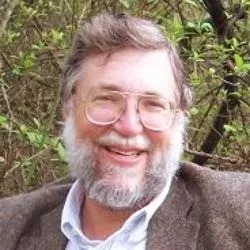
Christopher Paine — Former Director of the Nuclear Program at the Natural Resources Defense Council; Former Senior Staff Member to the U.S. Senate Armed Services Committee
For clarity, this transcript includes minor edits made by Christopher Paine and footnotes provided by Columbia University, AC4 research institute.
Andrea Bartoli
Welcome, all. This is Andrea Bartoli. We are delighted, as part of our ongoing evaluation of “Megatons to Megawatts,” today to have Christopher Paine for this interview. Chris Paine was directly involved – especially at the beginning of the process – and we are delighted that we can have this discussion. As in other cases, the interview will be led by Jeffrey Hughes. A focus of AC4 is on the bases for cooperation and the environmental aspect, which, time permitting, we may turn to at the end of the conversation. But in any case we are delighted to have this opportunity to go deeper into how the deal came about.
Jeffrey L. Hughes
Yes, thanks Chris, for your time today. As Andrea just mentioned, the Columbia University Climate School, through our AC4 institute, is devoting time to evaluating the “Megatons to Megawatts” agreement, a term we use interchangeably with the “HEU Deal,” which was an agreement that was formalized in 1993 and ran until 2013 between the United States and Russia, that took highly enriched uranium (HEU) from Russian nuclear weapons, diluted it down to lower levels useful for civil reactor fuel that the United States purchased over that period; it produced some 10% of US electricity over the deal, notably with little carbon footprint, which made it of particular interest to the Climate School. It was a real Swords to Plowshares event that few people know about. So we are trying to deepen the historical record of how it came about, how it was implemented, and also what the future implications might be, given there's still a lot of highly enriched uranium in the world.
Christopher Paine was a participant in the early steps that made possible the discussions that led to the HEU deal. Chris was a graduate of Harvard in 1974. He then had projects that involved Princeton and MIT on arms control, and made his way to work in the Congress and as a staffer for Senator Edward Kennedy, who was on the Armed Services Committee at the time, where Chris served for five years. He then moved over to the Natural Resources Defense Council (NRDC), focusing particularly on nuclear weapons and fuel cycle issues. So with that overview of Chris's background I would first be particularly interested in asking: How did you become interested and get into the national security field? I believe early on after your graduation, you were involved in grassroots arms control work in the United States, which then later branched out also to include Russian counterparts. With that, I'll turn the floor over to you, and we'll see how our conversation unfolds.
Christopher Paine
Sure. Well, I was in the anti-Vietnam War movement. I've been engaged in international security issues my entire life, since high school, really. I was a Vietnam era anti-war activist and draft resister convicted of refusing to comply with the Selective Service System, served a two-year probated sentence doing “alternative service” following my conviction in 1973, and was pardoned in 1976 by President Carter. I think I'm probably the only person with my background who then went on to hold Top Secret and nuclear “Restricted Data” security clearances. And I think that juxtaposition of roles explains somewhat how I was able to move in these different worlds, and bring to bear popular pressure on the government at the same time as I was operating within the government.
So after college and alternative service, I was a “left coast” journalist in California, covering the military industrial complex from a critical perspective and other sorts of progressive issues, working out of the Pacific Studies Center (PSC) in Mountain View and the Pacific News Service (PNS) in San Francisco, and writing articles about and from the Middle East and South Asia. But around 1978 the Carter administration proposed a massive deployment of mobile intercontinental ballistic missiles [ICBMs], with nuclear warheads in the Great Basin of Nevada and Utah, and I felt this was such an absurd proposal --so cosmically absurd in every possible dimension -- that I just had to go to Washington and fight it. So I left the west coast and went to Washington DC as a researcher for the Council on Economic Priorities, which was based in New York City. There I wrote a book with another guy about the MX missile called Misguided Expenditure.[1] And that took me next into an association with the Federation of American Scientists [FAS],[2] because they needed someone as an analyst and advocate in that very area. I was hired by Jeremy Stone[3] at the FAS at the very moment the Nuclear Freeze movement burst on the scene. And at the time I was dating the woman who was co-founding the freeze movement, Randy Forsberg, who was also the director of a small independent think tank in Brookline, MA, the Institute for Defense and Disarmament Studies[4] So I worked on the original call to halt the nuclear arms race, and then became the freeze movement's legislative strategist, for better or for worse, and worked on a number of legislative initiatives involving aspects of the freeze, culminating in the longest national security debate in congressional history and passage of the freeze resolution in the House [of Representatives]. And I next went to work, in 1984, for Representative Ed Markey,[5] who had been an early leader of the nuclear freeze, and I became his staff specialist on the Energy Conservation and Power Subcommittee, which had jurisdiction over nuclear non-proliferation issues, which were of great concern to him. He was a leader in the house on both the freeze and nuclear non-proliferation issues.
And it was around that time, in early 1986, that we carved out one component of the freeze and decided to focus on stopping nuclear testing, and that work brought me in contact with a whole host of people within the nuclear weapons laboratories[6] and with NRDC.[7] It was through that work that I initially met Tom Cochran.[8] And so the culmination of that work for Ed Markey was that we passed in the House a one kiloton threshold cut-off of funding for nuclear weapons tests in 1986 – which was an absolute shock to the system and a complete surprise, even to the community of test ban advocates, who had given our legislation no chance. I had devised a means of “legislating arms control” on a reciprocal basis, in order to get around the usual epithets of “unilateral disarmament” that always afflicted Congressional efforts to impose any restraints on the U.S. side of the arms race. But what happened in the interim was Gorbachev declared a nuclear test moratorium, and Tom Cochran was able to negotiate an arrangement with the Soviet Academy of Sciences for on-site in-country monitoring of the Gorbachev test moratorium, a long-desired breakthrough in arms control that the national security hawks had often called for, but that many in the Reagan Administration actually detested. We managed to emplace seismometers around the then primary Soviet test site in Kazakhstan.
Jeffrey L. Hughes
I believe that was in 1986.
Christopher Paine
Yes, and so that effort came to fruition, just as Markey's amendment was coming to the floor. And so I was able to set up a display in the Speaker's lobby of the House of Representatives for all the members to see as they passed in through the lobby to vote, ensuring that before voting they understood that independent US and Soviet scientists had accomplished what was supposedly impossible: on-site cooperative verification, which was the ostensible holy grail of the US position on arms control. That position was mainly adopted because American policymakers cynically understood that the chronically paranoid Soviets would never allow it; so the US always insisted on it. But in fact the Soviets under Gorbachev did allow it. And this whole effort culminated in the Assistant Secretary of Defense for International Security policy, a super hawk named Richard Perle…[9]
Jeffrey L. Hughes
The Prince of Darkness…
Christopher Paine
The Prince of Darkness, yes, angrily said to me during a break in a hearing: “You mean there are American scientists running around the Soviet Union, and I don't know about it!” I said, ”Yes, that is exactly what is happening.”
Jeffrey L. Hughes
And they were not governmental scientists, they were part of the NGO and academic communities…
Christopher Paine
The Reagan Administration refused to do it, so the Soviets were willing to work with the U.S. and international NGO community, knowing perhaps that these people had significant connections to US policymaking circles. I then went to MIT for a semester on a MacArthur fellowship, working on articles about the test ban with Frank von Hippel of Princeton and FAS. And then the Democrats took back the Senate, and Kennedy[10] asked me to come work for him on the test ban. So we tried for two years to pass the one-kiloton threshold ban on the Senate side, but we weren't able to do it. But we did force a compromise in conference: Reagan capitulated and agreed to a carefully staged renewal of test ban negotiations with the Soviet Union. However, he had this very attenuated track to get to a test ban; we had to first verify the Threshold Test Ban Treaty from the Nixon era (permitting large underground tests up to 150 kilotons), and for that we had to conduct a series of dilatory and largely irrelevant “Joint Verification Experiments.” They effectively devised a whole series of obstacles to get over before the US and Soviet Union could begin actual negotiations on a CTBT. Nonetheless, this hard-won concession started the whole system moving towards ultimately ending nuclear testing. And then, while I worked for Kennedy, we passed something called the Nuclear Test Ban Readiness Program,[11] which then forced the Department of Energy to start looking in detail about how we would manage the stockpile without reliance on underground test explosions.
Jeffrey L. Hughes
I might just add some background to what you just said. You mentioned the joint verification experiments (JVEs) that would prove somewhat consequential for the HEU deal down the road, because that was the first time a future Minister of Atomic Energy from Russia [Victor Mikhailov][12] visited the United States. And the experiments legitimized, for the first time, the meetings between Los Alamos and Livermore officials and Mikhailov in Nevada, as well as in Kazakhstan, building on the earlier work you mentioned from Velikhov and Cochran.
Christopher Paine
Right. Well, you also have to remember that Mikhailov was present in our negotiations in May of 1986 when we negotiated the agreement to do in-country monitoring in Kazakhstan. He was there at the meeting. He was at that time head of the institute that produced test monitoring sensors and equipment.
Jeffrey L. Hughes
But that was meeting with Velikhov and Cochran…
Christopher Paine
Right.
Jeffrey L. Hughes
But then, because of that sort of catalytic experiment, that helped lead to the joint verification experiments (JVE),[13] which then…
Christopher Paine
Oh it was absolutely an attempt by the Reagan-Bush administration at that point to take away the baton from us and shift it over into a channel that they felt much more comfortable with, and probably Mikhailov did too, which was we're somehow going to continue nuclear testing, but it'll be constrained in some way, and we will monitor each other. You could almost view the JVE as the two nuclear weapons establishments colluding with one another to keep the whole thing going.
Jeffrey L. Hughes
Although Mikhailov reflected at the JVE, as reported by Los Alamos counterparts, that it's a lot different meeting and working alongside with the counterparts in the country that you are targeting – he was on the nuclear targeting committee in the Soviet Union. So the personal dimension of meeting with his Lab peers, and having a technical competition about who can measure their tests better, resulted in a certain rapport building that may have proved important…
Christopher Paine
Right. Well, maybe, but the substantive result of the JVE was that the seismic estimates proved more accurate than the so-called “direct” hydrodynamic measurements of the near field shock wave. In other words, the whole mythology built up about how the “direct” hydrodynamic measurement of explosions was inherently more accurate than seismology was not correct -- anyway, that's all kind of inside baseball. But these technical things were fought over and analyzed in detail as a kind of proxy war over whether the nuclear status quo would persist, or evolve in some fundamental way to reflect the emerging new geopolitical environment.[14]
And you have to remember we got to know Mikhailov pretty well, especially Tom [Cochran]. And Mikhailov was actually, I think, fond of Tom Cochran. He really liked him. And we liked Mikhailov; he was blunt and had a good sense of humor. But we knew that actually he didn't agree with us. He was not on the nuclear disarmament track. He even published an autobiography called I Am a Hawk.
Jeffrey L. Hughes
You're right, I've read it. It's been expanded. There was an earlier shorter version [when he first became Minister of MINATOM in 1992],[15] but now it's been embellished to like 600 pages [including his collected writings and interviews].
Christopher Paine
So we were functioning in an environment where we had allies within the Soviet system, and then later the Russian hierarchy, who agreed with our perspective on trying to move the world towards nuclear disarmament. But we were also dealing with officials in the weapons complexes on both sides that didn’t have that vision at all, and saw it as a threat to their existence. And this is the fundamental problem in getting to nuclear disarmament: the real obstacles are more often domestic rather than international.
Jeffrey L. Hughes
Your reference reminds me about the [NRDC/FAS] Black Sea experiments starting shortly after the JVE in 1988, in 1989 which were opposed, for example, on the Soviet side by Yulii Khariton,[16] the Dean of Arzamas-16,[17] the Soviet Los Alamos [who was concerned about the potential loss of classified weapons information in the experiment].[But Khariton,] the scientific director of Arzamas-16 for almost 50 years, would soon be the first one to greet Sig Hecker [the US Director of Los Alamos,] when he came over later in the early 1990s to collaborate.[18] Nevertheless, despite the opposition of some of the defense establishment in the Soviet Union, somehow that Black Sea experiment was able to go forward. I believe you were there on that experiment and related trips.
Christopher Paine
Yes.
Jeffrey L. Hughes
I’d be interested in your recollections about that, because it had congressional folks along, which I suspect you helped pick out, and reporters too.
Christopher Paine
Yes. Victor Karpov was there, a top Soviet arms control negotiator...[19] This was sort of the peak of glasnost, if you will, and the peak of Velikhov' s influence. Velikhov was an extraordinary guy.[20] I don't know if you've read his autobiography…
Jeffrey L. Hughes
Yes, Strawberries From Chernobyl…[21]
Christopher Paine
You know he took extraordinary risks.
Jeffrey L. Hughes
Yes.
Christopher Paine
He signed that agreement with us [for a verification test in the USSR] without getting clearance beforehand from Gorbachev or the Politburo. He kind of understood where Gorbachev was trying to take the country, and appealed to his good side. So a lot of the progress that we were able to make was because of personal relationships. I mean, a kind of trust developed that we were trying to end this ridiculous Cold War and the vastly overbuilt arsenals. I don't think most of the Russian participants thought we would get to disarmament within their lifetimes, and I probably didn't either. But we wanted to set the world on a downward trajectory [of nuclear arms]. And as scientists they understood how irrationally overbuilt the whole structure was, and how dangerous it was. That was a common understanding that had informed this international scientist movement since Bertrand Russell and Albert Einstein, since the founding of Pugwash:[22] There was a community of people in both countries who understood what a menace this all was.
Jeffrey L. Hughes
I always found it interesting that Velikhov was able to operate on the fringes of the defense establishment in the Soviet Union and Russia, while he himself kind of stayed in the civil fusion category. He was more free to travel the globe: to go to Japan, and to France and push ITER,[23] and so forth. And so he was able to kind of create his own network outside his own system that he could leverage.
Christopher Paine
As Eisenhower said, when you have an insoluble problem, like fusion, internationalize it. And yes, Velikhov realized that early on, which was a way to interact and forge cooperation with scientific communities who could maybe get more funding for their projects, if they just were part of this larger international effort.
Jeffrey L. Hughes
So with regard to the Black Sea experiment [in 1989], do you recall, were you there, when [Steve] Fetter and [Tom] Cochran were climbing up the missile [doing gamma ray detection on the nuclear warhead]?[24]
Christopher Paine
Yes. I was there. I took pictures. And I had a lot of pictures after the whole trip, because we also visited some other sites in Russia…
Jeffrey L. Hughes
Wasn't it a contested ABM site?[25]
Christopher Paine
The Krasnoyarsk radar station[26]… that might have been a trip at a different time, in 1987 because I remember coming back and going out to the CIA and briefing all the analysts there on what we'd seen.
Jeffrey L. Hughes
That's so fascinating: the NGOs going around and gathering information [in the USSR!].
Christopher Paine
Yes, we saw facilities that [the intelligence community], of course, had been observing with U-2s and SR-71 aircraft overflights, and later satellites, for decades, and then speculating about them. But they'd never been to them, and we had. So I filled them in on, for example, how the Krasnoyarsk radar had come about; it was in the wrong place, and it was oriented outwards [of Soviet borders], and it was a violation. But it was a hunk of junk. It was falling apart. So the intelligence community needn't make such a big deal out of it. It was actually a symptom of Soviet decay and Soviet backwardness. It was not a threat.
Jeffrey L. Hughes
I suppose one motivation for bringing congressional representatives along [on that trip to Krasnoyarsk] was to kind of validate what you just said; and of course you didn't know what they would see in advance. But do you recall offhand who the members were that went and did it affect their views coming back or their politics?
Christopher Paine
Well, it's been a long, long time. I remember an influential staffer from the House Armed Services Committee, Tony Batista, came along on the trip to Krasnoyarsk. There were [many] separate trips; there was the original agreement to set up the seismic monitoring network in 1986, and then there was the huge conventional chemical explosion in 1987 that we got permission for… I believe it was from the Soviet Academy, but it must also have been with the cooperation of what was then called MAPI[27] (MINATOM’s predecessor), because the Soviet side conducted a spectacular large chemical explosion as a seismic detection and calibration experiment that then wound up on the cover of the New York Times Magazine Sunday.
Jeffrey L. Hughes
These NGOs: an explosion in the USSR near a nuclear weapons test site!
Christopher Paine
To the uninitiated, the Times picture may have even looked like a small nuclear detonation, and that was part of the experimental work to demonstrate how far away you could detect the regional seismic phases from underground detonations. And this was a very small explosion by nuclear standards, right? It was maybe several tons of high explosive or something like that, I can't remember the exact amount. On that trip I know we had Rep. Tom Downey of New York, a committed arms controller from Long Island, and Rep. Robert Carr of Michigan, but I just don't remember offhand who else might have been on that trip from the House. If memory serves, I was the only person from the Senate side. For the Soviet cruiser Slava warhead detection experiment in Yalta harbor, we had along Rep. Bob Carr again and Rep. John Spratt (D-SC) who then chaired a special Armed Services Committee panel on nuclear weapons production, and his legislative counsel Thomas Kahn, and Rep. Jim Olin (D-VA).
Jeffrey L. Hughes
Yes. Just as you mentioned the photos that you took, with regard to some of these records you just mentioned, one of the things that we have made a place for on the Columbia AC4 website, besides the archive of interviews to try to further flesh out the details of the historical record, is for archival materials that can be either associated with an individual or simply posted for general background with respect to the deal. So as you sort through any boxes and you come upon a trove, we'd be happy to digitize them and post them, either with respect to you as an individual or just more generically under an NRDC heading.
Christopher Paine
I do have a lot; I'm just now starting to go through it all. I promised my daughters I would write my own memoirs before I kick off, as they want to know more about what their father did before they were born and what happened.
Jeffrey L. Hughes
I understand the impulse.
Christopher Paine
So in terms of the origins of the HEU deal, Frank von Hippel[28] – especially in the context of a fissile material cut off, which he had been pushing for years and had been part of the of the nuclear freeze proposal – we were all aware, and had discussed at various times with the Russians, that you could easily take HEU from retired weapons and blend it down and make nuclear fuel out of it. You had to convert the metal to oxide, and then you had to blend it with natural uranium, but this was a well-known possibility.
Jeffrey L. Hughes
This was well before the October 1991 meeting?
Christopher Paine
Oh, yes, oh, yes; this had been just raised incidentally as a technical possibility for how to deal with HEU coming out of warheads. I mean it was well understood that this was a possibility. What wasn't well understood, and Tom [Neff]'s genius, imagination and formulation was how to integrate this material into the international uranium market without it upsetting the whole apple cart. And you know, the [Soviet] uranium exports were already depressing the international market at the time, and it was at a low ebb, but Neff was able to advance a proposal that met everybody's needs in theory, in concept…[29]
Jeffrey L. Hughes
Right.
Christopher Paine
… And to also accomplish this fantastic step forward for humanity: getting rid of highly enriched uranium from weapons. Because of his expertise in the international uranium market and in enrichment, and how the whole process worked, he was able to advance a detailed proposal that one would have thought should have come from the US government.
But that recalls a whole other dimension to this. Throughout this period the Reagan/Bush, and then the Bush Sr. administration, were absolutely recalcitrant when it came to increasing mutual transparency and accountability; they had used verification for so long as an excuse [or tactic] that by the time it was possible to achieve some of these goals, they immediately ran the other direction, and missed opportunities… The great sadness I have from this period is that, despite what we were able to accomplish, it really could have been so much more. We had through our dialogue and interaction with senior officials – like [Andrei] Kozyrev,[30] like Sergey Kortunov,[31] like Velikhov, like Mikhailov – they actually had the early Yeltsin administration making proposals for stockpile disclosures and reciprocal verification that the Bush administration turned a deaf ear to and was actively hostile to. There's a whole correspondence, some of it's in our workshop reports from that from time, we reprinted in the appendices our correspondence with the Secretary of Energy [James Watkins][32] and Victor Alessi,[33] the head of the DOE Arms Control Office at that time, saying, you know, here we've worked out some technical schemes to do this, we'd like you to take a look at it. Why don't you start a working group with MAPI on this? They are open to it. And then nothing, nothing -- in fact, overt hostility. They basically tried really hard for about a year to keep DOE weapons lab personnel from attending our [NRDC/FAS] meetings [with the Soviets]; in fact, not just DOE weapons labs, any of the DOE labs, because there were verification programs at Brookhaven and Argonne, and they browbeat the scientists at those institutions not to come to our meetings.
Jeffrey L. Hughes
Yes, I was intrigued looking at some of the records of the various NRDC/FAS meetings with their Soviet counterparts. I guess the first one was 1990 and I'm not sure there's a report on that one.
Christopher Paine
There is a report on that meeting that culminated in a June 1991 report, I think you probably have it in the archive, regarding ending the production of fissile material for weapons and verifying the dismantlement of nuclear warheads.[34] Years later I wrote a short guide to these workshops and their policy context for the archivists and researchers at Yale, which is the depository for NRDC’s papers. I will provide it to append it to the end of this interview transcript.
Jeffrey L. Hughes
Okay, so that joint paper was the record of the meeting, in effect. Okay.
Christopher Paine
That started the record of the series of six meetings conducted from October 1990 to December 1993. Unlike later reports, there was no record kept in English that recounted the actual discussions; this report basically was just a kind of technical summary of the problems that had been discussed.
Jeffrey L. Hughes
The general observation I was going to make was, besides the admiration of all the detail that you captured – I guess there was a handful of you taking the notes that somebody later orchestrated into a final report – but in the initial 1990 to 1991 reports, it's sort of NGOs meeting with senior Soviets, and yet over time, by the February 1992 report, there are USG people, joining the group at the meetings, and so….
Christopher Paine
Yes, eventually they capitulated, after the Soviet Union had faded into history, but by then they had lost valuable time and instilled a certain measure of distrust on the Russian side.
Jeffrey L. Hughes
But without the kind of building blocks [NRDC/FAS] started, one wouldn't have had some of those later conversations, right?
Christopher Paine
I mean, at some point I believe it was in February 1992, and certainly by 1993, there were all kinds of government people there. But the latter coincided with a shift in administrations.
Jeffrey L. Hughes
Well, what struck me is that when I looked at the roster of the people that were there in February 1992 a lot of them later moved into the new administration. Bob Bell[35] was there from the Congress, but then next he goes in and heads the arms control staff in the NSC. There was an OMB rep, there was a DOD rep, etcetera.
Christopher Paine
Right. Ken Luongo from Senator Wirth's staff then became an assistant to Hazel O'Leary, Secretary of Energy. Yes, so, there was a lot of migration of people who had been in our orbit into the Clinton administration.
Jeffrey L. Hughes
Right.
Christopher Paine
But I have to say the opportunity was lost. I mean, the Bush administration wasted well, essentially three years, 1989 to 1992 when they could have been forging ahead with setting up a robust verification structure to monitor the dismantlement and disposition of nuclear warheads, and they didn't do it, they just didn't do it, when there was a willingness on the Soviet/Russian side to do it.
Jeffrey L. Hughes
I mean it was a complicated time with Gorbachev almost being removed from office in August 1991… and meanwhile your group has sort of been operating there in trying to stoke cooperation...
Christopher Paine
Well, this just reminded me of another way we were involved in the early days of the HEU agreement, to the consternation of some people, because we were in Moscow and Kyiv the week that the Soviet Union disintegrated.
Jeffrey L. Hughes
Right, this would be the December [NRDC/FAS] 1991 meeting, following the October meeting, which we can maybe circle back to later.
Christopher Paine
Yes, well, regarding the October meeting, all I can say is I didn't know Tom Neff before that point. I'd never met him, and he wasn't on any of the invitation lists for the meeting. I was just looking through the old ones, and he wasn't on the list. Maybe at the last minute he was added. Marvin Miller, who was a professor of nuclear engineering in the same department as Tom at MIT,[36] Marvin was an attendee at the October 1991 meeting, and maybe he just suggested to von Hippel to bring him, but he wasn't on our radar for that meeting. Since my late beloved spouse Katherine Magraw had been a grad student at MIT’s Center for International Studies from 1985-88 and was completing her MIT doctoral dissertation in political science at the time, she may well have also been a link to Tom Neff, as I know they knew each other. Sadly, I can’t ask her as she died of cancer in 2019, shortly before her 61st birthday. After completing her Ph.D. she went to work on the nuclear test ban negotiations and ratification effort at ACDA and State from 1993-99.
Jeffrey L. Hughes
Well von Hippel also knew Neff from his graduate school days, and I think Tom may have shared his draft op-ed with him.
Christopher Paine
I never heard that back story. I really don't have any first-hand knowledge of how the link up happened. So Tom Neff didn't give a presentation, if I recall, at that October 1991 meeting. But he was able to talk to Mikhailov, and maybe some other officials, during the breaks between sessions. And then his op-ed appeared a few days later, and that started the ball rolling.
And if you look at this period, it's just extraordinarily crammed with events. Somewhere in my files, I came across Cochran’s travel schedule for October, November, December of 1991, and I mean, he was at a Pugwash meeting in Italy, then he came back to the US, then he went to Russia, then he came back, and then he went to China. We were constantly in motion during that whole period. In fact, we had a group of Chinese scientists as observers, I believe, at that October meeting...
Jeffrey L. Hughes
Yes, I was struck by that. That was interesting.
Christopher Paine
We had private meetings with [the Chinese scientists] afterwards at NRDC, and then we had, in later years, substantial exchanges with them on test ban issues. Tom [Cochran], Robert Norris[37] and I took Ray Kidder,[38] and Dick Garwin[39] to China, I believe that was in 1993 and met with some of their nuclear weapons team and discussed what the Chinese were going to do in response to the US Congress's decision to halt nuclear testing, and then Russia's extended moratorium. They expressed a willingness to sign the CTBT. It's extraordinary. I mean, I'm just looking here [at a document] … the parallel unilateral initiatives were announced – the Bush-Gorbachev initiatives of September 27 and October 5, 1991 – and then we had our October meeting and the December 1991 workshop at the Plaza Hotel [in Moscow with the Russian weapons scientists], and just a few days after that they formed they formed the CIS and the Soviet Union was history.
And then after that, the same group arrived in Ukraine, so we're there, basically that first week of independence. And what I think is not recorded in the accounts of that meeting is that Cochran and I had a meeting, which wasn't official. We went back to the parliament one of those evenings we were in Kyiv, and met with the chair of, I believe it was their defense committee at the time, but it could have been their foreign relations committee – one of those two committee chairmen – and Cochran sketched out on a back of an envelope the HEU value in the warheads that Russia was withdrawing from Ukraine. And we believe that when the Ukrainian policy establishment realized that the Russians were absconding with something of great value that they were entitled to a portion of, that, of course led to some complications down the road due to the Russian reluctance to pay up. It was the HEU deal, in fact, that helped to resolve this deadlock over CIS warhead withdrawals, because the US made an advance $60 million dollar payment to the Russians that enabled prompt delivery of critically needed commercial nuclear fuel shipments to Ukraine
Jeffrey L. Hughes
Right.
Christopher Paine
For better or for worse, we may have been somewhat responsible for that delay, but we felt for the better. Because the prevailing US policy toward Ukraine, the Bush administration policy, was completely tone deaf. It was completely off the rails in the wrong direction. It was so pro-Russian, so pro-Soviet, with no historical understanding of the repressive relationship between Greater Russia and Ukraine, just no, no background in it at all. And so there was no help going to Ukraine, it was all going to Russia: the agricultural credits, and so forth, the emergency food shipments, all that was going to Russia, and they just didn't care about Ukraine. Bush actually [in August 1991] landed in [Kyiv] and gave an absolutely idiotic speech, which was completely panned by the body politic in Ukraine; they considered it offensive because it was, it was so, so tone deaf and so pro-Soviet. So we felt as though Ukraine was getting the short end of the straw here, and that we needed to do something to at least make them aware that they were entitled to some of the revenue from this. And we did. And over time they did get to partake in the deal, mainly in the continuation of nuclear fuel shipments from Russia paid from the deal’s proceeds.
Jeffrey L. Hughes
I’ll note that in January 1992 [Secretary of State] Baker[40] met with Yeltsin to set up the February 1992 first summit meeting at Camp David between Yeltsin and Bush 41. And Velikhov had already helped set up a meeting with Yeltsin of all the Arzamas-16 and C-70[41] weapons lab scientists [including Mikhailov]; Gorbachev having, or almost lost having, the nuclear launch codes in August 1991, made it a good opportunity for Yeltsin to meet with the nuclear weapons establishment. And the result was he basically got a blessing at that meeting, according to accounts of it, for Minatom to go commercial. The whole idea of selling uranium or plutonium came up, as well as reactors, [with Mikhailov pressing Yeltsin on getting revenues for salaries]. And so when in February 1992 when Yeltsin met with Bush, who's with him? Velikhov. And Velikhov, in the now declassified records of the meeting, kind of bolsters the pitch Yeltsin makes for the selling of HEU and plutonium to the US.
Christopher Paine
He actually included plutonium in that?
Jeffrey L. Hughes
Both HEU and plutonium. Yep.
Christopher Paine
They were pushing the sale of weapons plutonium for MOX fuel?…
Jeffrey L. Hughes
Plutonium was on the table [but perhaps HEU was the main focus]. Secretary Cheney[42] objected, well we have enough HEU fuel for the navy; he didn't want the Defense Department to be on the hook to buy it. But then National Security Advisor Scowcroft[43] had already been briefed by Velikhov, and so he interjects: Dick, there are companies that want to buy it, you can blend it down. Besides the Velikhov angle, the reason I raised this came to mind was that within a week or so of this summit, Baker was on a plane to Moscow to meet with [Foreign Minister] Kozyrev on the idea of an HEU deal. And you mentioned Cochran's travel schedule. After Baker met with Kozyrev he was then flying to all the other [11] new constituent parts of the CIS, trying to set up embassies simultaneously in all of them, while also trying to keep one successor nuclear state. You mentioned Bush’s pro-Russian stance. There is sort of a counter case that the priority was trying to keep one nuclear power as opposed to four…
Christopher Paine
That was the tension, obviously. But the way it was done… I mean, of course, you have three entities involved at this point, you have the CIS, and under their agreement there was supposed to be a unified command, and the transportation and disposition of warheads was supposed to be a sort of joint project. But the Russians just took it over and ignored all the other participants. But had the US intervened at that point and said yes, we're genuinely interested in monitoring and transparency, and here's what we're willing to do if you guys are willing to do it, all the republics would have supported us. And we would have had the Russians over a barrel in terms of transparency at that point. But we didn't. We didn't volunteer anything, not a single thing. And yeah, it was all framed as “well, verification would be really clumsy and onerous, and it would delay the process, and we don't want to delay the process.” But they clearly had not thought strategically about trying to reshape the new world that they were suddenly getting. They decided that sort of a Russian monopoly on nuclear strategic power, basically continuing the status quo, the bipolarity between Russia and the United States, was the only model they knew, and they gravitated towards that. They didn't rethink the nature of the security system or the global future at all. They just slid into the view that Russia was going to inherit the mantle. Very little changed in the US as a result of the collapse of the Soviet Union. Very little changed within our military industrial complex. You know, there was a chain of acquisitions that ensued as there was a temporary cutback in the defense budget that only lasted two years, but that prompted some consolidations and acquisitions in the defense sector. And then a group of Bush officials with knowledge, foreknowledge, of those plans, left the administration and founded a venture capital firm, the Carlyle Group, and made billions with their proprietary knowledge of how the defense industry was going to be restructured; that's sort of the level at which they were functioning. They weren't thinking about global security alternatives. To his credit, the old cold warrior Paul Nitze,[44] as soon as he realized that the USSR was disintegrating, said, "We don't need nuclear weapons anymore, we should denuke,” and he wrote a paper with Les Aspin,[45] the chairman of the Armed Services Committee, advocating a policy of denuking, as he called it, and getting to the lowest level possible as quickly as we could. And that was the right policy response. But the Bush administration was not on board any of that, unfortunately.
Jeffrey L. Hughes
Your comments remind me that there was a congressional role in all of Bush policy here. I think it was in November of 1991 that the initial debate on Nunn-Lugar [to aid nuclear security in an ailing USSR] came up, and it was initially shot down in congress. I was intrigued, putting together my book about the HEU Deal, to actually see that in parallel, Senator Pell[46] was sponsoring legislation to federally fund the HEU deal, and both Neff and von Hippel wrote on its behalf, but basically there wasn't enough room even to get Nunn’s bill through (until he teamed with Lugar), let alone two federally funded initiatives for the Soviets, because there was kind of sentiment: where’s the post-Cold War budget “peace dividend”?
Christopher Paine
Republican Dick Thornburgh lost to Democrat Harris Wofford [in a Pennsylvania special election for a Senate vacancy November 1991] and that spooked the Bush administration that a moderate Republican like Thornburgh would lose to a Democrat. And Wofford had run a kind of anti-foreign aid campaign…a misguided campaign, in my opinion. He had attacked the Bush administration, facing a recession, for focusing on foreign aid, which he characterized as a waste, saying instead we should be supporting Americans and meeting their needs, which, of course, we should have been, but they're not mutually exclusive. Supporting Russia’s successful transition to a capitalist social democracy, along the line we had achieved with postwar Germany and Japan, was arguably more important at that time than increased support for social welfare at home, because it would have enabled a major long term structural shift in our own resource allocation away from dysfunctional spending on nuclear forces and toward domestic human needs.
The problem was the way we were spending our money. The easiest thing to do at that time would simply have been to take a chunk of the defense budget, just reorient several billion dollars allocated to defense spending, which is obviously implicated in controlling and reducing the nuclear weapon stockpiles. A disintegrating Soviet Union was obviously a national security issue, and they could have diverted money from the defense budget; they did divert a small amount for transportation, for airlift, and things like that, but they didn't use the resources in the Department of Defense to significantly assist the Soviet Union economically in its hour of need, and then Russia, you know, in the years that followed…
Jeffrey L. Hughes
Well, not while Cheney was there at Defense. And it was tough to even get Nunn-Lugar through Congress. I guess, there was a certain logic…
Christopher Paine
Yes, the political environment was sort of hostile to [aiding the Soviets], and there, you know, even George Mitchell[47]…
Jeffrey L. Hughes
The former senator from Maine…
Christopher Paine
…Who was the majority leader at the time, even he was criticizing, or making noises, about how the Bush administration was ignoring domestic policy, and was too preoccupied with international affairs, because we had just done the Gulf War, with all the international coalition building that Bush was involved in. Anyway, when the money to assist the Soviets was resurrected, that's where our second NRDC/FAS seminar came in. It was at the October 1991 meeting that we brought Mikhailov and others together. He initially had proposed a much bigger delegation of people; he had sent us a huge list, mostly scientists from his labs, from Arzamas-16 and Chelyabinsk-70, and he wanted to have a technical meeting on how to verify warhead dismantlement. At least that was what Mikhailov initially thought he was getting into, because Cochran had gone over to Russia around June and came back with an agreement between himself and Mikhailov to conduct a joint study of nuclear warhead dismantlement.
Jeffrey L. Hughes
That's initiative!
Christopher Paine
Yeah, it was. And Tom came back with an agreement, and then Mikhailov sent in this long list of technical people, but in the interim, the focus in the meeting shifted because of the political situation in the Soviet Union, and after the failed coup the meeting focus shifted to more of a broad brush and a bigger lens.
Jeffrey L. Hughes
I want to ask who took the initiative in connection with the meeting to include taking Mikhailov up to the Senate?
Christopher Paine
Oh, well, that was my doing. Because I had, when I knew this meeting was going to happen, I wrote a memo to Senator Kennedy, and I said we've got these Soviets coming, and perhaps you should have an “issue dinner” with them. , Kennedy typically had such dinners out at his house every couple of months; he'd pick an issue that he wanted to make headway on, and he was very bipartisan – he'd invite, for example, Senator Ted Stevens[48] and Senator [John] Warner[49] of Virginia, and some of his Republican friends, and some Democrats, and some experts, and we all sit around the table, and try to get some bipartisan headway on something.
Jeffrey L. Hughes
Did he ever invite Senator Domenici?[50]
Christopher Paine
Oh I'm sure Domenici must have come to one of those meetings over the years, but not at this time. So, what happened was, he couldn't do the issue dinner, but he agreed to a meeting, inviting Mikhailov to his hideaway office in the Capitol. And so on that appointed day, after our workshop Mikhailov was in town for perhaps another four days – and since my suggestion to Kennedy to have an issue dinner couldn’t work for his schedule, maybe instead he could take Mikhailov and organize a meeting with the Arms Control Observer Group. That group was a bipartisan, very bipartisan body by design; it was sort of the Senate's visiting committee for the arms control negotiations, so that any administration wouldn't get off on completely the wrong track when it came to bringing a treaty to the Senate. The Group enabled a lot of prior consultation with interested senators who knew something about arms control. So Kennedy, in the end, resolved that I would bring Mikhailov up to his hideaway in the Capitol and meet with a group of senators. But at the appointed hour I go to the hotel to pick up Mikhailov, and he's not there…
Jeffrey L. Hughes
Oh no!
Christopher Paine
I said, "Where is he? And one of his aides or somebody knew that he was nearby shopping for shoes. So I piled back in the cab and went to the store, and yes, he was in there shopping for shoes, and we had to call him out. He's carrying these shoes. He jumped at the chance to buy Western shoes, right? And then we rushed to the Capitol and had the meeting. And let's see, Senator Jeff Bingaman,[51] from New Mexico was there. And Senator John Warner of VA and Senator Ted Stevens, ….
Jeffrey L. Hughes
Wow!
Christopher Paine
… who was chairman, or the ranking minority member of the Defense Appropriations Subcommittee. And then Stevens invited Mikhailov, most likely pre-arranged with Kennedy, to the Arms Control Observer Group. So I think the next day Mikhailov swung by the Arms Control Observer Group and gave them the pitch for the plutonium storage facility. He wanted to use the Nunn-Lugar money, which wasn't available yet, but it was in the air, and the amounts were sort of known, and he wanted to use the entire amount, the $400 million. Well, then it was $500 million. He wanted to use $400 million for the plutonium component storage facility, and he wanted 100 million as a kind of “slush fund” to spread around the local area, and probably to local politicians and build good works like playgrounds and schools. I thought that was reasonable, because that's how it's done, even in the US; the DOE routinely does that when it builds facilities. Los Alamos does it all the time…
Jeffrey L. Hughes
Well that approach sounds similar to the idea later that Cochran would be involved with later Admiral Demars and Judge Webster: The Non-Proliferation Trust.[52] Nonproliferation was the core motivation, but you had these other social needs in Russia to serve as well to make it work.
Christopher Paine
Well, maybe, although that came a bit later. But then that ran afoul of US domestic politics, because people wouldn’t accept providing those kinds of community impact funds in Russia [in foreign assistance] when we don't have them available in the US budget“if we can't even come up with the money domestically for our own people, how could we do it in Russia” was the argument, which was really more a commentary on problems in the US political process. Mikhailov correctly apprehended that community impact spending was a smart thing to do, but I also think he was proposing creating a pool of relatively unaccountable money that then could be siphoned off by various people to ensure the project would move along and get the Russian resources it needed on schedule.
Jeffrey L. Hughes
Was Senator Nunn[53] at the observer's group, or was that a separate meeting at his office?
Christopher Paine
Well, I wasn't in the room [at the Arms Control Observer Group], so I can't recall directly. I don't remember if Senator Nunn was there. I expect he probably was.
Jeffrey L. Hughes
Senator Nunn was quoted in the newspaper by [Don] Oberdorfer[54] about what Mikhailov told him: “I need your help…”
Christopher Paine
So it may have been from a one on one meeting, or it was at the Arms Control Observer Group meeting. I don't know.
Jeffrey L. Hughes
So you were ferrying Mikhailov around and trying to keep him on track as he petitioned Congress for funds.
Christopher Paine
Well, yes, just trying to do my job. We had the sense at the time – at least among progressives – that this was a once in a lifetime opportunity: the Cold War, the absolutely impermeable structure that had been built up for decades, was crumbling and this represented a tremendous opportunity to move forward on a whole range of fronts. So we were going to do everything we could do. And plus, these Russians were our friends at that point, you know. We were trying to help them also as individuals. I mean, we wanted the lab guys that we knew not to have to go out and farm potatoes for a living; they were accomplished scientists and deserved something better.
Andrea Bartoli
A couple of points that in the conversation came that I would like to address, if you don't mind.
Christopher Paine
Sure.
Andrea Bartoli
On exactly this idea, that there is an era ending and that you have a sense of this irrationality of the arms buildup you mentioned, and that even on the Soviet side there was this shared sense that this extraordinary number of nukes, this extraordinary system, was just irrational and wrong. Can you elaborate a little bit more on that?
Christopher Paine
Well, I think that was a shared perception, and the Russians felt it more acutely than we did as a society, because their military industrial complex there had cost them civilian prosperity; it had bankrupted their country. And the general attitude in the Bush administration was “tough luck -- we're so productive we could have guns and butter, but too bad you only got to have guns, and now you can't even afford guns”. So in one of the reports, I think it was the report on the fourth meeting…
Jeffrey L. Hughes
Was that in February 1992?
Christopher Paine
The February 1992 meeting. There was a presentation by Bill Sutcliffe,[55] a scientist from Livermore, on the lab’s weapons conversion plan, or its economic conversion plan, and how it was trying to reduce dependence on income streams from the government for nuclear weapons. He gave a kind of rosy presentation, and then I analyzed his figures, and I was able to show that, in fact, conversion at the labs had been a total failure, and I included that analysis in the report, saying you know, the Russians aren't the only ones who need help restructuring, because there’s also been a total failure at the US labs to do that. And even though it had been pursued for many years, they had failed to establish valid enduring commercial relationships that could support groups of researchers.
Andrea Bartoli
I was intrigued with this idea that it was well known how down blending [of HEU] could be done, and how the electricity was to be produced from the diluted uranium. Was that published in regular scientific journals, something that was in the purview of just some scientists, or was simply well known by everybody?
Christopher Paine
It was well known by everybody; it's mentioned occasionally in reports, from early on that you have to convert the metal to oxide and then blend it down, and that was a pretty straightforward technical step that was known to everybody.
Andrea Bartoli
But was not done prior?
Christopher Paine
Not to my knowledge.
Andrea Bartoli
There is an Italian claim that Edoardo Amaldi[56] was involved in imagining this and explaining it, so it's another line of inquiry.
Christopher Paine
I think you could look back and probably find that in the annals of the Pugwash groups. When they discussed disarmament, I'm sure this was raised as a possibility; the scientists and the Italians, of course, were very active in Pugwash, so they may have raised it, including Amaldi.[57]
Andrea Bartoli
It would make perfect sense that Pugwash could be the place to find that. There is another aspect I’d like to take up on the conversations with Tom Neff; there is certainly this element of the uranium market, but especially also this idea of the system crumbling, right? You know the nuclear system or complex, especially in the Soviet Union, is extraordinarily costly. So was the suggestion that actually pivoting into something that makes nuclear fissile material valuable, so you suddenly have something that was so burdensome and costly that suddenly becomes something that you can make money out of?
Christopher Paine
Exactly.
Andrea Bartoli
It's a fundamental shift and reorientation of the entire production line.
Christopher Paine
It was all credit to Tom Neff for putting the thing together, because it was the magic bullet. I mean, when you think of the fact that the US enrichment plants at Portsmouth and Paducah ran on TVA power, overwhelmingly coal generated, the climate benefit of avoiding those electricity costs and using the SWU[58] value of Russian HEU just made sense; just the climate benefit alone from shutting down all that coal generation, much less the bill for the electricity. It was a brilliant, brilliant idea, especially the way he put it together and explained it, where everybody's interests could be met.
Andrea Bartoli
And these are some of the pieces that we are examining within the climate school, to better understand the environmental outcomes that resulted from this Deal, even though it was not necessarily the primary reason for this to happen. So next year we will invite you again to our Seminar. We will focus on this.
Christopher Paine
I just note that point in passing, because as I say, I was intensely involved in the early stages of this in 1991 and into early 1992 but after that I became totally preoccupied with getting test ban legislation through the Congress, and then with the negotiations to achieve it. Once Clinton came in, and negotiations on the CTBT got underway, I then started doing what Cochran was doing – running around the world, visiting nuclear weapons officials in France and China and Pakistan and India, and trying to get them all to sign on to the CTBT.
Andrea Bartoli
Well that was certainly very worthwhile and very important.
Christopher Paine
Yes.
Andrea Bartoli
And because Megatons to Megawatts was completed, we can now go back and say, well, the impact on the environment was significant in this and this and this aspects. And so I really hope that you will engage in that conversation.
Christopher Paine
Yes. Well, I mean, the avoided electricity costs and the avoided emissions are certainly obvious benefits. And then, if you look at the local contamination at these enrichment plants, at the gaseous diffusion plants, the waste reduction involved in not operating them was another environmental benefit. Yeah, and then avoided emissions, whatever, you know, had we not gotten the fuel, which at one point -- you have this data better than I -- was like 10% of all US electricity generation, and therefore about half of US nuclear electricity production -- was coming from dismantled Russian warheads over the period of the Deal.
Andrea Bartoli
And then, in addition, less mining, less storage, less safeguarding. You know, you have a lot of indirect advantages…
Christopher Paine
Yes. Well, that just reminds me, less mining, of course. But there was the other side of this equation that stalled the agreement implementation for what, three years was the Suspension Agreement[59] driven by a bunch of [US] uranium miners, and the way that the tail could wag the dog on something so important for humanity, could be wagged and distorted by a small, and I mean small domestic uranium mining industry, is extraordinary.
Andrea Bartoli
But even then the parties were able to figure out a solution, so there is an interesting cooperation component there that we are going to speak about in our June seminar [on Megatons to Megawatts implementation]. One last point that I'm very intrigued by is this freedom of the NGO, that is to say, you were able to do a lot of things exactly because in a way you didn’t have a government mandate, and yet you are able to engage and dream, or allowed for things to happen in a way that then the government is able to follow, and I find this peculiar in many ways, but very interesting in this particular case.
Christopher Paine
Well I think that was the whole premise behind the original Pugwash movement and the NGOs that followed it, like NRDC and FAS – actually FAS was created even before Pugwash. I mean you have to believe, I mean we certainly believed, that it's useful and important for scientists and other intellectuals in countries that are otherwise at cross purposes to meet with each other and discuss and try to find solutions. That doesn't seem to be the premise anymore… But I think it was the sort of imminence and overwhelming nature of the nuclear threat that really caused the governments to at least allow these contacts… I mean, we had to fight for some of these contacts when we tried to bring Russian scientists initially to the Nevada test site, when we set up a seismic network very similar to what we had had in the Soviet Union [in 1986]. The Reagan administration tried to block that, and then later the Bush administration tried to block our efforts; they tried, to deny the visas, and it was only through personal contacts between the Chairman of NRDC and a guy named Whitehead,[60] who was the Deputy Secretary of State at the time in [1986], that we got the visas.
Jeffrey L. Hughes
Kind of by tacit consent….
Christopher Paine
Just one Wall Street lawyer to another: Come on, be reasonable. These people are doing good work, let them come, you know.
Jeffrey L. Hughes
On this last point you raised Andrea, I think there's an analog with NGOs with the outreach that was able to be engineered at the beginning of the Clinton administration between the US National Labs and MINATOM they were willing to let Los Alamos or Livermore representatives, which are nominally government contractors, to go make agreements with MINATOM sites to do security work at their sites that took it out of the realm of government to government, and it was able to kind of go forward in a way that was more difficult for governments at that point.
Christopher Paine
You're speaking of the lab to lab program, right?
Jeffrey L. Hughes
Yes, the lab to lab programs, which were in many dimensions – from trying to bolster science to try to bolster specific physical material security on sites – and it was interesting how that cooperation really spanned out in the early Clinton administration, that kind of was able to reframe relations with Yeltsin and Russia about what type of cooperation was possible, at least in the nuclear realm, from Nunn-Lugar to lab-to-lab, to the HEU deal, to efforts on plutonium disposition.
Christopher Paine
And then we got to the Cooperative Threat Reduction Program, right?[61] So there was, yes, a progression. I have to say, in retrospect, this is my memory, and you're much more of an authority than I am now on this, but I don't think the Nunn-Lugar program – the original Nunn-Lugar program – was very effective. It didn't deliver; it was going to deliver rail cars and canisters for warheads, but basically all that transit back to Russia happened before any of the aid got there. And I think we delivered Kevlar blankets… So because of the slow pace at which the US government works, the aid never really arrived to be timely and helpful. That came later.
Andrea Bartoli
Yes but certainly the lab to lab work was important. You know what Jeff was saying was that for him…
Christopher Paine
Yes, it was important, but I mean, what kind of lasting political change did it lead to? This is my whole point: there was a moment when the deck of cards had been tossed up in the air, and they were still floating down….
Andrea Bartoli
And another way could have been possible. Your point is very clearly made that it could have been a very different world.
Christopher Paine
Well, I'm also saying that the forms of cooperation that were adopted were designed to actually reinforce the status quo. For example, the problem in Russia was the lopsided influence of the military industrial complex, vis-a-vis civilian society and the parliament, the nascent parliament. And we had a sort of struggling democracy there, to put it mildly. And so the major form of cooperation becomes cooperation between weapons labs? I mean, you know…. I'm sorry, but I don't mean to sound too cynical or conspiratorial, but there was an agenda there, you know, there was clearly an agenda that this allowed, particularly the DOE weapons complex, to control the nature of the interaction with the Russian side, you know, it would have been better had those…
Andrea Bartoli
Though some would argue that that was wise, right? Power comes first, and then other possible cooperation will follow.
Christopher Paine
Well, what was wise about it? I mean, what did we get out of it? Ultimately, in fact, by early 2000s Putin was giving speeches at their weapons complex, promising their complete and full regeneration. I have some of those speeches.
Andrea Bartoli
Yes, sure.
Christopher Paine
And on the US side, you know what was done during the Clinton administration, basically at the behest of and under severe pressure from the nuclear weapons complex and all its associated contractors, was to basically tell the Russians, you know we're not stopping, we're not stopping weapons modernization but we're going to do it without nuclear weapons tests. And we launched a huge program to achieve those goals. And of course the Russians couldn't afford anything like those programs in the mid-1990s, but by that time we were spending billions on “stockpile stewardship and management,” as it was rebranded.
Jeffrey L. Hughes
But that program, in its defense, did enable the US to sign on to the CTBT, and it was going to be able to prove that when…
Christopher Paine
Do you mean technically enabled or do you mean politically enabled?
Jeffrey L. Hughes
It was going to try to replace the argument for why you needed to have underground nuclear testing by having virtual testing, which that argument…
Christopher Paine
Which was false, and had been all along, and that was the reason we were able to pass the nuclear testing legislation that we did, and ultimately the Congress forced the Bush administration to stop testing, because this…
Jeffrey L. Hughes
I'm talking about under Clinton …
Christopher Paine
I'm speaking directly to your argument. This is the common misconception that that those programs on a technical basis “allowed” the United States to enter into a test ban, and everything that I learned in the classified realm, while I was in government, convinced me of exactly the opposite, that those were political handouts to the laboratories to get them to at least stand aside and not actively oppose a CTBT, it had nothing to do with what was really needed in order to certify the nuclear weapons stockpile indefinitely into the future. That's a whole different debate, and one that I engaged in ad nauseam for years, along with some of my scientist friends at the labs, and we fought that out in classified fora for years, and ultimately the Congress bought our understanding of the issue, and that's why we stopped testing.
Jeffrey L. Hughes
But the program that was started then is what certifies the stockpile today. Without testing…
Christopher Paine
You can say that. That's what the labs will tell you. But the more appropriate question was whether the program was even necessary, at the scale they pursued it. Why is it necessary to do cutting-edge nuclear weapons research in order to maintain a known stockpile of known nuclear weapons designs that have already been tested? That's the question. And the answer we came up with, in both the classified and unclassified fora, was it's not necessary. And this was acknowledged by my friends on the inside, in the Clinton administration; this was the political sop that the Clinton administration felt it felt it had to pay in order to get the labs to at least stand aside. In the end, they still damned the test ban with faint praise. They did not fulfill their commitments. They actually torpedoed the Senate ratification of the test ban by saying that they could not indefinitely certify the stockpile under a CTBT, they would not sign up to that, even with all this money.
Jeffrey L. Hughes
If I could just briefly ask a few more detailed historical questions, you mentioned a meeting that wasn't on the record that you had in [Kyiv]. I thought I'd read by an account by Hafemeister, who was at December meetings,
Christopher Paine
Dave Hafemeister.[62]
Jeffrey L. Hughes
Some memoirs that he had posted on his Cal Polytech site that referenced, I think, [former head of Los Alamos] Harold Agnew[63] and Carson Mark, perhaps going to the December Moscow meeting. I don't know if they were left off the record for any reason?
Christopher Paine
They were there. They're on the list as attendees.
Jeffrey L. Hughes
Was that for the December meetings?
Christopher Paine
Yes, Harold [Agnew] was there.
Jeffrey L. Hughes
And so was Carson Mark, who was the former head of the theoretical division at Los Alamos for decades… So, that's quite a showing of technical expertise... Oh, and I guess Ted Taylor[64] was there too. You mentioned earlier we were talking about the down blending. Was he a contributor to these discussions actively? He was very imaginative…
Christopher Paine
Did he give a presentation at that meeting? I don't think he gave a formal presentation, but yeah, he did give a presentation in a later meeting about disposing of plutonium in the sun, shooting it into the sun. Ted was kind of a wild and crazy guy, a wonderful guy.
Jeffrey L. Hughes
He designed the biggest and smallest fission explosion tests ever.
Christopher Paine
Yes. And Agnew and Carson Mark had a discussion with the Russians about how to “inert” the nuclear weapons primaries, so that they would become useless which could just involve using the tritium feed tube into the primary to insert some kind of neutron-absorbing, gooey substance that sort of would block the implosion, disturb the implosion, and make it useless for anyone who would steal a plutonium pit.
Jeffrey L. Hughes
So pretty serious technical discussions…
Christopher Paine
And when you see, for example, Harold Agnew talking to General Zelensov, or whoever, head of the 12th main directorate,[65] you know, in the Soviet defense forces that control nuclear weapons, you think this is a new world: we can actually go somewhere with this… But then I look back at the numerous letters we and others got from the Bush administration rejecting every suggestion that we [the NRDC/FAS group] made…. You know, I managed to get legislation introduced in the Congress favoring nuclear weapons declarations and declarations of fissile material inventories, and so forth. And then I used that model legislation and I took it to Russia, and a couple months later, Foreign Minister Kozyrev went to Geneva and proposed the legislation, my legislation! He said, this is what we Russia are willing to do; and he used my legislation as a model… But then nothing. No one responded to that from the Bush administration. Nobody said, oh, Kozyrev just gave this speech that's kind of important; he's talking about accepting declarations and inspections that have never been possible before. So my lasting impression of this period is that the best thing that came out of it was the HEU agreement; that it was the sort of concrete step, practical step forward. But to ponder what more could have come out of this period – that's a book I may write someday in the future.
Andrea Bartoli
Indeed, go ahead, please do. We are eager to read it. And thank you. This is great.
Jeffrey L. Hughes
And even if it's not an entire book, if you have recollections that you wish to have posted next to your name on the AC4 archival site, let us know. Or even portions of it; and we can take them down and update them, as appropriate
Christopher Paine
Sure.
I would add, reflecting now back on the series of NRDC/FAS meetings we’ve discussed that our US invitees experienced harassment and threats when we tried to organize these meetings and invited lab personnel who wanted to attend, but then they were informed by their superiors at DOE that they couldn't, because we were quote “ahead of official policy” on this issue; that was a cudgel that they used that kept a lot of lab participants away. We would have many more people come to these meetings had they been allowed to.
Jeffrey L. Hughes
That would “take away the prerogative of the president” was the claim…
Christopher Paine
Yes. The DOE said that they were serving the process and saving the prerogative of the president. But unfortunately the Bush administration policy, which had been laid down in the late Reagan administration and just continued thereafter, was that we didn't need verification anymore. This is after, you know, four decades of insisting that it was the sine qua non of arms control, and then suddenly we didn't need it. So you can draw your own conclusions about the degree of cynicism behind that.
Jeffrey L. Hughes
What happened to trust but verify?
Christopher Paine
Exactly, exactly, and especially when the Russians were for the first time really open to it
Jeffrey L. Hughes
One thing your experience reminds me of: you mentioned building trust with your Russian counterparts, and I remember a Professor of mine who was involved in conflict resolution, Robert C. North at Stanford, mentioned meeting with Greeks and Cypriots for a week to try to work out their differences. And both sides eventually [after trading affronts going ever back in time,] came to an understanding of good ideas on how to cooperate. But then the dilemma was, how do you ever sell them back home? Perhaps to some extent your experience over those years of meetings [with the Soviets] building the trust, for example, with Kozyrev, to present your ideas, whereas those same ideas landing in the less trusting domestic structures, institutions, and in politics is part of the challenge of making it work. And perhaps the market approach of the HEU deal, maybe made it easier to do in the market.
Christopher Paine
On the market approach, I'm not a student of all the permutations that then happened in the HEU deal, but I do know something about USEC, and not competing that contract was a mistake. The executive agent contract should have been openly competed from the beginning, because I think there were more competent companies than USEC. They were just using the agreement as a way to, as a way to finance their privatization.
Jeffrey L. Hughes
I think the original legislation in 1992 to create USEC, going forward in anticipation of an HEU deal, made USEC the exclusive agent, while USEC made a transition to a more environmentally friendly enrichment technology – AVLIS[66] or centrifuges. Legislation [in 1996] later changed that to enable potential competition, but it wasn't exercised as you suggested.
Christopher Paine
No, I mean Babcock and Wilcox[67] came to our office and laid out what they were prepared to do, and I just remember being reasonably impressed. They were very competent technically, a much more competent organization in this area, since they dealt with HEU for the Navy.
Jeffrey L. Hughes
Mikhailov visited their facility [in 1992], I believe, in Irwin, Tennessee.
Christopher Paine
I didn't know that. USEC then later goes through a bankruptcy and re-emerges as this other company, Centrus, and they're trying to resurrect this old Oak Ridge gigantic centrifuge technology, colossal centrifuge technology. I remember opposing this back in the 1970s or early 1980s, and saying, you know, what's wrong with a sort of run of the mill uranium enrichment – it's a commoditized business now –- you don't need some gigantic innovative thing…
Jeffrey L. Hughes
Abercrombie and Fitch versus Walmart designs…
Christopher Paine
Just license Urenco's[68] design if you want centrifuges, and let's get on with it. But you know this was – and they're still doing it, you know – I mean, if you look at what's going on now compared to our perspective then, for example, we thought, no one thought, that it was acceptable to have plutonium metal in commercial use, weapons-grade plutonium metal, distributed to commercial users. That's what the Trump administration is doing right as we speak. There's a cooperative program between a small company, Oklo, with financial backing from Meta, and Los Alamos National Laboratory to use weapons-grade PU in reactors, you know, just craziness.
Jeffrey L. Hughes
Well, you've got a new job to do.
Christopher Paine
I’m done… but I mean, history does move in cycles, and we've taken so many steps back from where we were, you know, in the early 1990s. I mean, I recall Kennedy had a budget plan. I've forgotten what he called it, oh yes “the peace dividend,” you know, and how we were going to reshape the defense budget, and all this money that was going to be going into human needs. And our former arms control negotiator and arch cold warrior Amb. Paul Nitze was talking about “denuking,” and wrote a joint paper on that topic with then House Armed Services Committee chairman Les Aspin (D-WI), and somehow these good ideas were basically undone and sabotaged, over the course of the Clinton Administration, by the permanent national security bureaucracy and the nuclear arms industrial complex, which wanted and still wants more decades of endless nuclear weapons “modernization.” And then these good ideas met their effective demise when George Bush Jr. [43] came in and said, you know, for the, for the next arms control agreement, the Strategic Offensive Reductions Treaty (“Moscow Treaty”) we don't need any verification at all. It's just going to be just mutual declarations and parallel unilateral actions. And that has led, predictably, to the breakdown of the entire nuclear arms control enterprise.
Andrea Bartoli
Your appreciation of Megatons to Megawatts is very clear. We are very grateful for these words and your comments.
Christopher Paine
Alright. Thank you.
Jeffrey L. Hughes
Thank you so much for your time, and we'll be getting back to you as discussed before, with the record of our discussion, and we'll proceed from there.
Christopher Paine
Okay, Bye.
Jeffrey L. Hughes
Thanks so much. Take care.
Addendum: NRDC Explanatory Note for the NRDC Archives at Yale University
A Record of What Might have Been: The Six U.S.-Soviet/Russian International Workshops on Nuclear Warhead Elimination (November 1990 to December 1993)
From November 1990 to December 1993, the NRDC Nuclear Program collaborated with the Federation of American Scientists (FAS) in conducting six “international workshops” with various Soviet/Russian partners. This was a period of great upheaval and policy change in the relations between the superpowers and in the organization of economic and political life, and military forces, in the former Soviet bloc nations. The meetings are of interest to historians not only for the role they played in easing communications between the two sides at a sensitive time, but also for the range of far-reaching arms control objectives and potential areas of East-West cooperation that were discussed. In that sense, they represent concrete evidence of possibilities not exploited, roads not taken, and critical disarmament opportunities lost. It was in this early period after the breakup, when Russia was in economic crisis but the specific character of the new Russian state had not yet been formed, that a more forthcoming set of US policies might conceivably have led to dramatic breakthroughs on the nuclear disarmament front, and a very different trajectory for the evolution of the Russian national security state than the one we see today, which viewed from a distance of almost 19 years, has reconstituted many of the objectionable aspects of the old Soviet system.
The first in this series of workshops, jointly sponsored by FAS in collaboration with the Committee of Soviet Scientists for Global Security and the Center for Program Studies of the USSR Academy of Sciences, was held in Moscow from 29 October – 1 November, 1990. It drew together Soviet and US experts on nuclear arms control and fissile materials, several of whom had participated in the 1989 Black Sea Experiment on cooperative verification of naval nuclear warheads, to examine the technical basis for new agreements that would directly verify reductions of nuclear warheads and nuclear-weapon materials, rather than indirectly infer these quantities through arbitrary warhead counting rules for deployed nuclear systems and unilateral intelligence estimates. Thomas Cochran attended the meeting on behalf of NRDC, as did Christopher Paine (at that time arms control adviser to Senator Ted Kennedy (D-MA). By the time FAS published the report from the workshop, in June, 1991, Paine had joined NRDC.[69] Cochran and Paine authored an Appendix to this report outlining the classes of data about nuclear weapons and nuclear weapon materials production that “have been declassified by the United States but not the Soviet Union.”
By the time of the Second International Workshop, co-hosted by NRDC and FAS in Washington, DC on October 18-19, 1991, Presidents George H.W. Bush and Mikhail Gorbachev had only recently announced parallel unilateral (but unverified) commitments to “eliminate” thousands of tactical nuclear warheads that were the most vulnerable to theft or unauthorized use, especially in the context of the mounting political instability within the then crumbling Soviet empire. The workshop focused on “verified storage and elimination of nuclear warheads,” and the Soviet delegation was sponsored by the Foreign Ministry of the USSR and included participants from that Ministry, the Ministry of Atomic Power and Industry (MAPI), the Institute of Technical Physics (Chelyabinsk-70, a major Soviet nuclear weapons laboratory), and the Moscow Institute of Technical Physics. Included in the Soviet delegation was the MAPI First Deputy Minister in charge of nuclear weapons production, Victor Mikhailov, who was making his first ever visit to the United States at the very time that Congress was considering a bipartisan Soviet aid package proposed by Senators Sam Nunn and Richard Lugar. A delegation of Chinese nuclear weapons experts organized by the Beijing Institute of Applied Physics and Computational Mathematics (a scientific component of China’s nuclear weapons complex) participated as observers.
NRDC helped Mikhailov and other Soviet officials make the rounds on Capitol Hill, where he sought $200 million in US financial assistance for warhead storage and $500 million for a new facility in the Chelyabinsk region to store plutonium components from dismantled weapons. The report and list of attendees from this Second International workshop can be found reprinted as Appendix D of the Report on the Third International Workshop, see below, which also includes an article by Paine and Cochran from the Bulletin of the Atomic Scientists, Jan-Feb. 1992, describing the larger political and strategic context in which these discussions were occurring, including the sudden flip-flop of the Republican George H.W. Bush Administration from an unswerving mantra of demanding “effective verification” from the Soviets to a stance of being agnostic or even hostile to the need for vigorous verification when it seemed most needed – the process of dismantling warheads in the disintegrating Soviet Union).
The Third International Workshop on Verified Storage and Destruction of Nuclear Warheads, sponsored by NRDC, was held in Moscow and Kyiv from December 16 -20, 1991, the very week that the Soviet Union was formally dissolved and was replaced by the Confederation of Independent States (CIS). Senior officials from the Soviet/Russian nuclear weapons complex attended these meetings, as did a number of retired leaders of the US nuclear weapons laboratories and mid-level U.S. specialists actively employed by these institutions. Correspondents from the New York Times and Washington Post attended as observers. Sensitive issues discussed in the meetings included the monitoring requirements and timetable for the withdrawal of former Soviet nuclear warheads from Ukraine to Russia.
The Fourth International Workshop on Nuclear Warhead Elimination and Nonproliferation was held in Washington, DC from February 26 -27, 1992. The 18 Russian participants included the scientific directors of the Soviet/Russian nuclear weapon design laboratories, the chief nuclear engineer of the Ministry of Defense, the First Deputy Minister in charge of nuclear weapons production, and senior arms control officials from the new Russian Ministry of Foreign Affairs. The approximately 50 U.S. participants included officials from: State, OMB, NRC, DOD, and JCS; National Academy of Sciences; House and Senate committees on armed services, foreign relations, and space, science, and technology; and academics and staff from public interest groups and foundations. Although the CIS/Russian delegation was unofficial, its presence in Washington was of considerable interest to the U.S. government, and various combinations of Russians were invited to meet with members of Congress and with officials in the NSC, State, DOD, and the Defense Nuclear Agency.
The Fifth International Workshop was held in Moscow on December 14-16, 1992, and was hosted by the Center for Arms Control, Energy, and Environmental Studies at the Moscow Physical-Technical Institute, one of the frequent Russian partners in the NRDC/FAS dialogue on nuclear warhead elimination. The workshop focused on the safeguarded storage of plutonium from dismantled weapons, potential civil uses, and ultimate disposition. Thomas Cochran attended representing NRDC, but the only surviving copy of the report from this meeting so far located in NRDC’s files is in Russian.
The Sixth International Workshop on the CTB and Nuclear Warhead Elimination was held in Washington, DC on December 15-17, 1993, co-sponsored by the NRDC, FAS, and the Moscow Physical-Technical Institute. The agenda for the meeting continued the ongoing dialogue on nuclear stockpile data exchanges, plutonium and HEU disposition, and a fissile material production cutoff for weapons, and added a fourth issue, the Comprehensive Test Ban (in October 1992 the US Congress cut off funding for US nuclear tests and established the goal of US policy as a global negotiated Comprehensive Test Ban Treaty by 1996, a goal that was achieved). This turned out to be the last in the series of NRDC-FAS international workshops focusing on nuclear warhead elimination issues.
As the newly arrived Clinton Administration staffed up, the U.S. –Russian dialog increasingly took place in official channels as the Nunn-Lugar assistance program became institutionalized. Led by the U.S., both sides retreated from pursuing deeper near-term nuclear stockpile reductions, and the intrusive and comprehensive monitoring arrangements that had been discussed in the series of workshops as potentially laying the basis for nuclear weapons elimination. And of course, many of NRDC’s Russian interlocutors became preoccupied with internal political and economic crisis as the economy of the former Soviet Union collapsed and a series of wrenching changes and social instability ensued.
In retrospect, historians are likely to view this period as a major opportunity lost. NRDC’s Nuclear Program believed at the time—a view vindicated by subsequent events—that the collapse of the old Soviet order was THE moment for the United States to take the initiative and transform the costly and dangerous nuclear deterrent relationship between the former Cold War adversaries. Instead, the US adopted a cautious “lead but hedge” strategy, designed to preserve the bulk of US nuclear forces and infrastructure, that turned out to be more “hedge” than “lead,” and thus it failed to fully invest in the emergence of a democratic-capitalist society in Russia. As a result, the process of socio-political transformation to democracy and the rule of law in Russia failed, and the organs of state security, including the nuclear weapons establishment, managed to reconstitute themselves and rebuild much of their power.
[1] David Gold, Christopher Paine, and Gail Shields, Misguided Expenditure : An Analysis of the Proposed MX Missile System, Council on Economic Priorities, 1981.
[2] The Federation of American Scientists (FAS)
The FAS was founded in 1945, focused on reducing the danger posed by nuclear weapons through education, transparency and steps towards nuclear disarmament.
[3] Jeremy J. Stone (1935–2011)
Stone was president of the Federation of American Scientists from 1970 to 2000. Stone was instrumental in reopening US–Soviet scientific dialogue after periods of political rupture, including advocacy for Andrei Sakharov and support for early nuclear test-ban and arms-control engagement.
[4] Randall C. Forsberg
Forsberg, a graduate of Columbia University and a PhD from MIT, was one of the founders of the Nuclear Freeze Campaign.
[5] Edward J. Markey
Markey served in the US House of Representatives from 1976 to 2013, becoming US Senator from Massachusetts in 2013, focusing on energy policy and climate change.
[6] The US nuclear weapons laboratories of the Department of Energy include Los Alamos, Livermore, and Sandia national laboratories.
[7] National Resources Defense Council (NRDC)
A nonprofit environmental advocacy organization founded in the US in 1970, that became an international environmental analysis, law, and policy group of 3 million members.
[8] Thomas B. Cochran
Physicist and former Senior Scientist and Director of the Nuclear Program at NRDC. For more information related to Cochran as it related to the Chris Paine interview here see Thomas B. Cochran Interview,
January 29, 2026, CNDSI Oral History Project, Advanced Consortium on Cooperation, Conflict,
and Complexity, Columbia University,
https://ac4.climate.columbia.edu/content/thomas-c-cochran-oral-history.
[9] Richard N. Perle
Assistant Secretary of Defense, 1981-1987, well known for his opposition to any US arms control deal with the USSR.
[10] Ted Kennedy (1932–2009)
US Senator from Massachusetts; influential in domestic and foreign policy.
[11] Nuclear Test Ban Readiness Program
A requirement of the National Defense Authorization Act for FY1989 (Section 1436) to take steps to plan and maintain the safety and reliability of the existing US nuclear stockpile without nuclear explosive tests.
[12] Viktor N. Mikhailov (1934–2011)
Russian nuclear physicist and Minister of Atomic Energy (MinAtom) of the Russian Federation (1992–1998). Mikhailov was responsible for running and safeguarding Russia’s nuclear complex during the chaotic post-Soviet transition.
[13] Joint Verification Experiment (JVE)
The JVE was a 1988 US-Soviet collaborative experiment to measure underground nuclear test explosion yields at the US Nevada Test Site and at the Soviet Semipalatinsk Test Site (in present day Kazakhstan), which demonstrated that non-intrusive monitoring was accurate, aiding US Senate ratifications of the Threshold Test Ban Treaty in 1990. For a concise overview with photos see https://nonproliferation.org/lab-to-lab-joint-verification-experiment/.
[14] Gregory E. van der Vink and Christopher E. Paine, “The Politics of Verification: Limiting the Testing of Nuclear Weapons, Science and Global Security, 1993, Vol. 3, pp 261-288.
[15] MINATOM
The Russian Ministry of Atomic Energy, decreed by Yeltsin in January 1992, inherited most Soviet nuclear assets located in Russia, with responsibility for nuclear warheads, the nuclear fuel cycle, operation of nuclear power plants, and naval reactors.
[16] Yulii B. Borisovich Khariton (1904–1996)
Chief scientific leader of the Soviet nuclear weapons program for decades.
[17] Arzamas-16 (now Sarov)
A closed Soviet nuclear weapons city (now Sarov), one of two key Russian nuclear weapons design laboratories
[18] Siegfried (Sig) S. Hecker
American nuclear scientist; former Director of Los Alamos National Laboratory. Hecker played a major role in post-Cold War US–Russian lab-to-lab cooperation, materials protection, and nuclear security initiatives.
[19] Viktor Karpov (1928-1997)
Karpov was involved in negotiations with the US on strategic arms since the 1960s, with expertise on technical verification, and later played key roles in SALT, INF and START deliberations, becoming Gorbachev’s chief arms negotiator and Deputy Foreign Minister in 1988 through 1991, addressing also nuclear weapons safeguards in the final months of the USSR.
[20] Evgeny P. Velikhov (1935–2024)
Soviet and Russian physicist; long-time vice president of the Soviet Academy of Sciences and founding director of the Kurchatov Institute. Velikhov was a key bridge between Soviet nuclear scientists and Western counterparts.
[21] E. P. Velikhov, Strawberries from Chernobyl: My Seventy-Five Years in the Heart of a Turbulent Russia, CreateSpace Independent Publishing Platform, 2012.
[22] Pugwash Conferences on Science and World Affairs
An international organization founded in 1957 to bring together experts and public figures to eliminate weapons of mass destruction, which followed up on a Manifesto issued by Bertrand Russell and Albert Einstein in 1955, calling for a conference to those ends. A philanthropist Cyrus Eaton, who funded the ongoing enterprise, lived in Pugwash Nova Scotia. The Pugwash conferences won the Nobel Peace Prize in 1995.
[23] The International Thermonuclear Experiment (ITER)
ITER is a collaborative international nuclear fusion project, sited in France, to demonstrate fusion power; Velhikov convinced Gorbachev to propose the multinational initiative to France in the mid 1980s.
[24] Black Sea experiment
A series of joint US–Soviet scientific tests carried out in July 1989 off Yalta aboard the Soviet cruiser Slava to evaluate whether various radiation‑detection technologies (gamma and neutron detectors, including helicopter‑borne sensors) could reliably identify the presence of nuclear warheads on ships. The project aimed to explore practical verification methods for potential limits or bans on sea‑launched cruise missiles (SLCMs) as part of broader strategic arms reduction talks, breaking new ground by allowing US scientists to take measurements close to an operational Soviet nuclear armament. See AC4 interviews with Thomas B. Cochran (https://ac4.climate.columbia.edu/content/thomas-b-cochran-oral-history#!#_ftn48) and Steve Fetter (https://ac4.climate.columbia.edu/content/steve-fetter-oral-history), for more details.
[25] Anti-Ballistic Missile (ABM) Treaty
A 1972 US–Soviet treaty limiting missile defense systems to preserve strategic deterrence.
[26] Krasnoyarsk radar station
Soviet-era early warning radar facility in Siberia, which the US maintained was sited in violation of the 1972 ABM Treaty.
[27] Ministry of Atomic Power and Industry (MAPI)
MAPI was formed in 1989, from its even more secretive predecessor organizations, as the USSR body responsible for nuclear weapons, mining, and nuclear power. It was succeeded within Russia by MINATOM in January 1992.
[28] Frank N. von Hippel
American nuclear physicist and Senior Research Physicist and Professor of Public and International Affairs emeritus at Princeton University. See the AC4 interview with Frank von Hippel conducted in 2025 and published in January 2026. https://ac4.climate.columbia.edu/content/frank-von-hippel-oral-history.
[29] Thomas L. Neff (1943–2024)
Thomas L. Neff was a physicist at MIT’s Center for International Studies who proposed in an October 1991 op-ed that the USSR convert highly enriched uranium (HEU) from dismantled Russian nuclear warheads into fuel for American power plants.
[30] Andrei Kozyrev
Soviet Minister of Foreign Affairs, 1990-1991, and Russian Minister of Foreign Affairs, 1992-1996.
[31] Sergey V. Kortunov (1956-2010)
Soviet diplomat who participated in arms negotiations with the US throughout the 1980s and early 1990s, becoming Deputy Chief of Staff of the Council of Defense of Russia in 1996.
[32] James D. Watkins (1927-2012)
A US Navy Admiral and Chief of Naval Operations was Secretary of Energy from March 1989 to January 1993.
[33] Victor E. Alessi (1939-2023)
A physicist and arms control negotiator with the Arms Control and Disarmament Agency, and later the Department of Energy.
[34] “Ending the Production of Fissile materials for weapons; Verifying the dismantlement of nuclear warheads: the Technical Basis for Action,” a preliminary report of the Federation of American Scientists, in collaboration with the Committee of Soviet Scientists for Global Security and the Center for Progarm Studies of the USSR Academy of Sciences, June 1991.
[35] Robert G. Bell (1947-2024)
Served on the US Congressional staff for 18 years, including the Senate Foreign Relations and Armed Services Committees, becoming Senior Director at the National Security Council for Defense Policy and Arms Control (1993-1999, and subsequently in positions with NATO.
[36] Marvin M. Miller (1937-2025)
A Professor at the MIT Department of Nuclear Engineering, and later Senior Scientist at the MIT Center for International Studies focused on arms control issues.
[37] Robert S. Norris
Senior analyst at the Natural Resources Defense Council (NRDC), expert on nuclear weapons policy.
[38] Ray Kidder (1923–2019)
American nuclear weapons physicist and laser fusion pioneer at Lawrence Livermore National Laboratory, and key participant in the technical debates that led to Congress’s determination to end nuclear testing.
[39] Richard L. Garwin (1928–2025)
American physicist and longtime science adviser on nuclear weapons and arms control; associated with IBM Research and widely influential in Cold War and post–Cold War scientist-to-scientist dialogues, including Pugwash and U.S. government advisory roles on strategic weapons and verification.
[40] James A. Baker III
US Secretary of State under President George H. W. Bush.14
[41] Chelyabinsk-70 (Snezhinsk)
A closed Russian nuclear weapons city, home to the All-Russian Scientific Research Institute of Technical Physics (VNIITF), one of Russia’s two principal nuclear warhead design laboratories.
[42] Richard B. Cheney (1941-2025)
US Secretary of Defense under President George H. W. Bush, and Vice-President, 2001 to 2009.
[43] Brent Scowcroft (1925–2020)
American military officer and diplomat; US National Security Advisor under Presidents Ford and George H. W. Bush.
[44] Paul H. Nitze (1907–2004)
US diplomat and Cold War strategist; key figure formulating the strategy of containment in NSC-68 in 1950 to wear down the USSR until it mellowed or cracked, and later during the late Reagan administration on arms control discussions.
[45] Les Aspin (1939-1995)
A Democrat Representative of Wisconsin in the US Congress from 1971-1993, with expertise in defense issues, becoming Chairman of the House Armed Services Committee in 1985, and was US Secretary of Defense from 1993 to 1994.
[46] Claiborne Pell (1918–2009)
US Senator from Rhode Island, long active on arms control and nuclear nonproliferation issues.
[47] George J. Mitchell
A Democrat US Senator from Maine from 1980 to 1995, and Senate Majority Leader from 1989 to 1995, including later becoming a US Special Envoy for Middle East Peace, 2009-2011.
[48] Theodore F. Stevens (1923-2010)
A Republican Senator from Alaska from 1968 to 2009, including president pro tempore of the Senate and Chairman of the Senate Appropriations Committee.
[49] John W. Warner (1945-2021)
A Republican US Senator from Virginia from 1979 to 2009, and was twice Chairman of the Armed Service Committee.
[50] Pete V. Domenici (1932–2017)
A Republican US Senator from New Mexico (1973–2009). Domenici was a crucial congressional supporter of nuclear laboratories and nonproliferation funding.
[51] Jeff Bingaman
A Democrat US Senator from New Mexico from 1983 to 2013, including on the Armed Services, and Energy and Natural Resources Committees.
[52] The Non-Proliferation Trust
A non-profit NGO formed in the 1990s, endeavoring to generate funds for nuclear security and other purposes in Russia for their services in storing US and other nations'spent nuclear fuel in Russia.
[53] Sam Nunn
US Senator from Georgia, expert on defense issues, and co-author of the Nunn–Lugar Cooperative Threat Reduction Program.
[54] Don Oberdorfer (1931-2015)
A journalist 25 years at the Washington Post, and later author and professor at Johns Hopkins. The article: Don Oberdorfer, “First Aid for Moscow: The Senate’s Foreign Policy Rescue,” Washington Post, December 1, 1992, C2.
[55] William G. Sutcliffe (1937-2021)
A nuclear physicist at Lawrence Livermore National Laboratory.
[56] Edoardo Amaldi (1908-1989)
An Italian physicist whose mentor and collaborator was Enrico Fermi; played a leading role in Italian and European physics, and a leading participant in Pugwash activities beginning in 1957.
[57] Italian scientists and engineers affiliated with Italian companies ENEL, ENEA, and ANSALDO explored the possible use of dilute warhead HEU for commercial nuclear fuel in the period 1989 – 1992, in preparation for the International Symposium on Conversion of Nuclear Warheads for Peaceful Purposes, held in Rome, 15-17 June 1992 under the auspices of the Scienziati e Tecnologi per l’Etica dello Sviluppo (STES).
[58] Separative Work Unit (SWU)
A measure of the amount of work to enrich 1 kilogram of natural uranium to specified level of enrichment, which varies by the enrichment technology used, the feed material, level of enrichment required, and other factors. The gaseous diffusion plants at Portsmouth, Ohio, and Paducah, Kentucky, for example, required roughly 50 times more electricity per SWU than a modern centrifuge.
[59] Suspension Agreement (Uranium)
A US trade agreement that suspended anti-dumping investigations into uranium imports from former Soviet states while imposing limits and conditions on imports.
[60] John C. Whitehead (1922–2015)
Former US Deputy Secretary of State and lawyer.
[61] Nunn–Lugar Soviet Threat Reduction Act of 1991 & Cooperative Threat Reduction (CTR) Program
A US Department of Defense program established in October 1991 to secure and dismantle former Soviet weapons of mass destruction. The program became the Cooperative Threat Reduction (CTR) Program after the end of the USSR, expanding also to some of the new rerepublics as well as Russia, often still called “Nunn-Lugar.”
[62] David W. Hafemeister (1934-2023)
An American physicist and Professor who worked on nuclear proliferation and arms control issues: as a science advisor to Senator John Glenn in the 1970s; at the State Department in the 1980s; in the 1990s advising the Senate Foreign Relations and Governmental Affairs Committees, and ACDA.
[63] Harold Agnew (1921-2013)
American physicist involved in the Manhattan Project at Chicago and Los Alamos, later becoming its third Director, 1970 to 1979.
[64] Theodore B. Taylor (1925–2004)
US physicist; designer of compact nuclear weapons at Los Alamos; later an energy researcher and environmentalist.
[65] 12th Chief (of Main) Directorate of the Ministry of Defense
The secretive Directorate, under the USSR and later Russia, is the organization responsible for securing, transporting, and delivering nuclear weapons, including to storage and nuclear test sites, to separate the weapons from systems to deliver them until authorized.
[66] Atomic Vapor Laser Isotope Separation (AVLIS)
A method to separate Uranium-238 and Uranium-235 from natural uranium heated to extreme temperature that uses a laser tuned to affect the Uranium-235 making it subject to collection on a charged plate; enrichment by gaseous diffusion (GDP) or centrifuges, by contrast, depend upon the weight difference of the heavier Uranium-238 to increase the concentration of Uranium-235. USEC initially touted AVLIS, to replace the GDPs, only to cancel it a year after privatization in 1998.
[67] Babcock & Wilcox Company
A company that provided support to the Manhattan Project and awarded the first contract in 1946 to develop nuclear propulsion systems for the US navy, with a long history of involvement in commercial nuclear energy for the Atomic Energy Commission, and for the US Department of Energy. A subsidiary of the company formed in 2015, BWXT, now sustains this focus on government and nuclear operations.
[68] Urenco – Multinational European Uranium Enrichment Company
A company founded in 1970 owned by the United Kingdom and the Netherlands, with other shares held by Germany, operating centrifuges that supply roughly a third of the global market, also with a subsidiary established in the US in 2010, as USEC flagged, today supplying about a third of US demand for enrichment for power reactor fuel.
[69] Ending the production of fissile materials for weapons; Verifying the dismantlement of nuclear warheads: The technical basis for action, Federation of American Scientists, June 1991 (included in this archived document collection.
Addendum provided by Christopher Paine